Best Antifouling Paint for Fiberglass Boats: Top Picks for Clean, Efficient Hulls
Direct answer: these antifouling paints are designed to prevent barnacles, weeds, and slime on fiberglass hulls, with options optimized for frequent saltwater use, marina environments, and low-VOC regulations. This guide highlights five solid choices, explaining who each product is best for and why. Use this to pick an antifouling solution that minimizes maintenance, reduces drag, and protects your investment between launches. The selections prioritize copper-based and copper-free formulas, ablative and hard-wearing coatings, and different application needs to fit various boat types and water conditions.
| Product | Best For | Why It Stands Out |
|---|---|---|
| TotalBoat Underdog (Blue) | Frequent saltwater sailors & power boats | Economical single-season protection with copper biocide; durable for trailering |
| TotalBoat JD Select Ablative (Black) | Salt & fresh water use, minimal buildup | Ablative, low odor, easy cleanup; self-polishing for less next-season work |
| Interlux Bottomkote NT (Black) | Fiberglass hulls in marinas with restrictions | Nanoporous technology; formulated for fiberglass with durable finish |
| Rust-Oleum Marine Flat Bottom Antifouling (Black) | Budget-conscious crews; simple repaint jobs | Low-cost option with copper release; broad substrate compatibility |
| TotalBoat Krypton Copper Free (White) | Aluminum outdrives, trim tabs, copper-free needs | Copper-free formula avoids galvanic issues; bright color options |
TotalBoat Underdog Marine Antifouling Bottom Paint – Blue

Best for boats that spend a lot of time in saltwater and are hauled seasonally. This economical antifouling bottom paint provides single-season protection with a copper biocide that helps prevent barnacle and mussel attachment as water moves beneath the hull. For use on properly prepared fiberglass, wood, steel, and iron boat bottoms, it wears away over the season, preventing paint buildup for easier reapplication next year. Choose this if you want a straightforward, cost-effective option for boats that are used frequently in saltwater.
Who it’s for: sailors, powerboats, and work boats that frequent saltwater and require a durable finish that withstands trailering and beaching better than traditional ablative paints. Caution: because it contains copper biocide, avoid prolonged exposure to sensitive aquatic habitats; ensure proper ventilation during application and follow local marina rules on biocide use.
TotalBoat Underdog Marine Antifouling – Black
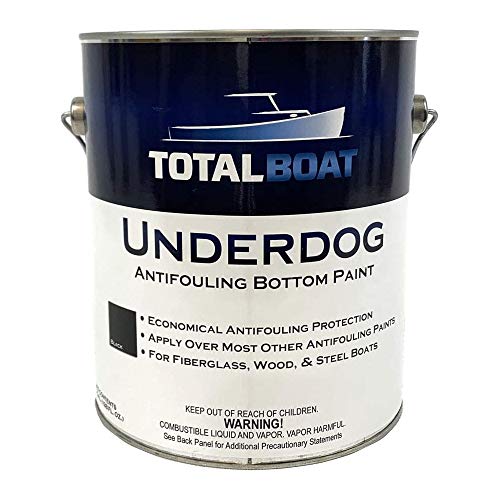
A good option for boats that operate in mixed-water environments. The black variant shares the same economical, single-season protection and copper biocide benefits as the blue version, with durability that stands up to trailering and intermittent beaching. Best for boats used frequently in saltwater, and for owners seeking a consistent, economical bottom coating.
Who it’s for: boats that regularly encounter barnacle pressure and require a simple, repeatable yearly refresh. Limitation: color choice may affect heat absorption; darker colors can warm the hull more in sun-exposed areas.
Interlux YBB379G Bottomkote NT — Black (Gal.)

Best for fiberglass boats, especially in marina environments with environmental restrictions. Interlux Bottomkote NT is designed for fiberglass and blends a durable finish with a low odor and low VOC profile. The self-polishing, ablative action gradually wears away to minimize paint buildup and maintain smoothness for better speed and efficiency. Choose this when marina rules emphasize low fumes and eco-friendliness.
Who it’s for: marinas or boatyards with ventilation constraints; sailors who want a clean, burnishable finish that can be burnished for reduced drag. Limitation: may require careful surface prep and conditions for optimal adhesion; verify compatibility with your boat’s bottom materials beyond fiberglass.
Rust-Oleum 396967 Marine Antifouling Paint – Black

Budget-conscious option suitable for fiberglass, wood, or steel surfaces. This copper-releasing formula helps deter fouling below the waterline and offers a practical choice for repainting existing hull coatings. It re-coats in roughly 4 hours and provides coverage up to about 110 sq ft, making it suitable for smaller boats or quick maintenance cycles.
Who it’s for: weekend sailors and boat owners seeking a low-cost, straightforward antifouling solution. Limitation: performance may be less robust in high-fouling saltwater compared with premium ablative formulas; monitor wear if the boat sees heavy use.
TotalBoat Krypton Copper Free Antifouling – White

Best for copper-free needs, including aluminum hulls, outdrives, and trim tabs. Krypton Copper Free uses a copper-free formula to avoid galvanic corrosion while maintaining effective antifouling properties. The white color helps with heat reflectivity in sunny climates. Ideal for boats requiring copper-free coatings or where copper-based paints are restricted.
Who it’s for: owners with aluminum components or environmental concerns about copper; those seeking bright, copper-free colors. Limitation: copper-free formulations can differ in long-term fouling protection versus copper-based paints; plan for appropriate reapplication cycles accordingly.
Buying Guide
- Coating type: Choose ablative (self-polishing) for easier cleanup and less buildup, or hard/low-VOC options for environments with environmental restrictions.
- Water environment: Consider saltwater, brackish, or freshwater use; some formulas perform best in high-fouling saltwater while others excel in mixed waters.
- Substrate compatibility: Verify the product is suitable for fiberglass, and note any additional prep requirements for wood, steel, or aluminum.
- Color and heat: Dark colors absorb more heat; lighter colors reflect heat, which can influence hull temperature and performance in sunny climates.
- Environmental considerations: Low VOC and marina-specific rules may guide choice; copper-free formulas can reduce galvanic concerns on aluminum components.
- Reapplication cadence: Ablative paints wear away with use, reducing buildup but requiring more frequent refreshes; non-ablative coatings may require more sanding at the end of a season.
- Ease of cleanup: Water-based, low-VOC paints generally offer easier cleanup with soap and water; consider marina restrictions when planning cleanup.
FAQ
- What is antifouling paint and how does it work on fiberglass?
Antifouling paint contains biocides or low-adhesion formulations that prevent organisms from attaching to the hull, reducing drag and fuel use. Fiberglass surfaces require proper preparation and compatible coatings for best adhesion. - Should I choose copper-based or copper-free antifouling paint?
Copper-based paints offer strong, long-lasting protection but may cause galvanic issues with certain metals. Copper-free formulas avoid galvanic concerns but can differ in protection longevity; choose based on hull materials and marina regulations. - Is ablative paint better than a hard coating?
Ablative coatings wear away gradually, reducing paint buildup and easing next-season prep. Hard coatings resist wear longer but may require more sanding when reapplying. Your choice depends on usage and maintenance preference. - Do these paints require special ventilation or environmental controls?
Many modern options are low-VOC and designed for marina environments, but always follow local regulations and manufacturers’ instructions for safe application and curing. - How often should I recoat the hull?
Ablative coatings typically require annual refreshes; non-ablative options’ intervals vary by water exposure and hull performance. Monitor fouling levels and plan reapplication accordingly. - Can I use these products on aluminum or outdrives?
Some formulas are copper-free and suitable for aluminum components, while others are designed specifically for fiberglass, wood, or steel. Confirm substrate compatibility before use.