Best Marine Grade Polyurethane Sealants for Boats, Rvs, and Docks
When choosing a marine grade polyurethane sealant, look for products that deliver a strong, flexible bond above or below the waterline, resist saltwater and weathering, and cure within a practical timeframe. This guide highlights top options suited for boat hulls, decks, portholes, and RV exteriors. It targets boat owners, DIYers, and maintenance crews who need durable, watertight seals without long downtime.
Below is a quick table of the five selected products, outlining their key strengths, best-use scenarios, and typical limitations. Use this at-a-glance reference to compare sealant types, curing behavior, and application contexts before diving into more detail in each product section.
| Product | Main Use | ||
|---|---|---|---|
| 3M Marine Grade Silicone Sealant, 08019 | Marine-grade silicone sealant; above the waterline | Interior/exterior sealing on boats and RVs | Silicone, not polyurethane; different performance profile |
| 3M Marine Adhesive Sealant 5200 (06500) | Permanent bonding and sealing | Deck housings, porthole mounting, transoms | Long cure time could affect scheduling |
| 3M Marine Adhesive Sealant Fast Cure 5200 (06535) | Fast-curing permanent bond | Small to medium sealing tasks with quick turnaround | Limited by small tube size |
| SEAL-ONCE Marine Penetrating Wood Sealer | Waterproof wood sealer and protector | Wood decks, docks, and outdoor wood structures | Not for hardwoods like teak or ipe |
| FORTIVO 5200 Fast Cure Marine Sealant (Black) | High-bond, UV-resistant 5200 alternative | Heavy-duty marine caulking below waterline | Color-specific (black) may affect cosmetic choices |
3M Marine Grade Silicone Sealant, 08019
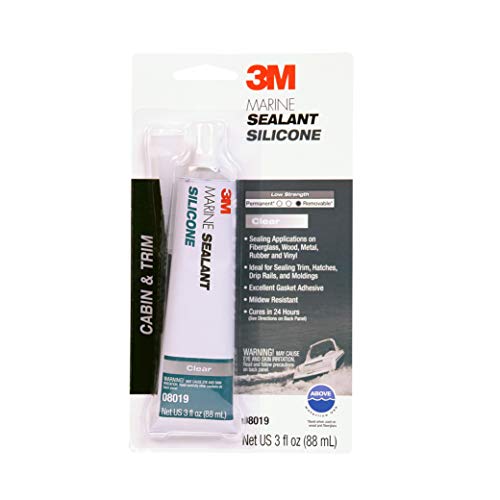
This product is developed specifically for marine sealant needs above the waterline. It remains tough and flexible across a broad set of substrates, including bare and painted metal, glass, paint, fiberglass, non-oily woods, many plastics, and abraded rubbers. It is ready to use straight from the container with no mixing, and it cures in as little as 24 hours, enabling faster return to water activities. Best for buyers who need a straightforward, flexible seal that resists environmental exposure above water.
Who it’s best for: Weekend boaters and RV owners who value ease of application and quick curing for interior/exterior above-waterline sealing projects.
Why selected: It offers versatile adhesion across common marine materials without requiring mixing, reducing project setup time and error potential.
Limitations to note: It is a silicone-based formula, which behaves differently from polyurethane in some bonding applications. Use where silicone’s flexibility and longevity matter most, and ensure compatibility with existing sealants and substrates.
3M Marine Adhesive Sealant 5200 (06500)

This polyurethane sealant provides a permanent bond and sealing solution for a range of marine substrates, including wood, fiberglass, and metal. Its versatility supports deck housings, hull fittings, porthole mounting, fiberglass transoms, and underside molding. It resists water intrusion above and below the waterline, making it a robust choice for critical joints and fittings. Best for projects requiring a single, persistent seal that endures saltwater exposure.
Who it’s best for: Professionals and serious DIYers who need a reliable, all-purpose marine adhesive sealant for structural joints and long-lasting seals.
Why selected: Its permanence and weathering resistance help ensure a lasting bond under varied marine conditions.
Limitations to note: Cure times can be longer than fast-curing options, potentially delaying completion on time-constrained projects.
3M Marine Adhesive Sealant Fast Cure 5200 (06535)

This is a fast-curing variant of the 5200 sealant line. It delivers a permanent bond for bonded marine substrates such as wood, fiberglass, and metal, with better for applications that require quicker handling and return to service. It resists saltwater and weathering both above and below the water line. Best for time-sensitive repairs and installations where a reliable seal is needed without a lengthy cure period.
Who it’s best for: Builders and DIYers who need a strong, durable seal without extended downtime.
Why selected: The 24-hour effective cure with tack-free performance helps speed up repair schedules.
Limitations to note: Smaller tube size can limit project scope, requiring more frequent restocking for larger tasks.
SEAL-ONCE Marine Penetrating Wood Sealer

This water-based, UV-stable sealer protects exterior wood exposed to marine environments. It forms a water-resistant shield at the cellular level, helping preserve natural color and extending wood life on decks, docks, and other outdoor structures. It is not intended for hardwood species such as ipe, mahogany, or teak. Best for rustic, outdoor wood projects where a low-VOC, non-hazardous option is preferred.
Who it’s best for: Woodworkers and dock builders seeking a marine-grade sealant alternative for wood-based structures in open-water settings.
Why selected: Its water-based formula and UV stability make it a practical choice for long-term outdoor protection without harsh solvents.
Limitations to note: Not suitable for certain hardwoods; check substrate compatibility before applying on hardwood decks or exotic timbers.
FORTIVO 5200 Fast Cure Marine Sealant (Black)

This black 5200 fast-cure sealant combines high load bearing capacity with UV protection. It is designed for heavy-duty marine applications, offering reliable adhesion below the waterline and standard marine bonding performance. It skins in about two hours and reaches full strength within a day, enabling fast project turnaround. Best for projects where a dark sealant line is desired and rapid cure is a priority.
Who it’s best for: Boat builders and repair crews needing a robust, quick-setting sealant with strong endurance in tough marine conditions.
Why selected: The combination of high bond strength, UV resistance, and fast cure makes it competitive for demanding below-waterline sealing tasks.
Limitations to note: Color choice (black) may influence aesthetics on visible seams; ensure color matches project requirements.
Buying Guide: Key Considerations For Marine Sealants
What substrate are you sealing? Different formulations bond best to wood, fiberglass, metal, or plastics. Polyurethane sealants generally excel in high-strength joints and below-waterline scenarios, while silicone products offer flexibility in above-waterline gaps. Always verify substrate compatibility on the product page.
What is the cure time you can tolerate? For fast repairs, choose fast-cure formulas that handle curing in hours rather than days. If you need a long-term seal with heavy load-bearing demand, a standard polyurethane that cures over 24 hours or longer may be preferable.
Water exposure and UV resistance matter. Below-waterline applications demand sealants with strong water resistance and UV protection to prevent degradation. If the project is above water, UV stability helps extend service life but may come with different adhesion properties.
Color and finish considerations. Some sealants are clear or white, while others come in color options such as black. For cosmetic considerations, select a hue that minimizes visibility or matches the substrate color.
Application and tool requirements. Many products are ready to apply straight from the tube, but some may require priming or specific surface preparation. Review surface prep steps to ensure optimal bonding results and avoid gaps or sags.
Frequently Asked Questions
- What is the difference between polyurethane and silicone marine sealants? Polyurethane provides strong bonds and durable, flexible seals for below-waterline and structural joints. Silicone offers excellent elasticity and weather resistance above water, with ease of application in many situations.
- How long do marine sealants typically take to cure? Cure times vary by product. Some fast-cure options set within 1–2 hours to handle ticklish jobs, while others require 24 hours or more for full strength. Always follow the manufacturer’s instructions.
- Can I use marine sealants on wood decks and docks? Yes, many polyurethane sealants, including 5200 variants, are designed for wood substrates and provide secure, long-lasting seals when properly applied.
- Is it important to match sealant color to the project? Depending on visibility and aesthetics, color can matter. Some projects benefit from clear or white products, while others may require dark tones for seam concealment or style.
- Should I choose a fast-cure sealant for all tasks? Not necessarily. Fast cures are beneficial for time-sensitive jobs, but for large, complex joints or areas with flexible movement, longer cure times may yield better long-term performance.
- Are there environmental considerations when using these products? Some products are water-based and low VOC, while others are solvent-based. Check the product label for environmental and safety guidance, and ensure proper ventilation during application.