Best Marine Fire Fighting Equipment for Boats and Watercraft
Fire safety on the water demands reliable, purpose-built gear. This guide highlights five marine-ready extinguishers and related equipment to help boaters choose the right option. Each product is evaluated for typical saltwater environments, ease of use, and deployment speed. Best for small boats or personal watercraft, for commercial vessels, and for versatile on-board safety, these picks cover common marine fire scenarios.
| Product | Best For | Key Feature |
|---|---|---|
| First Alert Marine1 FE1A10GR | Small to mid-size boats | UL rated 1-A:10-B:C; all-metal construction |
| Kidde Mariner 5 | Boats with Class B/C fires | Corrosion-resistant aluminum and stainless components |
| First Alert FE5R-PWCNA | Personal watercraft and small craft | USCG size I compliant; dry chemical for flammable liquids |
| First Alert AUTOMAR10 FE10GR | Car and marine use | UL 10-B:C; metal head; sodium bicarbonate agent |
| Jasvelly 6-Pack 2.5 lb ABC Extinguisher | Multi-vehicle and marine environments | 5 ft discharge range; long service life |
First Alert Marine1 Fire Extinguisher
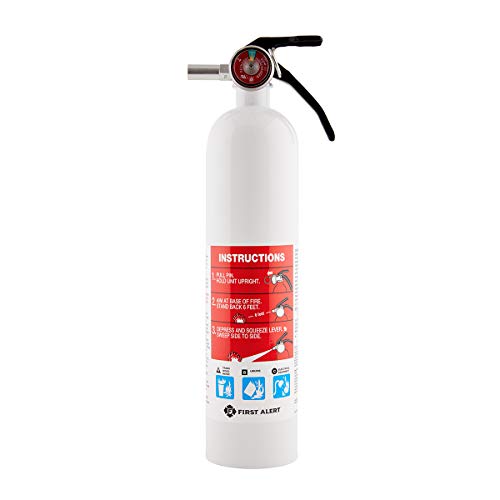
Best for: small to mid-size boats seeking a durable, reliable marine extinguisher. This unit is UL rated 1-A:10-B:C and uses monoammonium phosphate, which covers wood, paper, plastics, liquids, and electrical fires. Its all-metal construction and commercial-grade valve are designed for harsh marine environments. It is rechargeable by certified professionals after use, which is advantageous for vessels that require reuse after training or practice sessions. A limitation is that recharge may require professional service, potentially increasing downtime after a discharge.
Kidde Mariner 5 Fire Extinguisher

Best for: boats needing Class B and C fire protection with corrosion resistance. The Mariner 5 fights common marine fires (flammable liquids, gases, and electrical fires) and uses durable aluminum and stainless steel components. It discharges quickly (8-12 seconds) with a 4-6 feet range and 100 PSI operating pressure. Choose this if you want quicker deployment and improved material resilience in salty environments. A caution: single-use design means replacement after discharge is necessary; plan for quick accessibility times and inventory management.
First Alert FE5R-PWCNA Personal Watercraft Extinguisher

Best for: personal watercraft and small craft operators who need Coast Guard considerations met. This unit is designed for marine use and meets ANSI/UL711 and CAN/ULC-S508 requirements with a dry chemical agent. It is effective against flammable liquids and electrical fires. Use caution in confined spaces where accidental discharge might affect crew or passengers. Its single-device nature makes inventory management straightforward for one- or two-crew operations.
First Alert Fire Extinguisher For Car & Marine Use AUTOMAR10
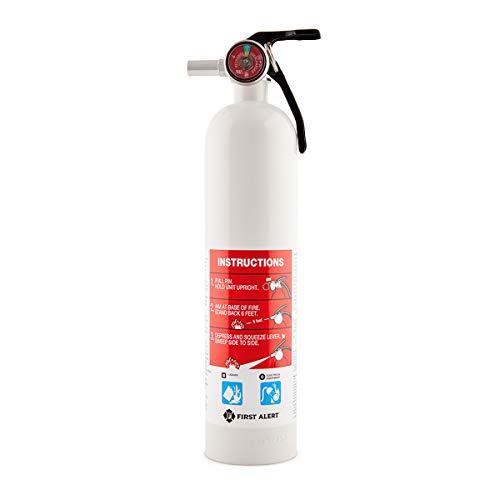
Best for: use on boats and in vehicles where both flammable liquids and electrical fires are a concern. The AUTOMAR10 is UL rated 10-B:C with a durable metal head and commercial-grade valve and trigger. It uses sodium bicarbonate extinguishing agent and includes a metal pull pin with a safety seal. A caveat: while versatile, it may be larger than some handheld models, affecting portability on very small vessels.
Garage10 – Garage/Workshop FE

Best for: marine-adjacent garages or workshops where spaces may resemble shipboard storage or maintenance zones. This extinguisher is rated 10-B:C and features a durable metal head, with a metal valve and quick-release mechanism. It fights flammable liquids and electrical fires and uses sodium bicarbonate. Consider this when you have a nearby workshop or dockside maintenance area on larger boats or fleets. A limitation is that it is tailored more for workshop settings than on-deck mounting.
Buying Guide: Key Considerations For Marine Fire Fighting Equipment
- What fire types are most common on your vessel? Boats typically encounter Class A (wood/paper), Class B (flammable liquids), and Class C (electrical) fires. Choose extinguishers rated for these classes and with agents effective for marine environments.
- Is saltwater exposure a concern? Look for marine-grade construction, corrosion resistance, and aluminum or stainless steel components to withstand salinity and humidity.
- Are quick-deployment and reusability important? Some models are rechargeable after use, while others are single-use. Consider maintenance schedules and service access in your boating routine.
- Portability and mounting options? For small craft, compact, lightweight extinguishers with easy-pull pins are beneficial. Larger vessels may benefit from higher-capacity units or multi-pack options for cabin and engine rooms.
- Compliance and certifications? Verify ANSI/UL, CAN/ULC standards, and Coast Guard compatibility where applicable to ensure on-water acceptance and inspection readiness.
Frequently Asked Questions
- What does UL rating 10-B:C mean? It indicates the extinguisher is suitable for most common fires involving ordinary combustibles, flammable liquids, and electrical equipment, with a specified discharge capability.
- Which extinguisher is best for personal watercraft? Models like the FE5R-PWCNA are specifically designed for watercraft and meet U.S. Coast Guard requirements for marine use.
- Should I choose rechargeable extinguishers? Rechargeable units save replacement costs over time and can be serviced by professionals, but require scheduling after a discharge.
- What is the recommended number of extinguishers on a boat? A practical approach is to have at least one extinguisher within reach in the cabin and another near the engine or galley, with additional units based on boat size and layout.
- Are dry chemical extinguishers safe for marine environments? Yes, but they can be messy and require careful cleanup; they are effective across multiple fire types, which is helpful on watercraft.
- Can multi-pack extinguishers be mounted together? Yes, multi-packs provide quick access in covered areas; ensure proper mounting and visibility for crew training.