Best Kayak With Pedal Drive for Fishing and Adventure
People seeking hands-free propulsion with reliable steering will find pedal-drive kayaks a compelling option. This guide highlights five top choices that balance stability, storage, and ease of use for anglers, recreational paddlers, and light-tow requirements. The selections favor models with durable hulls, integrated seating, and accessible pedal systems. Whether you fish in calm lakes or navigate shallow marshes, these picks optimize efficiency and comfort. The buyer’s table below helps compare each option at a glance.
| Product | Best For | Why It Stands Out |
|---|---|---|
| Pelican Catch 110HDII | Freshwater anglers | HyDryve II pedals, Ergocast G2 seat, multiple gear rails for accessories |
| Danrelax Inflatable Kayak | Travelers needing portability | Premium PVC, robust pedal and rudder system, two swivel rod holders |
| Brooklyn 12.0 Pro by BKC | Longer trips and standing casts | Propeller drive, rudder steering, high payload, stable 12‑ft hull |
| Upgraded Brooklyn 10.0 by BKC | Compact storage with solid stability | Flipper-style pedal drive, rudder, 350 lb capacity |
| Reel Yaks Recon | Modular, lightweight setups | Fin-drive propulsion, modular assembly, easy disassembly |
Pelican Catch 110HDII – Sit-On-Top Fishing Kayak

The Pelican Catch 110HDII combines a compact 10-foot hull with HyDryve II pedal propulsion and an Ergocast G2 seating system. Its four gear rails support accessory customization for fishing, filming, or storage. Best for anglers who want quick setup and comfortable seating in shallow waters where plants and debris are common.
Who it’s best for: Recreational anglers who value a stable sit-on-top, easy maneuverability, and the ability to add gear with rails. Limitations: Smaller footprint may limit large gear storage compared with longer models.
Danrelax Inflatable Kayak With Pedal System

This 12-foot inflatable kayak emphasizes durability with 2600 g/m² PVC and a 0.9 mm reinforced stitch. It includes a 20 mm aluminum pedal system and a 2.5 mm steel rudder linkage for hands-free propulsion and precise steering. Its interior features a padded floor for comfort during extended fishing sessions. Best for travelers who need a portable option without sacrificing pedal control.
Who it’s best for: Anglers who travel or store gear in compact spaces. Limitations: The setup and inflation require more time than rigid kayaks.
Brooklyn 12.0 Pro Single Pedal Kayak by BKC

This 12-foot sit-on-top model uses a high-efficiency propeller pedal system for hands-free propulsion. A removable drive option upgrades the craft, while a precise rudder provides reliable steering. The hull design balances stability with the ability to maneuver in chop or currents. Best for anglers who want extended range and a robust setup for longer trips.
Who it’s best for: Anglers who value propulsion efficiency and adaptable steering. Limitations: Paddles are not included, so you’ll pair it with your preferred paddling setup.
Upgraded Brooklyn 10.0 Pedal Kayak

This 12-foot design emphasizes a fast, efficient flipper-style pedal drive paired with a rudder for sharp turns. Weighing about 65 lbs and supporting up to 350 lbs, it is easy to transport while remaining capable for gear-heavy excursions. Best for buyers who want a lighter pedal option without losing stability.
Who it’s best for: Anglers focused on speed and portability. Limitations: Paddles are not included, requiring a separate purchase for traditional paddling.
Reel Yaks Recon Modular Fishing Kayak
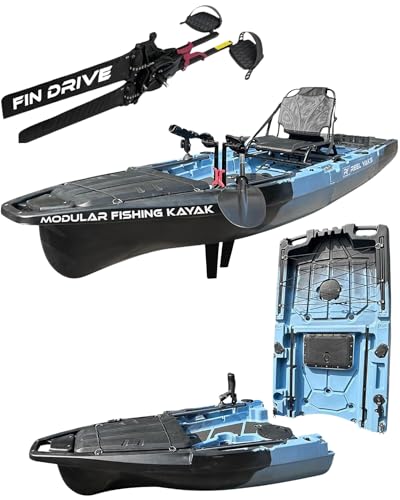
The Recon modular setup features a fin-drive propulsion system designed for quiet, hands-free movement. It weighs 11 lbs for the drive portion and disassembles into a portable, lightweight configuration. Best for anglers who value modularity and easy transport, with a focus on compact storage and quick assembly.
Who it’s best for: Those who need a modular, light solution that travels well. Limitations: Might require separate gear integration for a fully outfitted fishing setup.
Buying Guide: Key Purchase Considerations
- Propulsion type: Pedal drives come in propeller and fin designs. Propeller drives are often faster over distance; fins may fare better in weed-choked waters.
- Hull length and stability: Longer kayaks typically track better and carry more gear, but shorter models can be easier to transport and launch.
- Seat comfort: Ergonomic seating matters for long sessions; look for adjustable, breathable seats with lumbar support.
- Storage and accessories: Consider built-in gear rails, hatches, and rod holders when evaluating fishing efficiency and organization.
- Portability and storage: Inflatable and foldable options save space but may require more setup time.
- Weight capacity: Match hull capacity with gear, cooler, and angling equipment to avoid overloading.
Frequently Asked Questions
- What is a pedal-drive kayak best for?
Pedal-drive kayaks are ideal for hands-free propulsion, long paddling trips, and stable platforms for fishing or photography. - Are pedal kayaks harder to transport?
Some models can be heavier, but foldable or inflatable versions offer easier storage and portability. - Do pedal kayaks require special maintenance?
Routine checks of pedals, drive fins, and rudder systems help maintain efficiency and prevent corrosion. - Which features matter most for fishing?
Gear rails, rod holders, ample storage, and a comfortable seat significantly impact fishing performance. - Can I switch to paddling if I don’t like pedaling?
Many models offer removable drives or dual-mode setups so you can paddle as needed.