Best Bilge Pump Float Switches for Boats and Ponds: Automatic and Reliable Picks
Answering your search for a dependable bilge pump float switch, these models deliver automatic operation that responds to water levels, helping to prevent flooding on boats or in water features. Ideal buyers include boatowners seeking marine-grade reliability, DIY installers needing easy wiring, and multi-area users who want redundancy. Below is a concise buying guide and five top picks that balance durability, ease of use, and price. Consider the intended environment, voltage compatibility, and the switch’s sealing and mounting features when choosing.
| Product | Best For | Why It Stands Out |
|---|---|---|
| Rule 35A Marine Rule-A-Matic | Small to mid-size boats | Mercury-free, corrosion-resistant, easy to install |
| Huazu Bilge Float Switch | Budget builds with varied pumps | Durable ABS shell, reliable 2″ to 3/4″ control range |
| SEAFLO 02-Series | Backed by warranty buyers | Enhanced sealing, steel ball bearing activation |
| QWORK 2 Pack | Multiple pump setups | Ultra-sealed, versatile voltage, 20A max at 12V |
| SEAFLO 03-Series | Heavy-duty marine or pond setups | ABS housing, automatic control with precise levels |
Rule 35A Marine Rule-A-Matic Switch
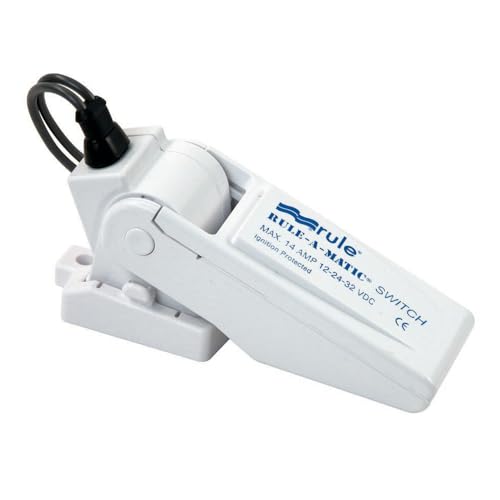
The Rule 35A automatically activates your bilge pump when water rises, protecting against unexpected flooding. Best for small to mid-sized boats that require a mercury-free, durable, and easy-to-install switch. The marine-grade construction includes corrosion-resistant components and a robust housing. This model is well-suited for owners who want straightforward wiring and reliable performance with minimal maintenance. A limitation is that installation clarity depends on your boat’s bilge wiring layout; plan for a clean, secure mounting.
Huazu Bilge Float Switch

This automatic float switch is designed for compatibility with various submersible pumps and includes a sturdy ABS shell. It turns on at 2 inches and off at 3/4 inch water levels, helping to control bilge pumps reliably in compact or multi-channel installations. Best for budget-conscious buyers or installations where you need a spare switch. A possible limitation is the 2–3/4 inch range may not suit very low-water environments where finer control is required.
Rule 40A Rule-A-Matic Plus

The Rule-A-Matic Plus combines rugged design with a moisture-tight shell and a compact form factor. It’s best for owners who need a robust, space-efficient option that can handle debris exposure without jamming. Choose this if you require reliable marine-grade performance in a smaller housing. A caveat is that some users may want a larger switching capacity for high-load pumps; verify your pump’s amperage needs before choosing.
Landhoow 2 Pcs Automatic Bilge Float Switch

Comes as a two-pack for redundancy, suitable when you want back-up switches or multi-area control. It includes an automatic control system with a maximum current of 20A at 12V, 10A at 24V, and 8A at 32V. Best for boat owners who need dependable back-up options and longer service life thanks to ultrasonic sealing. A limitation is the longer harness may require extra mounting space and careful routing to avoid entanglement.
CREATORELE Automatic Bilge Pump Float Switch
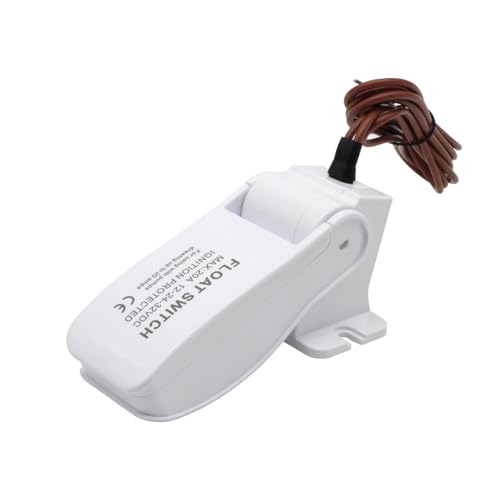
With automatic start/stop at 51mm and 20mm, plus large silver contacts for stable operation, this switch supports DC12/24/32V. It’s best for boaters who want strong contact reliability and multi-voltage compatibility. It’s a solid choice for installations requiring dependable electrical contact and a broad voltage range. A potential limitation is that the precision of 51mm to 20mm activation may require precise mounting aligned to your hull.
SEAFLO 03-Series Heavy Duty

Designed for heavy-duty marine or pond setups, this SEAFLO model uses ABS housing and ultrasonic welding for durable, water-resistant sealing. It supports 12/24/32V and provides automatic water level control with clearly defined on/off thresholds. Best for users needing a rugged, long-lasting switch in harsh environments. A consideration is ensuring the unit’s amperage aligns with your pump’s requirements to avoid overloading.
Buying Guide
What voltage does your system use? Most bilge float switches support 12V, 24V, or 32V systems; matching the correct voltage is crucial for safe operation and maximum life. Check current ratings (amps) to ensure compatibility with your bilge pump’s draw. Consider sealing and mounting—ultrasonic welding and moisture-tight housings reduce leaks and corrosion. For vessels needing redundancy, a multi-switch pack or a back-up unit is beneficial. If space is limited, a compact, integrated design may be preferable. For ponds or pools, ensure the switch is rated for outdoor or wet-location use and compatible with your pump type.
How to compare level settings? Look for switches with defined activation and deactivation levels. Some models trigger around 51mm (2 inches) and deactivate near 20mm (0.8 inches); others have adjustable ranges. Decide whether you need fixed thresholds or adjustable control for different water conditions. Durability matters; ABS housing, corrosion resistance, and reliable contacts improve long-term performance in marine environments.
FAQ
- What is a bilge pump float switch? A device that automatically starts or stops a bilge pump based on water level, helping prevent flooding.
- Which voltage should I choose? Choose the voltage that matches your pump system (12V, 24V, or 32V).
- Are these switches waterproof? Many models use moisture-tight seals and ABS housings; verify the product’s sealing rating before purchase.
- Can I use a spare switch in another area? Yes, multi-pack switches allow installation in multiple bilge zones or as backups.
- Do these switches require professional wiring? They are designed for straightforward wiring, but ensure proper wiring to avoid shorts and ensure safe operation.
- What maintenance is needed? Periodic inspection for corrosion, cleaning of debris, and testing the switch function helps ensure reliability.