Best Marine Poly Fuel Tanks for Boats and Outboard Engines
Looking for reliable, corrosion-resistant marine poly fuel tanks? This guide highlights five top options designed for boats, outboards, and deck use. The selected tanks emphasize capacity, durability, built-in gauges, and spill prevention. Best for anglers needing long-running fuel, frequent boaters seeking easy refills, and owners preserving space on compact vessels. The table below offers a quick comparison of key specs to help you choose the right tank at a glance.
| Product | Brand | Capacity | Key Feature | Best For |
|---|---|---|---|---|
| Scepter 12 Gallon Portable Boat Gas Tank (08668) | Scepter | 12 gal / 45 L | 2-way vented cap; built-in fuel gauge | Boats needing longer run time & vented refueling |
| Scepter 08669 Rectangular 12 Gallon Low Profile | Scepter | 12 gal / 45 L | Low-profile, space-saving design; built-in gauge | Smaller boats or tight storage areas |
| Moeller 032525 Below Deck Permanent Fuel Tank | Moeller | 25 gal | Side mount fit with brass fittings; corrosion resistant | Boats needing larger onboard fuel capacity |
| Sierra International 031624 24 Gal Topside Tank | Sierra | 24 gal | Topside installation; red finish | Topside mounting on mid-sized boats |
| Moeller 031626 Topside Fuel Tank 22 Gallon | Moeller | 22 gal | UV-stabilized, rotomolded poly; topside ready | Boats built before 2011 with topside mounting |
Scepter 12 Gallon Portable Marine Gas Tank

The Scepter 12-Gallon portable boat fuel tank offers ample capacity in a compact profile. It includes a 2-way vented cap, an integrated fuel gauge, and a built-in pickup for quick fueling. The design supports diesel and ethanol-blended fuels and accepts standard 1/4 NPT marine fittings. Best for boaters needing longer runtime without adding bulk to storage. Caution: ensure proper venting to prevent vapor buildup during refueling.
Who it’s best for: Small to mid-size boats with limited storage seeking a reliable, gauge-equipped container.
Why selected: Combines high capacity with a space-saving footprint and a built-in gauge for quick checks on the water.
Limitations: Fuel line is sold separately; verify compatibility with your fittings and hoses before purchase.
Scepter 08669 Rectangular 12 Gallon Low Profile Tank

This low-profile variant keeps a 12-gallon capacity while reducing height for easier under-seat or compact storage. It features a 2-way vented cap for safe refueling and a built-in fuel gauge. Suitable for outboard-powered craft that require a slim, space-conscious tank. Best for boats where vertical clearance is limited or where storage height is at a premium.
Who it’s best for: Boaters with tight storage spaces and a need for reliable fuel monitoring.
Why selected: The low-profile design preserves space without sacrificing gauge visibility or venting capability.
Caution: As with all vented cans, keep away from ignition sources and ensure secure fitting to avoid leaks when docking or transporting.
Sierra 031624 24 Gal Topside Tank

The Sierra 24-gallon topside tank is designed for convenient top-side mounting, offering a larger capacity for longer boating trips. Its red color provides easy identification, and it’s positioned as a top-side alternative for mid-sized vessels. Best for boaters who want substantial onboard fuel without frequent refueling stops. A limitation is that it is primarily a topside install, which may restrict its use on certain hull configurations or require mounting hardware compatibility checks.
Who it’s best for: Anglers or cruisers needing a higher onboard fuel reserve on top-side installations.
Why selected: Higher capacity in a topside layout supports longer days on the water with fewer fill-ups.
Moeller Topside Tank 22 Gallon
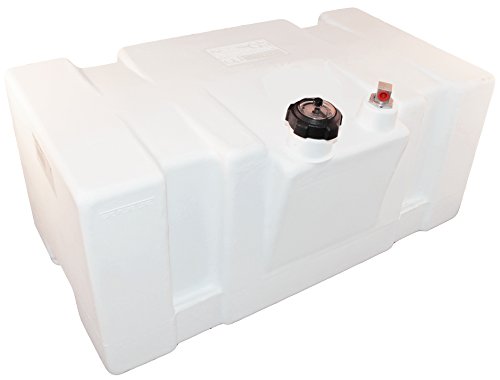
The Moeller 22-gallon topside tank is a rotationally molded, UV-stabilized poly unit designed for topside mounting on boats built before 2011. It measures 29.25 inches long by 19 inches wide and 13.58 inches high (with cap). Best for vessels with older configurations that require a robust, UV-protected topside option. Consider compatibility with your deck layout and mounting hardware to ensure a proper fit.
Who it’s best for: Owners of older boats needing a dependable topside replacement with UV resistance.
Why selected: Large capacity and durable construction make it a practical topside choice for mainstream pre-2011 boats.
Buying Guide: Key Considerations For Marine Poly Fuel Tanks
- Choose a tank that balances your expected run time with storage space on your vessel. Higher capacities are great for long trips but require more space and fitment considerations.
- Topsides provide quick access and visibility but may require mounting space. Below-deck tanks save deck space but may need longer hoses and careful routing.
- A vented cap reduces vapor buildup during refueling, while an integrated gauge helps monitor fuel levels without additional tools.
- Polyethylene tanks resist corrosion and are UV-stabilized; check for ethanol/diesel compatibility if you mix fuels.
- Verify compatibility with your boat’s fittings (NPT standards, hose diameters, and connector types) to avoid leaks.
- Heavier tanks require sturdy mounting and lifting capabilities. Consider how you’ll transport and install the unit.
- Salt spray, humidity, and sunlight affect longevity. Look for UV protection and corrosion resistance for marine use.
- Tanks designed with multi-layer barriers reduce evaporation; keep fill levels to recommended percentages to minimize losses.
FAQ: Marine Poly Fuel Tanks
- What is the advantage of a vented cap? It prevents vapor buildup by allowing air to escape during fueling, reducing pressure and safety risks.
- Can these tanks hold diesel or ethanol blends? Many models support diesel and ethanol-blended fuels; check specific product notes for compatibility.
- Is a built-in fuel gauge common? Yes, several models include a gauge or sight line to monitor fuel without removing the cap.
- What mounting options exist? Tanks can be topside or below deck, with varying dimensions; ensure your deck or bilge space can accommodate the unit.
- Do these tanks require professional installation? It depends on your boat’s configuration; many owners perform installation with standard fittings and hoses, but some setups benefit from professional help.
- How do I prevent fuel evaporation? Use tanks designed to minimize evaporation and avoid filling beyond recommended levels to reduce loss.