Best Easy Steps for Boat Trailers: Safe Boarding on the Water
If you need quick, stable access to your boat from a trailer, these boat trailer steps are the right upgrade. They’re ideal for boaters who prioritize safety, durability, and ease of installation. Best for anglers, family boats, and weekend cruisers, these steps improve stability when boarding in wet or windy conditions while docking or unloading. This guide highlights five top options and explains who each product is best for, with practical considerations to help you choose.
Summary table of selected products
| Product | Best For | Key Benefit |
|---|---|---|
| Aupar Boat Trailer Steps, 3-Step | Casual boaters needing a sturdy, basic step | Solid steel construction with anti-slip tread |
| Aupar Heavy Duty Boat Trailer Steps with Handrail, 3-Step | Rookie to intermediate trailers needing extra safety | Handrail and triangular support for stability |
| Aupar Boat Trailer Steps, 4 Step | Full-access boats or taller trailers | Additional step with textured tread for better footing |
| OUTPRIZE Boat Trailer Step, 3 Steps | Versatile setups; left or right handrail | Adjustable handrail; reinforced triangle supports |
| MAXXHAUL 70089 Heavy Duty 300-lbs | Heavy-use or larger boats | Non-slip surface; strong steel frame |
Aupar Boat Trailer Steps, 3-Step
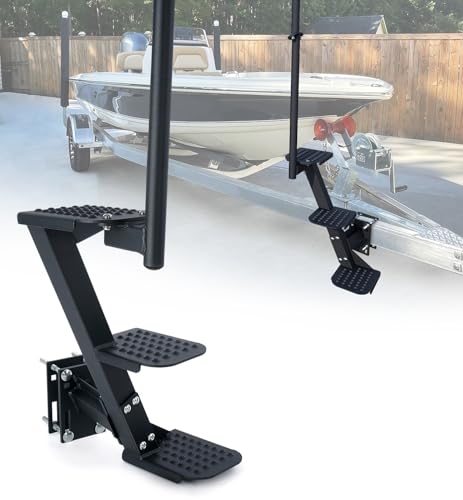
Best For: Casual boaters who want a straightforward, durable entry step. This 3-step design provides stable boarding with a textured, slip-resistant surface. The heavy-duty steel frame and black powder coating resist corrosion in marine environments, making it suitable for frequent use.
Why selected: It blends solid construction with practical safety features, including a stable triangular support and a secure handrail bar for confident climbs. The anti-slip tread helps in rain or spray conditions, and its universal sizing fits standard trailer tongues.
Caution: The three-step layout may feel taller on very short tongues; verify your trailer height and reach before installation.
Aupar Heavy Duty Boat Trailer Steps with Handrail, 3-Step

Best For: Boat owners who prioritize added safety with a handrail. This three-step setup features a secure handrail and anti-slip surface patches for wet conditions, plus a robust steel frame with black powder coating.
Why selected: The handrail and stable triangular base reduce the risk of slips or shifts during boarding. It’s a solid choice for bass boats or mid-sized trailers needing extra security.
Caution: Ensure the handrail clearance aligns with your boat’s edge; some installations may require slight tongue modification for optimal positioning.
Aupar Boat Trailer Steps, 4 Step

Best For: Boat owners needing extra height access for longer or taller trailers. The 4-step configuration includes a textured tread for improved footing across all steps, increasing safety during boarding and disembarking.
Why selected: The additional step allows for easier climbed access on wider or taller tongue configurations, making it a good fit for owners with high bunks or higher trailer frames.
Caution: The extra step adds weight; check your trailer tongue load limits to avoid overburdening the hitch area.
OUTPRIZE Boat Trailer Step, 3 Steps
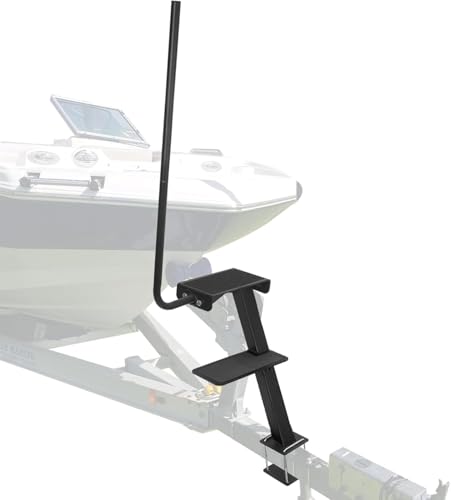
Best For: Vessels that need a flexible setup with left or right adjustable handrails. This three-step model supports up to 450 lbs and includes reinforced triangle supports for stability in challenging docking scenarios.
Why selected: The adjustable handrail minimizes interference with the boat’s edge, enabling a secure climb for various boat lengths. It’s a reliable option for multi-boat garages or shared trailers.
Caution: Verify leg height compatibility with your trailer frame; installation on very curved or custom tongues may require additional brackets.
MAXXHAUL 70089 Heavy Duty Step

Best For: Heavier-use situations or larger boats, where a robust, durable step is essential. This MAXXHAUL model fits up to 3″ x 5″ frames and offers a non-slip textured surface for traction in rain or mud.
Why selected: It combines a strong steel frame with a powder-coated finish for longevity and lower maintenance in harsh marina environments. The non-slip surface reduces the chance of slips during wet conditions.
Caution: Heavier weight means longer installation times; ensure mounting hardware and tongue strength can support the step’s mass over time.
Buying Guide: How to Choose The Right Boat Trailer Step
- What tongue size does your trailer use? Look for universal-fit designs that accommodate common 3″ x 3″ and 3″ x 5″ tongues, or confirm the exact compatibility listed by the seller.
- How many steps do you need? A 2-step setup is lighter and more compact; a 3-step or 4-step unit provides greater height clearance for higher trailers or bunks.
- What safety features matter most? Prioritize anti-slip surfaces, a secure handrail, and reinforced triangle supports for stability on wet docks or windy days.
- Is installation straightforward? Seek models with simple mounting options, clear hardware, and left or right-hand rail configurations to avoid interference with your boat.
- Durability and environment: Marine environments demand corrosion resistance. Powder-coated steel or stainless components offer longer service life in saltwater settings.
- Weight and fit: Check the unit’s weight and overall height to ensure it does not exceed tongue load limits or affect trailer balance.
FAQ
- Q: Will these steps fit all boats? A: Most are designed for common trailer tongues (3″ x 3″ or 3″ x 5″), but always verify compatibility with your trailer’s dimensions before purchase.
- Q: Are safety rails necessary? A: A handrail significantly improves stability when boarding, especially in wet conditions.
- Q: Do steps require professional installation? A: Many are designed for DIY installation; follow provided mounting instructions and use appropriate hardware for your trailer.
- Q: Can I use these steps with multiple boats? A: Some models feature adjustable handsrails or left-right mounting options to fit different vessel layouts; confirm fit per boat configuration.
- Q: Do they rust easily? A: Look for powder-coated steel or corrosion-resistant finishes to prolong life in marine environments.
- Q: What is the weight limit to consider? A: Most models support 450 lbs or similar ratings; ensure you stay within this limit for safety.