Best Clear Coat Solutions for Boats
Looking for a clear coat that protects boat surfaces from UV exposure, saltwater, and wear? This guide highlights five clear coat options that are well-suited for marine applications. Each option includes who it’s best for, why it stands out, and practical cautions to consider before purchase. Suitable for boat owners, hobbyists, and professional rebuilders alike, these selections cover gel coats, spray enamels, and durable one-part systems.
| Product | Best For | Why Lineup Matters |
|---|---|---|
| KBS Coatings 8404 DiamondFinish Watercolor Clear Coat | Owners needing durable, single-part protection | High scratch resistance; weatherproof; no hardener required |
| KBS Coatings 8304 DiamondFinish Watercolor Clear Coat | Direct-to-metal or painted surfaces seeking strong topcoat | Single-part formula; tougher than many two-part clears |
| Quicksilver 802878Q53 Clear Coat Enamel Spray Paint | Engine cowls and exposed engine areas | OEM-spec for Mercury/Mariner; spray convenience |
| Marine Coat One Gel Coat – ISO/NPG Clear Gel Coat | Hull or large surfaces needing UV and weather resistance | High-gloss protection; wax-free option for clear bases |
| Fiberglass Supply Depot Clear Gelcoat Without Wax | Fiberglass projects requiring a UV-resistant clear base | No-wax formula supports bonding for multi-layer builds |
KBS Coatings 8404 DiamondFinish Watercolor Clear Coat
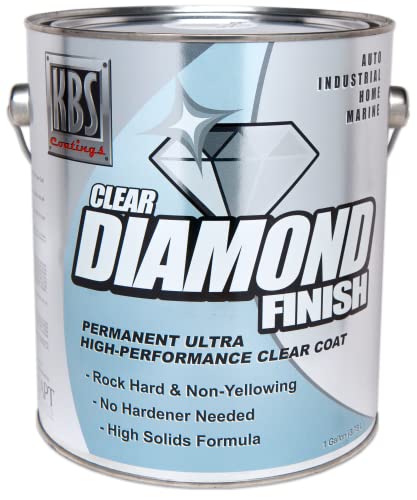
Best for boats and outdoor gear requiring a hard-wearing, single-part clear coat. This formula resists scratches and impacts better than many traditional clears, helping maintain color depth and clarity over time. The product is designed to withstand saltwater, humidity, and UV exposure without clouding, making it a solid choice for marine surfaces and exterior projects. Caution: as a single-part formula, performance depends on proper surface prep and environmental conditions during application.
Who it’s best for: Boat owners needing durable topcoat protection without mixing ratios, hobbyists applying to various substrates, and outdoor projects exposed to harsh conditions.
KBS Coatings 8304 DiamondFinish Watercolor Clear Coat
Best for direct-to-metal and painted surfaces needing robust protection. Its single-part formula is designed to be tougher and harder than many two-part clears, which can simplify maintenance on weathered hulls or aluminum components. Caution: ensure compatible primers and substrates before application to avoid adhesion issues.
Quicksilver 802878Q53 Clear Coat Enamel Spray Paint

Best for finishing engine cowls and other exposed engine surfaces. This spray delivers an enamel clear coat formulated to meet Mercury Marine OEM specifications, which can maximize performance on Mercury, Mariner, or MerCruiser components. Caution: spray coatings may require masking and ventilation; compatibility with non-metal surfaces should be tested.
Marine Coat One Gel Coat (ISO/NPG) With Wax Catalyst

Best for restoring or finishing boat surfaces needing high UV protection and a high-gloss finish. This gel coat is suitable for boats and can be pigmented or used as a clear base in some applications. Caution: contains MEKP catalyst for hard cure; handle with proper safety measures and follow mixing instructions precisely.
Marine Coat One Gel Coat – ISO/NPG Clear Gel Coat Without Wax

Best for building a hull or composite part on a prepared mold where a clear, UV-resistant base is needed. It’s a clear gel coat option without wax, suitable for subsequent layer bonding. Caution: no-wax formulas can require careful curing conditions to avoid tackiness before final finishing.
Rust-Oleum Marine Spar Varnish, Quart

Best for exterior wood surfaces above the waterline, such as trim and railings. The oil-based formula accommodates expansion and contraction with changing weather. This isn’t a traditional boat gel coat but provides a clear, flexible protective layer on wooden components. Caution: not ideal for high-humidity, direct-water-exposure areas without proper adhesion preparation.
Fiberglass Supply Depot Clear Gelcoat Without Wax

Best for versatile marine and automotive applications needing UV resistance and a clear finish. The no-wax formula supports proper bonding for additional fiberglass layers and coatings. Caution: work within recommended pot life and cure times to avoid tackiness on larger surfaces.
Buying Guide
- Surface compatibility: Choose a product that matches your substrate—gel coat for hulls, fiberglass, metal, or wood. Direct-to-metal options simplify prep for painted surfaces.
- single-part vs. multi-part: Single-part clears are easier to apply but may offer different hardness or UV resistance compared with two-part systems. Consider maintenance cycles and recoat intervals.
- UV and saltwater resistance: Marine environments demand UV protection, salt resistance, and clear clarity retention. Look for products explicitly marketed for marine use.
- Application method: Spray clears offer fast coverage but require masking and ventilation. Wipe-on or brush-on finishes may suit smaller areas or intricate parts.
- Gloss level and finish: For boats, a high-gloss finish can enhance appearance but may show surface imperfections more readily. Consider testing on a sample area.
- Safety and curing: Some gel coats use MEKP catalysts. Always follow safety guidelines, proper ventilation, and product-specific cure times and temperatures.
Frequently Asked Questions
- Which clear coat is best for boat hulls? Gel coats and high-build clear coats designed for marine use offer robust UV protection and gloss retention on hulls. The choice depends on whether you need spray convenience or a gel coat base for multi-layer builds.
- Can I apply a clear coat over existing paint? Yes, many direct-to-painted-surface clears are formulated to bond to painted substrates, but proper surface prep is essential to ensure adhesion.
- Is a wax-free gel coat better for boats? Wax-free formulas help with bonding to subsequent layers and reduce interference with adhesion, making them suitable for rebuilding or refinishing projects.
- How important is UV protection? UV resistance prevents yellowing and chalking, preserving clarity and color depth on marine surfaces exposed to sun exposure.
- Do I need a respirator for marine clear coats? Yes, many coatings require adequate ventilation and respiratory protection during application, especially spray products and gel coats.
- What maintenance is needed after applying a clear coat? Regular washing with marine-safe cleaners and periodic light polishing help maintain gloss and prevent oxidation.