Best Marine Antifouling Paint Solutions for Your Boat
Looking for marine antifouling paint that keeps hulls clean and efficient? This guide highlights top options and helps you choose based on boat type, water conditions, and maintenance goals. Best choices target frequent boaters, sailboats, and work boats that spend time in saltwater or mixed conditions. Below you’ll find concise product summaries, a quick comparison, and a practical buying guide with questions to steer your decision.
| Product | Best For | Finish Type |
|---|---|---|
| TotalBoat Underdog Marine Antifouling Bottom Paint (Blue, Gallon) | Frequent saltwater use, boats under frequent motion | Ablative / self-polishing |
| TotalBoat JD Select Ablative Antifouling Bottom Paint (Quart) | Fiberglass, wood, or steel boats in mixed waters | Ablative / self-polishing |
| TotalBoat JD Select Ablative Antifouling Bottom Paint (Black, Gallon) | Same as above, larger quantity | Ablative / self-polishing |
| TotalBoat Outdrive AF Aerosol for Underwater Metals (Black, 12 oz.) | Underwater metal components | Coating with zinc pyrithione |
| Interlux YBA064A/16 Trilux 33 Aerosol Antifouling Paint (Gray, 16 oz.) | General antifouling for various hulls | Aerosol antifouling |
TotalBoat Underdog Marine Antifouling Bottom Paint (Blue, Gallon)
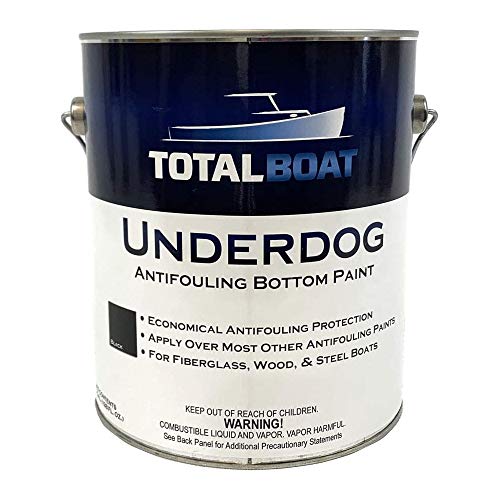
Best for boats that see frequent use in saltwater. Underdog provides economical one-season protection with copper biocide to deter barnacles and mussels. It’s suitable for fiberglass, wood, steel, and iron hulls and delivers a durable finish that withstands trailering and beaching better than some traditional ablatives. The coating wears away during the season, reducing buildup for easier next-season prep. Best for sailboats, power boats, and work boats that operate actively.
Who it’s for: frequent saltwater users and boats that launch and re-launch often. It’s the better option when you want economical annual antifouling with minimal maintenance. Caution: ablative wear means you’ll need to recoat after a season of heavy use.
TotalBoat JD Select Ablative Antifouling Bottom Paint (Quart)

This option uses a self-polishing, ablative film that wears away as the boat moves, reducing buildup and enabling easier repainting next season. It’s compatible with fiberglass, wood, and steel in both salt and fresh water. The low-odor, low-VOC formulation cleans up with soap and water, making it suitable for marinas and restricted environments. It is best for boaters seeking a balance of protection, environmental friendliness, and ease of maintenance.
Who it’s for: boaters seeking a low-toxicity, easy-cleanup antifouling with less sanding next season. Choose this if you value environmental considerations and straightforward re-coating. Caution: ensure proper surface preps and follow local marina rules on coatings during application.
TotalBoat JD Select Ablative Antifouling Bottom Paint (Black, Gallon)

Similar to the quart version, this gallon option supports larger vessels or those needing extended coverage across longer seasons. It remains an ablative, self-polishing coating that wears away with water movement, minimizing paint buildup and simplifying next-season prep. It’s ideal for fiberglass, wood, and steel, in mixed water environments. The lower odor and VOCs support marinas with stricter environmental requirements.
Who it’s for: larger boats or users who want more gallons on hand for multiple seasons. Better for long seasons and frequent launches. Caution: heavier gallons require proper ventilation during application and complete surface drying before launching.
TotalBoat Outdrive AF Aerosol For Underwater Metals (Black, 12 oz.)

Designed to inhibit corrosion on underwater metals such as propellers, outdrives, shafts, and trim tabs. Contains zinc pyrithione to keep metal surfaces smooth in service. The fast-drying formula can deliver protective layers quickly, with at least two coats recommended for single-season protection. This aerosol is best for narrow or intricate metal surfaces that are difficult to coat with traditional brushes.
Who it’s for: boaters needing targeted, quick-drying protection for underwater metals. Better for maintenance on metal components; avoid using on hull surfaces not designed for metal coatings. Caution: ensure you apply in well-ventilated areas and avoid spraying near fuel sources.
Interlux Trilux 33 Aerosol Antifouling Paint (Gray, 16 oz.)
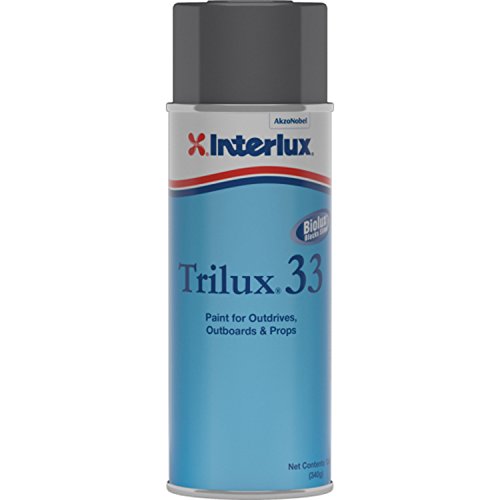
Interlux Trilux 33 is a best-in-class aerosol antifouling option for a range of hulls. The gray finish and aerosol form make it a convenient choice for spot repairs or smaller vessels. Its formulation is designed to resist barnacles and growth under typical boat-use conditions, supporting smoother operation and reduced drag.
Who it’s for: sailors and boat owners who want a reliable aerosol antifouling option for quick touch-ups and smaller projects. Caution: aerosols may require multiple light coats for full-season protection and careful masking of surrounding surfaces.
Buying Guide: Key Considerations For Choosing Marine Antifouling Paint
- Hull material compatibility: Verify that the antifouling paint is rated for fiberglass, wood, steel, or iron as needed for your boat.
- Ablative vs. conventional: Ablative coatings wear away as you move, reducing buildup and sanding; traditional products may last longer but require more maintenance.
- Water type and use: Saltwater use and frequent launches favor ablatives with robust single-season protection; freshwater or light-use boats might benefit from low-toxicity, easy-cleanup formulas.
- Environmental and marina requirements: Low-VOC and low-toxicity options are preferred where environmental restrictions apply.
- Recoat and launch timing: Some products have no maximum dry time; others require careful timing before launch. Plan recoat intervals based on season length and use.
- Application method: Aerosol options are convenient for small areas and repairs; brush-and-roll formats provide broader coverage for larger hulls.
- Maintenance considerations: Ablative coatings reduce buildup and sanding but may need reapplication every season for heavy use.
- Safety and handling: Follow surface preparation guidelines, ensure proper ventilation, and wear protective gear during application.
Frequently Asked Questions
- What is the main difference between ablative and non-ablative antifouling paints?
– Ablative paints wear away with water movement, reducing buildup and simplifying next-season prep. Non-ablative paints remain until mechanically removed. - Which product is best for frequent saltwater boating?
– Products labeled as ablative, like TotalBoat Underdog and TotalBoat JD Select Ablative, are well-suited for frequent saltwater use. - Can I use antifouling paint in a marina with strict environmental rules?
– Yes, choose low-VOC and low-toxicity formulations, such as some JD Select and similar options, to comply with environmental restrictions. - Is aerosol antifouling paint effective for a full season?
– Aerosol options like Interlux Trilux 33 can work for smaller projects or spot repairs; larger hulls typically require brushed coatings. - Do I need multiple coats for single-season protection?
– Many products recommend at least two coats for optimum protection, especially on exposed or heavily used hulls. - What is the best choice for underwater metals protection?
– The TotalBoat Outdrive AF Aerosol provides targeted protection for propellers, shafts, and other underwater metal surfaces.