Best 18HP Outboard Motors for Small Boats and Kayaks: A Practical Buying Guide
Answering the question: if you need reliable propulsion for a small boat or a kayak with extra load, an 18HP two-stroke outboard motor is a strong option. This guide highlights five solid 18HP models, suitable for inflatable boats, fishing dinghies, and shallow-water craft. Each pick targets different needs—speed, ease of use, or durability—so you can choose based on gear, typical water conditions, and maintenance willingness. Below, you’ll find quick comparisons, product highlights, and a buying guide to help you decide.
| Product | Best For | Key Benefit | Notable Limitation |
|---|---|---|---|
| LIWBYYG 2 Stroke 18HP | Speed seekers | High power, 5500 RPM top speed | Two-stroke requires mix and maintenance |
| NAZEAOB 18HP 2 Stroke | Heavy loads | Strong load capacity up to 2,204 lbs | Short shaft may limit on larger transoms |
| DUIBAII 18HP HangKai | Balanced efficiency | Efficient carburetor, 6.34 gal tank | Fuel economy varies by load |
| BJTDLLX Short Shaft 18HP | Compact boats | Short shaft design with CDI ignition | Short shaft limits for deeper transoms |
| CNCEST 18HP 2Stroke | All-around reliability | Strong acceleration and reliable cooling | General spec listings; may vary by kit |
LIWBYYG 18HP Outboard Motor

Features: A lightweight aluminum alloy body with spray-painted finish offers heat and impact resistance. Water cooling and a CDI ignition system enable reliable starts and steady operation. Large muffler helps keep noise around 80 decibels for clearer water awareness. Maximum output 18 HP at 5500 RPM with an 8-inch three-blade propeller to reduce water resistance.
Best for: Boat owners prioritizing speed and strong propulsion on smaller craft. This model is suited for anglers or speed-focused sailors who operate in calm to moderate-water conditions. Caution: Two-stroke engines require proper fuel mixing and maintenance to avoid excessive wear over time.
NAZEAOB 18HP 2 Stroke Outboard

Features: A 246CC engine with CDI ignition and water cooling delivers robust power and reliable starting. The heavy-duty aluminum alloy housing resists corrosion and deformation. Maximum load capacity up to 2,204 pounds, which is useful for carrying gear or multiple passengers on smaller vessels.
Best for: Heavier loads or gear-heavy trips on inflatable or compact boats. Choose this if you want higher payload capability without sacrificing performance. Caution: Heavier overall weight may affect draft and maneuverability on ultra-small crafts.
DUIBAII 18HP HangKai Outboard

Features: Lightweight aluminum alloy construction with spray painting for wear and weather resistance. 18 HP output at 5500 RPM with an 8-inch, three-blade propeller. A fuel-efficient carburetor and a 6.34-gallon external fuel tank support longer operation between fills.
Best for: Sailors who want a balance of speed and range, with a focus on fuel economy and easy handling. Caution: Keep an eye on fuel consumption if running at high speeds under heavy load.
BJTDLLX 18HP Short Shaft

Features: Short shaft, 246CC two-stroke engine with CDI ignition and water cooling. Front-mounted tiller control and a practical FNR gear setup (Forward-Neutral-Reverse). Large fuel tank capacity, designed for easy installation and reliable performance on small craft.
Best for: Small boats or dinghies where a shorter shaft and compact layout matter. Choose this if you frequently operate in tight spaces or shallow environments. Caution: Short shaft may not be ideal for deeper transoms; verify transom height before purchase.
TdiriNar 12HP Short Shaft (for context)
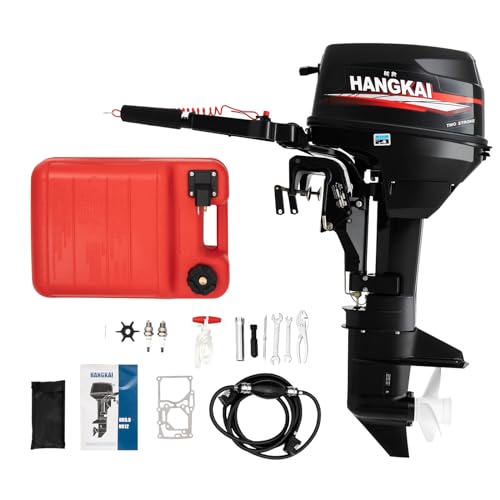
Note: Although this entry is a 12HP model, it is listed here for quick comparison of short-shaft designs and CDI ignition features. It demonstrates typical configurations you might encounter when evaluating 18HP options for smaller vessels.
CNCEST 18HP 2Stroke Outboard

Features: 2-stroke engine design with water cooling and a CDI ignition system. Short shaft design enhances maneuverability on smaller boats, with a focus on high-speed performance and reliable cooling to prevent overheating under load.
Best for: Sailors seeking robust acceleration and straightforward maintenance on compact vessels. Caution: The CNCEST listing emphasizes performance but may vary by kit contents; confirm included components before ordering.
Buying Guide
What to consider when choosing an 18HP outboard
- Boat type and transom height: Short shaft vs long shaft impacts compatibility with your boat’s transom.
- Weight and balance: Heavier motors affect the boat’s trim and fuel economy; ensure a proper match with payload and ballast.
- Fuel system and efficiency: Two-stroke engines are common in this class, but fuel efficiency and oil mixing requirements vary by model.
- Cooling and reliability: Water cooling reduces overheating; check cooling capacity for sustained high-speed operation.
- Ignition and starting: CDI ignition improves starting reliability; verify accessibility of starter and tilting mechanisms.
Operational considerations
- Installation: Look for a model with a straightforward mount and adequate propeller choice for your boat size.
- Maintenance: Two-stroke engines require regular oil mixing and prompt spark plug checks; plan for routine service.
- Fuel range: Larger external fuel tanks extend operation time, beneficial for long trips or anchor-to-spot fishing.
- Noise and vibration: Mufflers and isolation features contribute to a quieter ride, useful for sensitive waters or camping days.
Who should buy which model?
- Best overall versatility: CNCEST or NAZEAOB for balanced power and reliable cooling.
- Best for speed lovers: LIWBYYG for top RPM and propeller efficiency.
- Best for payload-heavy days: NAZEAOB with its higher load capacity.
- Best for compact boats: BJTDLLX short shaft and DUIBAII HangKai for tight spaces and fuel efficiency.
Quick FAQ
- What is the typical lifespan of an 18HP two-stroke outboard? Short- to mid-term durability depends on maintenance and operating conditions; regular service is essential.
- Are two-stroke 18HP motors fuel-efficient? They can be efficient with proper carburetor tuning and capable fuel tanks, but consumption varies with load and speed.
- Do these motors work well in saltwater? Yes, with proper corrosion protection and rinsing after use; check aluminum alloy protection and anodes where applicable.
- Is a longer shaft better for choppy water? Longer shafts offer more clearance and reduce cavitation in some setups, but require a compatible transom height.
- Can I install these myself? Many models are designed for straightforward tiller mounting, but follow the manufacturer’s installation guidelines and local regulations.
- Which model is best for inflatables? Models with compact weight and reliable CDI ignition are favorable; ensure propeller compatibility with inflatable hulls.