Best Epoxy Paint for Fiberglass Boats: Top Coatings and Kits for Strong, Lasting Finish
Finding the right epoxy-based paint or coating for a fiberglass boat starts with matching the product’s performance to your boat’s location and use. This guide highlights five top options that are well-suited for fiberglass hulls, decks, bilges, and related areas. The selected products balance durability, ease of application, and resistance to sun, water, and chemicals. They’re ideal for boat owners who want a seaworthy, low-maintenance finish that lasts multiple seasons. Below, you’ll find a quick comparison table, followed by detailed product sections and a buying guide to help you choose confidently.
| Product | Best For | Typical Use |
|---|---|---|
| TotalBoat Wet Edge Topside Marine Paint | Above-waterline topsides and trim on fiberglass | Coating for hulls, decks, doors, and trim |
| TotalBoat TotalTread Non-Skid Deck Paint | Non-slip decks and high-traction surfaces | Boat decks, docks, cabin soles, steps |
| TotalBoat TotalBilge Epoxy Bilge Paint | Bilges, engine rooms, and lockers | Waterproof bilge and bulkhead protection |
| TotalBoat Marine Topside Boat Paint Primer | Primer for topside paints on fiberglass and wood | Undercoat for 1-part and 2-part coatings above waterline |
| Globalcom Fiberglass Boat Repair Kit | Fiberglass repair and gel coat touch-ups | Repair holes, cracks, and chips |
TotalBoat Wet Edge Topside Marine Paint

TotalBoat Wet Edge Topside is a durable, high-gloss, chemical-resistant marine paint designed for above-waterline surfaces on fiberglass, metal, wood, and more. It offers easy application with either a brush/roller or spray and is formulated to resist fading, cracking, and peeling. This product is best for boaters seeking a single-coat aesthetic with strong color and gloss retention for hulls, trim, and exterior areas exposed to sun and salt. A key limitation is its intended use above the waterline only, so scenarios requiring below-waterline protection require a different coating or primer system.
Who it’s best for: Boat owners who want a versatile, long-lasting topside finish that reduces maintenance while delivering a showroom gloss. Also suitable for RV exteriors and exterior trim on fiberglass or metal surfaces.
TotalBoat TotalTread Non-Skid Deck Paint

TotalTread provides a textured, low-glare, high-traction surface ideal for decks and other high-traffic areas. This polyurethane-based coating resists fading and peeling, and it’s easy to clean without wearing away the finish. It’s well-suited for fiberglass decks, docks, cabin soles, and stairs where secure footing is essential. A limitation to note: the texture may be more abrasive for some footwear; testing on a small area first is advised to ensure the texture level meets your preference.
Who it’s best for: Boat owners prioritizing non-slip performance on decks and other above-water surfaces where maintenance ease and long-term aesthetics matter.
TotalBoat TotalBilge Epoxy Based Bilge Paint

This tough, waterproof bilge paint is designed for areas such as bilges, engine rooms, lazarettes, lockers, and bulkheads. The epoxy coating resists chemicals, oils, alkyds, and solvents, helping to protect and brighten spaces so leaks and problems are easier to detect. It’s best for fiberglass and metal surfaces, applied in 1–2 coats with brushing, rolling, or spraying. A caveat: proper surface preparation is essential for best adhesion and coverage.
Who it’s best for: Boat managers wanting a robust bilge coating that tolerates harsh marine chemicals while maintaining a clean, light-colored space for visibility.
TotalBoat Marine Topside Primer for Fiberglass and Wood
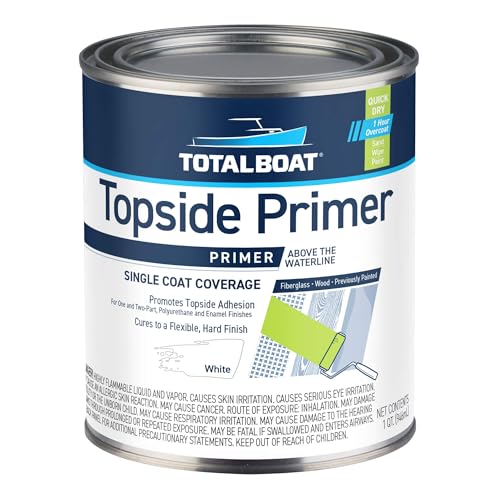
This one-part marine primer provides a durable, flexible undercoat for 1-part and 2-part polyurethane and enamel topside paints. It’s intended for use above the waterline on fiberglass, wood, gelcoat, and surfaces in good condition. The primer seals the surface with a single coat, and a second coat can be applied if more build is needed. It’s chromate-free and lead-free, and compatible with common topside coatings after proper surface prep. A limitation is that heavy imperfections may require corrective fairing prior to priming.
Who it’s best for: Builders and boat owners who want a reliable undercoat that improves adhesion and smooths the path to a durable topside finish on fiberglass or wood.
Globalcom Fiberglass Boat Repair Kit

This multifunctional fiberglass repair kit uses epoxy filler to fix chips, cracks, pits, gouges, scratches, and holes on boats and decks. It offers strong adhesion, UV resistance, and waterproof protection, helping restore the surface to close to its original condition. It’s suitable for vertical surfaces and works on various hard substrates. It is intended for above-waterline repairs. A potential limitation is curing time and the need for proper masking and sanding after application.
Buying Guide: Key Considerations For Epoxy Paint On Fiberglass
- Surface preparation: Proper cleaning, drying, and any required sanding are crucial for adhesion and long-term durability. Some products require priming on bare metal or fiberglass.
- Waterline location: Choose coatings formulated for above-waterline use for topsides, and use below-waterline products or primers where appropriate.
- UV resistance and gloss retention: For sun-exposed areas, prioritize UV-stable resins and color retention for a long-lasting finish.
- Non-slip requirements: If covering decks or high-traffic areas, non-slip textures like TotalTread provide safer footing but may affect appearance and handfeel.
- Ease of application: Some products offer one-part systems with brush/roller application, while others are primer-plus-topcoat systems requiring multiple layers and longer cure times.
- Environmental and safety considerations: Look for chromate-free, lead-free formulations and ensure proper ventilation during use.
- Repair compatibility: For damaged areas, a gel coat or epoxy repair kit may be needed in conjunction with paint for a seamless repair job.
Frequently Asked Questions
- What is the main difference between epoxy-based and polyurethane marine paints?
Epoxy provides superior adhesion and waterproofing, while polyurethane topside paints offer UV resistance and gloss retention. Many boaters use epoxy primers or fillers beneath a polyurethane topcoat for best results. - Can I use epoxy bilge paint on fiberglass decks?
Bilge paints are designed for areas in contact with water and oils. They can be used in protected sections of fiberglass if you follow surface preparation guidelines and ensure compatibility with the surrounding finish. - Do I need a primer before topside paint on fiberglass?
Yes, a dedicated marine primer improves adhesion and can help fill minor imperfections. Choose a primer compatible with your topcoat for best results. - Is a non-slip deck coating suitable for all boat decks?
Non-slip coatings are ideal for decks and wet surfaces but may affect comfort and appearance. Test a small area first to confirm texture and traction meet your needs. - How long does epoxy-based marine paint take to cure?
Cure times vary by product and environment. Follow the manufacturer’s instructions for temperature, humidity, and ventilation to achieve full cure before use. - Are these products safe for marine life and the environment?
Most modern marine coatings emphasize reduced volatile organic compounds and safer formulations. Always follow safety data sheets and local regulations when applying coatings near water.