Best Marine Shut-Off Switches for Boats and RVs
Find reliable marine shut-off switches that prevent battery drain and protect electrical systems. This guide highlights five dependable options, each best for specific setups like compact panels, heavy-duty environments, or side-post batteries. Ideal for boaters, RV owners, and anyone maintaining a DC electrical system on water or away from shore power.
| Product | Best For | Key Benefit |
|---|---|---|
| Blue Sea Systems m-Series 6006 | Small panels and tight spaces | Removable knob prevents accidental current |
| Nilight 90015A | Heavy-duty, versatile DC systems | High current ratings and robust build |
| Gioyonil 12-48V Master | Universal DC isolations | Wide compatibility and sturdy ABS housing |
| FASTSTORM 300A | Extreme conditions and high cranking needs | IP66 waterproof, ignition-protected |
| Joinfworld Side Post 12-48V | Side-post batteries and space-saving installs | M10 studs, copper sheet for conductivity |
Blue Sea Systems m-Series Battery Switch ON/OFF with Knob

Best for compact installations where space is at a premium. The m-Series design supports front, rear, or surface mounting, enabling flexible panel layouts. The removable knob helps prevent accidental current flow during service, improving safety in tight electrical bays. Suitable for boats or RVs with limited mounting options and modest DC loads.
Who it’s best for: boaters or RV owners with small panels or cramped electronics spaces. Why selected: its compact form factor and multiple mounting options make it easier to integrate into tight consoles or control boards. Caution: ensure the knob is removed only during maintenance, as some users rely on the knob for safety during servicing.
Nilight 90015A Battery Switch 12-48V

Best for heavy-duty DC systems requiring higher current handling. The Nilight switch features robust ABS housing and four bolt points for secure mounting, plus multiple current ratings suitable for DC 12-48V networks. It can stand alone or be paired with other switches, and its primary purpose is to eliminate battery drain when the vessel or vehicle is idle.
Who it’s best for: users needing a strong, standalone disconnect with high current capability. Why selected: its high continuous and intermittent ratings provide reliable protection for demanding electrical setups. Caution: verify compatibility with your cabling gauge due to high current demands and bolt sizing.
Gioyonil Battery Disconnect Switch Master
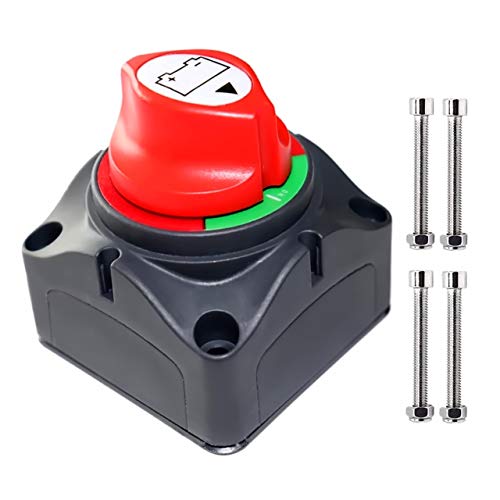
Choose this for universal 12-48V DC isolation needs across cars, vans, boats, and ATVs. It offers wide compatibility and a sturdy ABS housing with a rear cover that insulates terminals. The unit uses four removable side plates and tin-plated copper studs for corrosion resistance and reliable conductivity.
Who it’s best for: multi-vehicle owners or boaters needing a versatile, robust isolator. Why selected: the included copper conductive elements and strong casing improve safe operation under various conditions. Caution: ensure the 4 side plates do not impede clearance in crowded panel areas.
Joinfworld Side Post Battery Disconnect Switch

Best for side-post battery configurations where space is limited and quick installation matters. It provides 2×3/8″ studs and copper sheets for reliable conductivity, plus a rugged ABS housing. Its safety emphasis and strong terminals make it suitable for marine and RV rigs with compact layouts.
Who it’s best for: installers working with side-post batteries or constrained spaces. Why selected: improved electrical conductivity via copper sheets and robust mounting options. Caution: check stud sizing compatibility with your battery terminals to avoid fit issues.
Joinfworld Battery Disconnect Switch 12V-48V

Best for a balanced, all-around disconnect solution for 12-48V systems. The 275A continuous rating, 455A intermittent, and 1250A cranking specifications suit typical marine and vehicle needs while maintaining safety. ABS housing and a rear terminal shield protect against shorts during maintenance.
Buying Guide: How To Choose A Marine Shut-Off Switch
- Voltage compatibility: Most options cover 12V to 48V systems. Confirm your system voltage before selecting a model.
- Current rating: Match continuous, intermittent, and cranking ratings to your battery size and draw to prevent unexpected drain.
- Mounting and space: Consider panel depth, mounting options (surface, rear, front), and available enclosure space.
- Construction and materials: ABS housing provides durability; look for corrosion-resistant studs and copper conductors in marine environments.
- Safety features: Removable knobs or lockable configurations help reduce accidental switching during maintenance or storage.
- Compatibility with battery configurations: Side-post vs top-post, and whether the unit supports single or multiple batteries in parallel.
- Ease of installation: Some switches come with mounting brackets, side plates, and copper sheets for quick, safe connections.
Frequently Asked Questions
- What does a battery disconnect switch do?
A battery disconnect switch isolates the battery from the electrical system to stop current flow, preventing drain when not in use and protecting circuits during maintenance.
- Can I use a 12V switch on a 24V system?
No. Use a switch rated for your system’s voltage to ensure safe operation and proper current handling.
- Should I choose a waterproof switch for marine use?
Yes. A waterproof or IP-rated switch reduces the risk of shorts and corrosion in wet environments.
- What is a cranking rating?
The cranking rating indicates the maximum current the switch can handle briefly when starting an engine. Choose a rating that exceeds your starting draw.
- Are side-post battery switches easier to install?
They can be, especially when space is limited or existing side-post terminals are used. Check compatibility with your battery type.
- Is a safety knob important?
A removable knob helps prevent accidental disconnection during maintenance or cleaning, increasing safety.