Best Gas Tanks for Outboard Boat Motors: Durable, Portable Fuel Options
Answering the top buyer concern: select a portable marine fuel tank that fits your outboard motor, matches your hose connections, and resists sun and salt spray. This guide highlights five reliable options ideal for fishing boats, deck boats, and small sail–powered craft. Each product section explains who it’s best for, why it’s selected, and any practical limitations. A concise buying guide follows to help you compare capacity, compatibility, and features at a glance.
| Product | Capacity | Best For | Why It Stands Out |
|---|---|---|---|
| VEVOR Marine Tank (14.53 Gal) | 14.53 gal | Extended trips, larger boats | High capacity, visible gauge, durable HDPE |
| VEVOR Marine Tank (6.34 Gal) | 6.34 gal | Compact spaces, smaller boats | Compact, long hose, clear inlet/outlet |
| VEVOR Boat Fuel Tank (3.17 Gal) | 3.17 gal | Under-seat storage, lightweight needs | Lightweight, molded handle, strong HDPE |
| PeakPursuit 3 Gal Marine Tank | 3 gal | Traveling crews, emergency spare | I-shaped handle, fuel level indicator |
| Scepter 6 Gallon Portable Tank | 6 gal | Under-seat storage, versatile fuels | Integrated gauge, vented cap, EPA/CARB |
VEVOR Marine Tank 14.53 Gal with Gauge

Best for: small to mid-size boats on longer trips where fuel planning matters. Why selected: high capacity (55 L / 14.53 US gal) and a visible gauge help monitor fuel levels, with a long 9.8 ft hose for flexible reach. The tank is built from high-density polyethylene and includes a two-way vent-cap design for controlled pressure. Consideration: avoid prolonged direct sun exposure to minimize aging and expansion risks.
VEVOR Marine Tank 6.34 Gal with Gauge

Best for: deck boats and fishing vessels with limited storage. Why selected: 6.34 gal capacity pairs with a long 9.8 ft hose and a clear gauge, aiding quick refills and monitoring. Built from durable HDPE to resist aging and impact. Limitation: avoid long sun exposure to prevent aging and expansion.
VEVOR Boat Fuel Tank 3.17 Gal

Best for: spaces where portability is essential, such as under-seat storage. Why selected: 3.17 gal capacity with 9.8 ft hose and integrated gauge; compact design fits small boats and inflatables. Caution: use away from direct sunlight to reduce aging and expansion risk.
AloneGoer 3 Gallon Portable Gas Tank
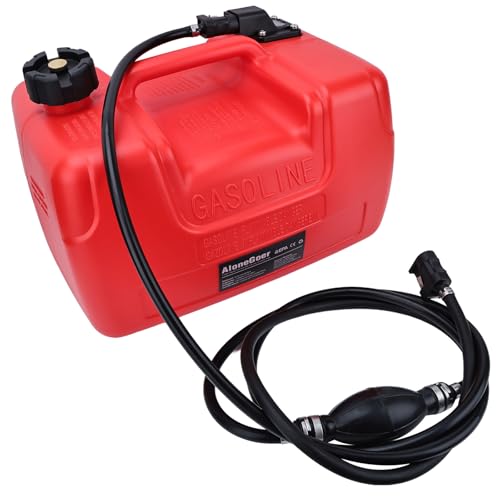
Best for: Yamaha outboard motors and as a compact spare fuel source. Why selected: 12 L capacity designed for Yamaha connectors and multi-layer barrier technology to reduce fuel permeation and evaporation. It’s corrosion-resistant for salt spray environments. Limitation: ensure compatibility with your exact connector model to avoid fit issues.
PeakPursuit Marine Tank, 3 Gal

Best for: carrying a portable backup supply for short trips. Why selected: 12 L capacity, with a convenient I-shaped handle and a clear fuel level indicator. The integrated fuel tank air inlet filter helps maintain clean fuel for engine performance. Caution: verify hose compatibility with your motor’s fuel fittings.
Scepter 6 Gallon Portable Tank

Best for: under-seat storage on boats needing a versatile fuel can. Why selected: 6-gallon capacity with a built-in fuel gauge and a 2-way vented cap to prevent vapor buildup. EPA and CARB compliant design supports use with various fuels and ensures safer handling. Limitation: separate fuel line must be sourced if you want a full refuel setup.
Buying Guide
What capacity should you choose? Consider typical trip length, boat size, and available storage. Larger tanks (like 14.53 gal) reduce refueling frequency but require more space and weight management, while 3–6 gal tanks fit under seats for smaller craft.
Which hose and connector matter? Look for tanks with 9.8 ft (3 m) hoses and compatible connectors (Yamaha-compatible ports or universal fits). A longer hose improves reach, but ensure hoses are fuel-rated and not prone to kinking.
Why is a gauge important? A clear fuel level indicator helps prevent running dry and enables better trip planning. Some tanks also include a built-in filter for cleaner fuel and an air inlet design that reduces vapor during fueling.
Material and durability? High-density polyethylene (HDPE) tanks resist aging, impacts, and corrosion. UV exposure can age plastics; store tanks away from direct sun when possible and avoid prolonged exposure to prevent expansion.
Ventilation and safety features? Vented caps prevent dangerous vapor buildup while allowing fuel to breathe. Look for two-way venting options and secure seals to reduce leaks and odors on board.
Portability vs. permanence? If you need to move the tank often, choose molded handles and a compact shape. For larger boats, a bigger tank with a robust gauge helps with long trips and steady fuel flow.
Compatibility notes? Some tanks advertise Yamaha-specific connectors. If your outboard motor uses a different interface, verify compatibility before purchase to avoid misfit hoses and fittings.
FAQ
- How do I know which tank size to buy for my outboard motor?
– Match capacity to typical voyage length, boat size, and storage space. Larger tanks reduce refueling stops but require more space and weight management. - Are these tanks safe to use with ethanol-blended fuels?
– Many portable tanks are designed for common marine fuels, but always check the product details for ethanol compatibility and CARB/EPA compliance where applicable. - Do all tanks come with hoses and gauges?
– Several include hoses and built-in gauges, but verify each listing to confirm accessories and compatibility with your motor’s fittings. - What maintenance is needed for these tanks?
– Inspect seals and vents, keep the gauge readable, avoid prolonged sun exposure, and store in a cool, shaded area to extend life. - Can I use a tank with a different brand hose than the motor requires?
– Ensure hose inner diameter and thread/connectors match your motor’s intake. If unsure, consult the manufacturer’s compatibility notes. - Is a built-in fuel gauge essential?
– It helps monitor fuel levels at a glance, especially for longer trips. If a gauge isn’t available, plan refueling by time or trip distance.