Best Electric Kayak Motors for Easy, Quiet Paddling
Answering your search for a reliable motor for a kayak, this guide showcases five top options that fit American waterways and optimize propulsion with electric power. Each pick targets a different need—from compact kayak-specific shafts to higher thrust for larger setups. This overview helps anglers and recreational paddlers choose the right motor based on boat size, water conditions, and battery considerations.
Summary of selected products
- Minn Kota Endura C2 Transom-Mount Electric Trolling Motor – 30 Lb. Thrust
- Newport NV-Series 55lb Thrust Saltwater Transom Mounted Trolling Motor
- Newport Kayak Series 55lb Thrust Transom Mounted Saltwater Electric Trolling Motor
- Newport NV-Series 36lb Thrust Trolling Motor 12V Saltwater Transom Mount
- Newport NK300 Electric Kayak Motor – 3HP Equivalent, 36V
Minn Kota Endura C2 Transom-Mount Motor
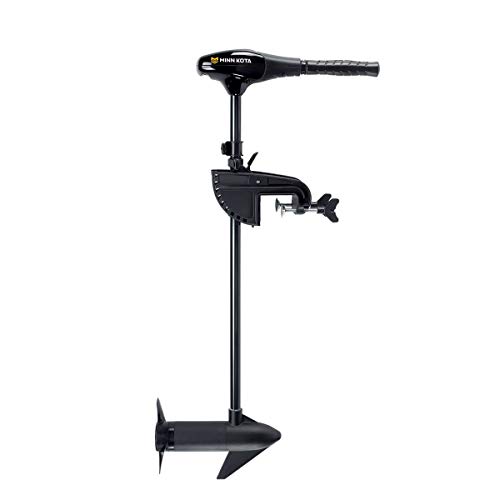
Best for anglers who want a simple, dependable transom-mount option with easy tilt and depth control. The 30 Lb thrust suits lightweight kayaks and smaller craft. This model includes a Telescoping Tiller for comfortable handling and a 10-Position Lever Lock Bracket for quick angle adjustments, making it ideal for calm lakes and rivers with light vegetation.
Who this is best for: paddlers prioritizing straightforward installation, predictable performance, and easy stopping power on small or mid-weight kayaks. Why selected: the Endura C2’s robust, UV-resistant build and power prop designed for thick cover help you push through weeded zones without frequent adjustments. Caution: in deep-sea or heavy-current conditions, its lower thrust may limit performance on larger boats.
Newport NV-Series 55lb Thrust Saltwater Transom Motor

Best for larger kayaks and boats where strong thrust and endurance matter. This 55Lb model provides robust power for saltwater use with a 30-inch shaft, LED battery meter, and a 6-inch telescoping tiller. Eight speeds (five forward, three reverse) give versatile control, and corrosion-resistant hardware suits marine conditions.
Who this is best for: saltwater anglers and heavier kayaks needing sustained performance. Why selected: it balances high thrust with practical shaft length and easy adjustability. Caution: heavy weight and price may be higher than lighter-duty options.
Newport Kayak Series 55lb Thrust Transom Motor
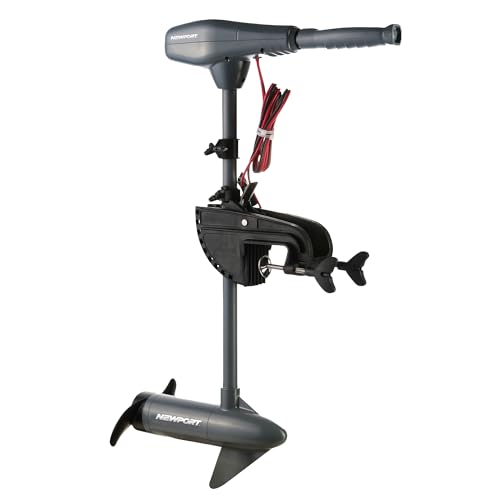
Best for kayaks that require strong propulsion with a reliable 24-inch shaft for flexible depth placement. This model uses an all-aluminum motor head and corrosion-resistant hardware, making it suitable for both saltwater and freshwater use. It features eight speeds and a six-inch tiller handle for precise maneuvering.
Who this is best for: paddlers needing high thrust with a compact shaft for variable depth control. Why selected: you get solid saltwater durability alongside easy speed control. Caution: some users might prefer a longer shaft for deeper water depending on hull draft.
Newport NV-Series 36lb Thrust Trolling Motor
Better for lightweight kayaks and paddlers who want reliable, quiet operation with efficient power use. This model offers a 30″ shaft, LED battery indicator, and a corrosion-resistant motor head, making it suitable for both freshwater and saltwater environments. It’s designed for smaller boats or those prioritizing battery life.
Who this is best for: budget-conscious paddlers and smaller kayaks needing dependable, low-thrust propulsion. Why selected: balanced weight and performance with durable construction. Caution: lower thrust could limit speed in windy or choppy water conditions.
Newport NK300 Electric Kayak Motor

Best for serious kayak anglers seeking high-end electric propulsion with long-range and quiet operation. The NK300 delivers 1300W (3HP equivalent) and up to 66 miles of range on a 36V setup, with lightweight design at 25.5 pounds. It’s designed to maximize run time and efficiency for extended trips.
Who this is best for: anglers targeting distant hotspots or extended trips where range matters most. Why selected: high power with long-range efficiency suited for bigger or faster kayaks. Caution: higher weight and cost compared to smaller universal motors.
Buying Guide
- What shaft length do I need? Consider kayak depth and where the propeller sits relative to hull. Longer shafts (30-36 inches) suit deeper water and larger kayaks, while shorter shafts are easier to manage on small boats.
- How much thrust is appropriate? Lighter kayaks do well with 30-36 lb thrust; larger or windier conditions benefit from 55 lb or more. Choose thrust based on boat weight, load, and typical water conditions.
- Should I choose saltwater-rated units? If you fish or boat in saltwater, pick models with corrosion-resistant hardware to extend life. Freshwater models can be lighter and less expensive.
- What about battery and runtime? Higher thrust motors often consume more power. Look for battery meters and consider long-range models if you need extended run times between charges.
- Is motor weight a concern? Heavier motors can affect handling and mounting options. Verify your kayak’s transom strength and balance before purchase.
FAQ
- What is the typical lifespan of an electric kayak motor?
Answer: Lifespan depends on usage, maintenance, and water exposure; regular cleaning and storage in dry conditions help extend life. - Can I use a standard trolling motor on a kayak?
Answer: Yes, many trolling motors are designed for kayaks, but ensure shaft length and mounting fit your hull and weight capacity. - How do I choose the right thrust for my kayak?
Answer: Match thrust to boat weight, load, and water conditions. Heavier setups or windy conditions benefit from higher thrust. - Are saltwater motors necessary for coastal kayaking?
Answer: Saltwater-rated hardware reduces corrosion risk when paddling in brackish or marine environments. - What maintenance is needed for electric kayak motors?
Answer: Clean the prop and shaft, check mounting hardware, and store away from moisture when not in use. - Do electric kayak motors require special batteries?
Answer: Most use 12V to 36V systems; verify compatibility with your battery type and charging setup.