Best Marine Refrigerators and Freezers for Small Boats and RVs
Answer: For marine and off-grid use, compact, voltage-flexible refrigerators and freezers with durable builds and convertible or dual-zone options are ideal. This guide compares five models that fit tight spaces on boats, yachts, RVs, and cabins, focusing on compact footprints, 12V or dual-voltage operation, and adaptable cooling zones. Best choices suit boaters needing reliable cold storage, RV travelers seeking off-grid capability, and small-space dwellers who want flexible freezer and refrigerator combos. The following table highlights the featured products and their key strengths at a glance.
| Product | Best For | Key Benefit |
|---|---|---|
| Upstreman 7.7 Cu.Ft. Refrigerator with Freezer | Small apartments, offices, dorms | Large capacity with separate, adjustable freezer and low-noise operation |
| Pemberly Row Compact RV-Marine-Offgrid Refrigerator-Freezer | Compact marine and RV interiors | Convertible fridge/freezer with built-in design for tight spaces |
| CIGREEN 12 Volt RV Refrigerator | Outdoor activities, camping, small boats | DC compressor, 12V/24V compatibility, sleek look |
| Equator Compact RV-Marine-Offgrid Convertible Refrigerator-Freezer | Marine and RV interiors | Convertible design with space-saving, flush mount fit |
| SUDEG DC 12-24V Car Refrigeration Fridge Freezer | Off-road, boating, mobile use | Dual voltage control and practical temperature range |
Upstreman 7.7 Cu.Ft. Refrigerator with Freezer
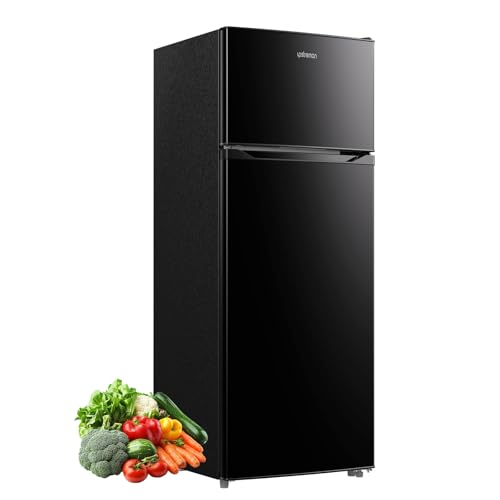
Features: 7.7 cu. ft. total capacity with a 1.5 cu. ft. freezer and a 6.2 cu. ft. refrigerator; temperature range 28.4°F to 48.2°F for the fresh zone; freezer from -9.4°F to 14°F; five adjustable settings; quiet operation at 39dB; energy cost around $0.12 per day.
Best for: small apartments, offices, or dorms needing a high-capacity fridge-freezer in a compact footprint. Why selected: Combines ample storage with a relatively quiet profile and a wide fresh-food temperature range for daily use on boats or cabins with power reliability.
Caution: As a stand-alone unit, ensure your space allows for the door swing and proper ventilation; verify shore power compatibility for long cruises.
Pemberly Row Compact RV-Marine-Offgrid Refrigerator-Freezer

Features: 1.6 cu ft capacity; built-in design; convertible from freezer to refrigerator; recessed handle for a sleek look; quiet operation at 42 dB; energy-efficient cooling.
Best for: boaters and RV owners who need a discrete, space-saving unit with flexible freezer/refrigerator functions in limited areas. Why selected: Its compact footprint and flush mount design minimize bulk in tight cabins or any marine installation.
Caution: The small capacity may require more frequent shopping for larger families or long trips; plan storage accordingly.
CIGREEN 12 Volt RV Refrigerator with Freezer

Features: 12V DC compressor; temperature range from 10.4℉ to 50℉ (-12℃ to 10℃); metal precoating; sleek black exterior; suitable for campers, RVs, dorms, and small offices.
Best for: outdoor enthusiasts and small-space habitats needing reliable 12V cooling on the move. Why selected: The DC compressor design supports camping and sailing needs where shore power may be unavailable.
Caution: Cooling performance can depend on vehicle movement; ensure proper mounting to avoid vibration transfer in rough seas or rough roads.
Equator Compact RV-Marine-Offgrid Convertible Refrigerator-Freezer

Features: Built-in design; convertible from freezer to refrigerator; space-saving, flush mount with recessed handle for small spaces.
Best for: small boats and RVs where convertible storage is a priority. Why selected: The convertible design offers flexibility for varying travel needs, minimizing the number of appliances aboard.
Caution: Conversion operation should consider door clearance and any weight distribution on a marine deck or RV cabinet.
SUDEG DC 12-24V Car Refrigeration Fridge Freezer

Features: Dual voltage controller; 12V/24V adaptability; practical temperature control and quiet operation; designed for marine, RV, and mobile use.
Best for: off-road trips, boating, and mobile adventures requiring reliable dual-voltage operation and stable temperature control. Why selected: The dual-voltage flexibility supports diverse power setups and ensures compatibility with many marine and RV electrical systems.
Caution: Controller and wiring must be properly installed to avoid voltage fluctuations that could affect cooling performance.
Buying Guide
What should you consider when choosing a marine refrigerator or freezer?
- Power source and compatibility: Prefer models with 12V or dual-voltage (12V/24V) operation for boats and RVs. Check shore power compatibility and any required electrical setup.
- Size and footprint: Measure the installation area for width, depth, and height; marine applications often need compact footprints and flush mounting.
- Temperature controls: Look for adjustable settings and clear temperature ranges for both fridge and freezer sections, including convertible options.
- Noise and energy consumption: Quieter units with lower energy use are preferable for living spaces and cabins.
- Storage configuration: Separate freezer capacity and adjustable shelves help organize diverse items while cruising or camping.
- Durability and mounting: Recessed handles and robust build support long-term marine or RV use; plan secure mounting to reduce vibration.
Frequently Asked Questions
- What is the best refrigerator size for a small boat?
A compact to mid-size refrigerator with a separate freezer (roughly 1.5–6.2 cu ft fridge and 0.5–2 cu ft freezer) often fits tight cabins well. - Are dual-voltage units necessary for marine use?
These provide flexibility on boats with varying power setups and can run on both 12V and 24V systems. - Can these fridges operate without shore power?
Yes, many are designed for off-grid use with DC compressors, but performance depends on battery capacity and charging. - Is convertible fridge-freezer better than two separate units?
Convertible units save space and simplify installation in very small spaces, though two units can offer independent temperature control. - What maintenance is required for marine refrigerators?
Regular cleaning, door seal checks, and ensuring proper ventilation help maintain efficiency and prevent ice buildup.