Best Gauges for Pontoon Boat: Clear Readouts for Safe, Efficient Cruises
If you’re outfitting a pontoon boat, choose a multi-gauge set that provides GPS speed, RPM, engine temps, and fuel status in one clean panel. The right package helps you monitor performance and fuel economy while cruising. This guide highlights five reliable gauge kits and explains who each is best for, plus practical buying tips for pontoon boats.
Summary table of selected products
| Product | Best For | Key Benefit | Notes |
|---|---|---|---|
| MH 6 AUTO Boat Gauge Set | All-around use; sensor-included package | GPS speed, temp, oil, fuel, volt with built-in alarms | 8–16 V system; alarms warn on thresholds |
| MH 7 Boat Gauge Set | Full 7-gauge suite for larger dashboards | Includes trim gauge; robust alarm features | Wide measurement range; requires space |
| MOTOR METER RACING W PRO Series | Truck, car, and boat versatility | High-contrast white dial, red LED; multi-application | 12 V negative ground |
| ARTILAURA 6 Gauge Set | Compact, budget-friendly package | Six essential gauges; clear 3 3/8″ and 2-1/16″ sizes | Integrated sensors |
| Universal 6 Gauge Kit | Durable, weather-ready kit for multiple models | All sensors included; stainless build | Suitable for marine and other vehicles |
MH 6 AUTO Boat Gauge Set
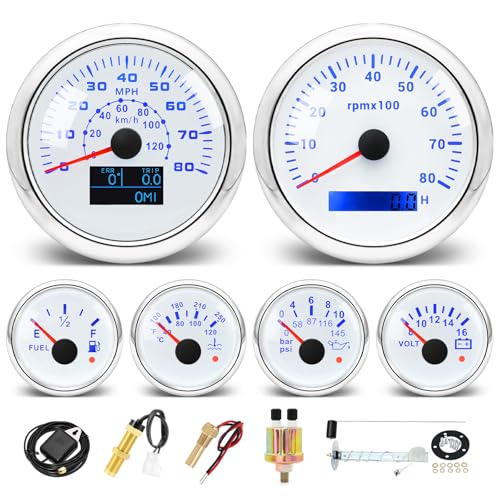
What it includes: a six-gauge set with GPS speedometer (80 MPH / 120 KMH), tachometer, oil pressure, fuel level, water temperature, and voltmeter. It ships with all sensors: tachometer sender, oil pressure sender, fuel level sender, water temperature sender, and a GPS antenna. It also provides warning values for fuel, oil, water temp, and voltage to trigger an audible/visual alarm when thresholds are crossed.
Who it’s best for: boaters needing a complete, ready-to-install gauge cluster with integrated sensors and alarm alerts for safer operation. Better for pontoons with moderate-to-large dashboards that can accommodate a 3-3/8″ and 2-1/16″ gauge mix.
Why selected: its all-in-one sensor kit reduces installation complexity and provides explicit alarm thresholds to improve awareness while cruising or docking.
Caution: ensure your vessel’s electrical system (8–16 V) matches the kit’s requirements to avoid malfunction or alarm misfires.
MH 7 Boat Gauge Set

What it includes: a seven-gauge set featuring GPS speedometer, tachometer, oil pressure, fuel level, water temperature, voltmeter, and a trim gauge. All sensors are included, such as the tach sensor, oil pressure sender, fuel level sender, water temperature sender, and GPS antenna. It emphasizes warning values similar to the MH 6 series to alert for critical conditions.
Who it’s best for: owners who want a broader gauge panel (including a trim gauge) for larger pontoon dashboards or boats that require deeper monitoring of engine and fuel status.
Why selected: the additional trim gauge helps monitor engine reference points, and the package remains sensor-complete for easier installation.
Caution: the broader gauge footprint may require more dash space; verify panel cutouts before purchase.
MOTOR METER RACING W PRO Series

What it includes: a six-gauge kit with 85mm GPS speedometer and tachometer plus 52mm gauges for volt, fuel level, water temperature, and oil pressure. The design features a white dial with red LED accents for easy visibility in bright sun or at night.
Who it’s best for: shoppers seeking a high-contrast, durable gauge set that is suitable for cars, boats, and trucks, with a focus on readability under varying lighting conditions.
Why selected: the large GPS speedometer and tachometer pair is ideal for pontoon boats that require clear, quick readings while cruising.
Caution: it requires a 12-volt negative-ground electrical system; confirm compatibility with your vessel’s wiring before installation.
ARTILAURA 6 Gauge Set

What it includes: a six-gauge set including GPS speedometer, tachometer, fuel gauge, water temperature, volt, and oil pressure gauge. All necessary sensor accessories are included to monitor engine status in real time. Size configuration uses standard 85mm for GPS and tachometer and 52mm for the other gauges.
Who it’s best for: pontoon owners who want a compact, budget-friendly yet complete package with essential monitoring in a streamlined layout.
Why selected: a balanced mix of essential gauges with sensors included, offering practical coverage without overloading the dashboard.
Caution: ensure your dash has the space to accommodate both 3 3/8″ and 2-1/16″ gauge diameters.
Universal 6 Gauge Kit

What it includes: a six-gauge set with GPS speedometer, fuel level, water temperature, voltmeter, tachometer, and oil level gauge. The kit emphasizes a sturdy build with 304 stainless steel rims and a glass lens for durability in harsh marine conditions. Sensor accessories enable real-time monitoring of engine status.
Who it’s best for: boaters needing a robust, marine-grade gauge kit with long-lasting hardware and comprehensive sensor coverage.
Why selected: the stainless steel construction and integrated sensor kit make it suitable for frequent-use pontoons exposed to salt or spray.
Caution: verify the mounting pattern compatibility with your dash before purchase, as some gauges use different diameter housings.
Buying Guide: Key Considerations For Pontoon Gauges
What gauge types should I look for on a pontoon package?
Focus on GPS speedometer, tachometer, oil pressure, fuel level, water temperature, and voltmeter. A trim gauge is a plus if your boat has trim or tilt features. Ensure the set includes sensors for a clean, plug-and-play install.
Should I prioritize sensor-included sets?
Yes. Sets that include tach, oil, fuel, temperature sensors, and a GPS antenna reduce installation time and compatibility risks. Alarm thresholds are a bonus for early warning of engine issues or low fuel.
What dash space and gauge sizing matter?
Pontoons often have limited dash space. Check the gauge diameters: 3-3/8″ gauges pair with 52mm gauges (2-1/16″). Confirm cutout dimensions and layout to avoid crowding and ensure readability.
How important are alarms and warning thresholds?
Alarm features alert you to critical conditions such as low fuel, high engine temperature, or low oil pressure. If you cruise in remote areas, alarms can improve safety by prompting quick checks or stop-and-diagnose actions.
What materials and durability should I expect?
Look for gauges with weatherproof housings, stainless steel rims, glass lenses, and IP-rated seals. These features help withstand sun exposure, spray, and salt if you boat in coastal waters.
How do I choose between a compact 6-gauge kit and a larger 7-gauge set?
A 6-gauge kit covers essential readings in a compact dash. A 7-gauge set adds a trim gauge and extra sensors for more comprehensive monitoring. Choose based on dash space, budget, and the information you want at a glance.
Installation tips for pontoon boats
Plan the layout before installing. Route wiring cleanly, use weatherproof connectors, and ensure the GPS antenna has a clear sky view for accurate speed readings. Keep a spare fuse in your kit for quick replacements.
Maintenance and longevity considerations
Regularly check sensor connections, clean gauge lenses, and protect wiring from moisture. Replace worn gaskets and seals to prevent moisture intrusion and ensure consistent readings.
FAQ
- What gauge set is best for a small pontoon? A compact 6-gauge kit with essential readings is typically ideal for smaller dashboards and simpler setups.
- Do these kits work with older electrical systems? Most kits require a 12-volt negative-ground system; verify your boat’s electrical configuration before purchase.
- Are alarm indicators reliable for pontoon use? Alarms provide quick status alerts and can improve safety, especially in marinas or open water.
- Can I upgrade later if I need more gauges? Yes, many kits are modular or expandable with additional gauge plugs or sensors.
- How tough are these gauges in marine environments? Look for IP-rated, water-resistant housings with stainless steel or corrosion-resistant components for longevity.
- Is GPS speed accurate in inland waters? GPS speed is generally accurate on lakes and rivers, but reflections and signal loss can affect readings in dense cover or narrow channels.