Best Marine Fuel Tank Level Sensor Solutions for Boats and RVs
Answering the common question: which marine fuel tank level sensor is best for a boat, RV, or truck? This guide highlights five solid options that balance durability, accuracy, and ease of installation. Ideal buyers include boat owners upgrading old senders, RV travelers needing reliable fuel and water reads, and anyone replacing a corroded unit. Below you’ll find concise product insights, a quick comparison table, and practical buying guidance to help you choose with confidence.
| Product | Depth Range | Output | Best For | |
|---|---|---|---|---|
| RUPSE Fuel Sender Unit | 6.8″ (175mm) footprint | 8-color adjustable backlight; 8-level readout | Gas/diesel/water; stainless steel build for longevity | SAE 5-hole pattern required for mounting |
| CLLOMAGY Marine Fuel Sending Unit | 6–12 inch depth variants | Gas or water level readout | Replacement for broken senders; flexible depth | Cutting and alignment needed for depth fit |
| 100TECH 8″ 240-33 ohms | 8″ (200mm) | 240-33 ohms standard gauge | Durable reed-switch design; direct replacement | Some 8″ models may require gasket and screws |
| SEACHOICE 6″–12″ Kit | 6–12 inches | Gas or diesel applications | Versatile depth range; straightforward fit | Requires correct tank depth match |
| OXCANO 7″ (180mm) | 7″ depth | Broad compatibility; durable reed switch | Durable, simple replacement with long service life | May need tank-specific adjustments for fit |
Note: All products listed are compatible with common SAE mounting patterns and use reed-switch technology for durability and reliability. Always verify your tank depth and mounting hole pattern before purchasing.
RUPSE Fuel Sender Unit Boat Fuel Tank Sending Unit
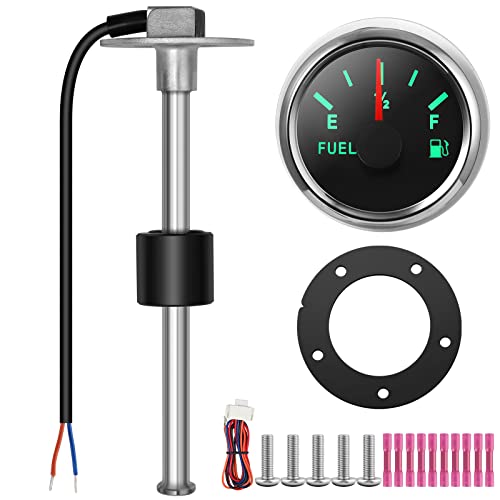
Best for: Boats that need a robust, corrosion-resistant sender with a clear readout. The stainless-steel exterior and high-quality reed-switch sensor deliver stable output for gasoline, diesel, water, and methanol environments. It includes 8 backlight colors for easy visibility in varying lighting conditions.
Why selected: Built for longevity and accurate measurement with IP67 waterproofing and anti-fog curved glass. The SAE 5-hole mounting and included gasket support quick, sealed installation.
Caution: Ensure your tank depth aligns with the 6.8″ footprint and mounting pattern; misalignment can affect sealing and readings.
CLLOMAGY Marine Fuel Sending Unit

Best for: Mariners and RV users seeking a flexible depth option with easy field adjustment. This unit is designed to read gas and water levels effectively, helping avoid being caught with low fuel or unexpected water intrusion.
Why selected: Notable for its adjustable depth and straightforward readouts; ideal as a replacement part for damaged senders.
Caution: Some users may need to cut or rotate the sender to fit their specific tank depth; plan for on-tank customization during installation.
100TECH 8-Inch 240-33 Ohms Marine Sender

Best for: Users who want a direct replacement with long-term reliability. The reed-switch approach reduces moving parts and avoids frequent recalibration.
Why selected: Uses 240-33 ohm output, compatible with standard gauges, and claims no required tank adjustment. It includes installation accessories and detailed instructions.
Caution: Check the exact length compatibility; some installations may require different hose fittings or gasket alignment.
SEACHOICE 15461 Marine Electric Sending Unit Kit

Best for: Boats needing a complete kit that supports 6 to 12 inch tank depths and is suitable for gasoline or diesel fuels. Useful for deeper or shallower tanks that require flexible installation.
Why selected: Provides accurate fuel level information across a practical depth range with a straightforward reading. Its versatility makes it a good match for multi-fuel setups.
Caution: Ensure the tank depth requirement matches the 6–12 inch specification to avoid fit issues or inaccurate readings.
OXCANO 7-Inch Marine Fuel Sending Unit

Best for: Users seeking a wide applicability range with a durable, no-moving-parts design. The doughnut float helps resist wear and offers long service life in marine environments.
Why selected: The reed switch design provides durability and reliability, with broad compatibility for boats, cars, and trucks. Simple installation supports quick upgrades.
Caution: Confirm the tank’s mounting pattern and depth compatibility to ensure a precise fit.
Buying Guide: Key Considerations for Marine Fuel Tank Level Sensors
What depth range does my tank require?
Measure the tank depth and choose a sender that matches or is easily adjustable to your tank’s interior depth. Deeper tanks may need longer sending units or adjustable necks.
What is the required electrical output?
Most marine gauges use standard 240-33 ohm outputs. Confirm your gauge compatibility to avoid mismatched readings or non-functional displays.
Is the sensor suited for multiple fuels or water readings?
Some senders are designed for gasoline, diesel, and water. If you regularly deal with water intrusion or mixed fuels, select a corrosion-resistant model with proven water resistance.
What mounting pattern and seals are needed?
Most units use SAE 5-hole mounting. Check gasket material and oil resistance to ensure a proper seal against fuel vapors and moisture.
How important is installation ease and documentation?
Models with clear wiring diagrams, included screws, gaskets, and illustrated instructions save time and reduce the risk of incorrect wiring.
What maintenance considerations exist?
Reed-switch-based senders often have fewer moving parts than arm-type senders, which can translate to longer life. Consider the presence of anti-corrosion features for saltwater use.
FAQ
- What is the typical resistance range for marine fuel senders? Most senders provide 240 ohms at empty to 33 ohms at full, which matches common gauges.
- Can I install a new sender without replacing the gauge? Yes, many senders are designed as direct replacements for existing gauges with matching resistance patterns.
- Do all senders require professional installation? Not necessarily; many include diagrams and hardware for DIY installation, but ensure proper sealing and electrical connections.
- Are waterproof ratings important? Yes, IP67 or higher water resistance helps protect the sensor in damp or splashing conditions typical of boats.
- Can I cut the sender to fit a shorter tank? Some units are adjustable via cutting or rotation; verify the manufacturer’s guidance for your model.
- What maintenance helps extend life? Regular inspection for corrosion, ensuring seals remain intact, and keeping the float mechanism free of debris can extend life.