Best Offshore Life Jackets for Safe Boating on the Water
When choosing an offshore life jacket, prioritize visibility, buoyancy, and reliability in demanding conditions. This guide highlights five offshore-ready options ideal for commercial crews, reefers, or serious recreational mariners. The top picks emphasize face-up recovery design, high-visibility colors, and robust construction. Best for commercial crews, offshore vessels, and serious sailors who need dependable flotation and quick assist features. Better for those who want a mix of automatic and manual inflation, plus strong compliance with safety standards.
| Product | Best For | Key Benefit | Limitations |
|---|---|---|---|
| Seachoice Type I Commercial Offshore Vest | Commercial/offshore crews | Face-up positioning, high visibility | Over 90 lbs weight class |
| Seachoice Type I Commercial Offshore Jacket | Vessel crews | Face-up assist, bright orange | Bulkier compared to vests |
| Eyson Inflatable Life Jacket | Sportsmen, paddlers | Automatic inflation within ~5 seconds | CO2 cylinder required replacement |
| Onyx A/M-24 Automatic/Manual Inflatable | Mixed activities | USCG approved, versatile inflation | Manual inflate option may be preferred in some activities |
| Onyx 103000-100-004-12 General Purpose | General boating | Adjustable fit, lightweight flotation | Single-pack design |
Seachoice Type I Commercial Offshore Vest

Designed for offshore and commercial vessels, this vest emphasizes dependable flotation and visibility. It helps keep the wearer face-up in emergencies and uses bright fluorescence with SOLAS panels to aid rescue. Best for offshore crews who need reliable buoyancy with quick visibility in rough seas. A potential limitation is its weight class, suitable for wearers over 90 pounds, which may not fit lighter users.
Seachoice Type I Commercial Offshore Jacket

This offshore jacket provides offshore emergency flotation with a design that helps maintain a face-up position in emergencies. The high-visibility orange color and SOLAS reflective panels improve visibility during rescue. Choose this if you prefer a jacket-style option for easier reach and potentially more mobility on active offshore decks. May be bulkier than standard life jackets and somewhat heavier to wear for longer periods.
Eyson Inflatable Life Jacket

Eyson offers a highly visible, automatic inflatable life jacket with a quick 5-second inflation time. It suits sport and recreational boats where comfort and ease of movement matter. The jacket uses a 33-gram CO2 cylinder and is reusable after air-drying. Best for active boaters who want lightweight, low-profile gear. A limitation is that it relies on cylinder maintenance and replacement, which may incur ongoing costs over time.
Onyx A/M-24 Automatic/Manual Inflatable

USCG-approved inflatable life jacket with automatic inflation on immersion and a manual inflation option. It fits 30”-52” chest and provides 22.5 pounds of buoyancy when fully inflated. Best for mixed activities like paddling and sailing where quick response matters. Consider manual inflation use if you expect to stay in shallow areas or maneuver frequently; automatic inflation may deploy unexpectedly in calm water.
Onyx 103000-100-004-12 General Purpose Boating Vest
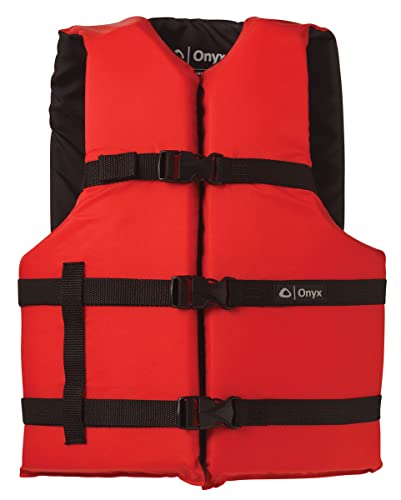
This universal life jacket offers adjustable belts and a chest strap to prevent ride-up, with lightweight flotation foam for comfortable wear. It’s suitable for general boating and family use. It is not specialized for offshore conditions but provides a reliable, straightforward option for everyday maritime activities. Best for casual boaters who prioritize ease of use and comfort over specialized offshore features.
Buying Guide
Key considerations when selecting offshore life jackets include intended use, buoyancy level, inflation type, and visibility features. The right choice depends on your activity, deck space, and crew requirements.
- Inflation Type: Decide between automatic, manual, or dual inflation. Automatic inflates in water, ideal for hands-free flotation; manual is better where water exposure is limited or you want control.
- Buoyancy and Fit: Higher buoyancy supports larger individuals and rough seas. Look for adjustable belts, chest straps, and size ranges that fit your measurements.
- Visibility: Off-shore use benefits from fluorescent colors and reflective panels to improve rescue odds. SOLAS labeling adds credibility in professional settings.
- Durability: Offshore environments demand rugged shells and abrasion resistance. Consider models with reinforced seams and reliable closures.
- Regulatory Compliance: USCG approval or SOLAS standards indicate adherence to recognized safety requirements. Verify the designation for your region and vessel type.
- Maintenance: Inflatable models require CO2 cylinder checks and replacement. Reusability and ease of drying impact long-term costs.
Frequently Asked Questions
- What is the difference between a vest and a jacket? Answer: Vests are sleeveless and more maneuverable; jackets provide full torso coverage and can feel bulkier but may offer better warmth and protection in rough conditions.
- Are inflatable life jackets safer than traditional foam vest? Answer: Inflatable models are lighter and less bulky, offering comfort for active use, but require proper cylinder maintenance and potential manual inflation in certain activities.
- Who should wear offshore-rated life jackets? Answer: Commercial crews, offshore workers, and serious mariners in exposed waters benefit most from offshore-rated gear with enhanced buoyancy and face-up design.
- How do I check USCG approval? Answer: Look for USCG approval labels on the product and verify the model number against the manufacturer’s documentation.
- Can I reuse CO2 cylinders after inflation? Answer: Yes, but cylinders must be inspected and replaced if damaged or expired; recharging is not possible, so new cylinders are needed for reuse.
- What size should I choose? Answer: Pick a size based on chest measurement and weight; many offshore vests are designed for over-80-pound users but always confirm the size chart.