Best Water Separator Filters for Boats: Clear Fuel, Clear Performance
When choosing a water separator filter for a boat, the goal is clear: protect the engine by removing water and fuel contaminants efficiently. This guide presents five reliable options suited for a range of outboards, sterndrive, and inboard engines. It highlights who each product is best for, why it was chosen, and any practical limitations to consider. Whether you run a Yamaha, Mercury, or a universal marine system, these filters help maintain fuel quality and engine reliability.
| Product | Best For | Key Benefit |
|---|---|---|
| S3213 Fuel Water Separator Marine Kit | Universal outboard users needing compatibility with Yamaha, Mercury, and more | 10-micron filtration with 3/8″ NPT ports for smooth fuel flow |
| Quicksilver 802893Q01 | Mercury and Mariner enthusiasts | 25-micron element built to original equipment specs |
| Attwood 11841-4 | Budget-conscious buyers seeking universal fit | Double gasket seal and 10-micron replacement capability |
| CARMOCAR Fuel Filter Water Separator | Universal marine applications needing 3/8″ ports | 10-micron efficiency with multiple part-number replacements |
| Sierra 18-7866 | Inboard, sterndrive, and outboard systems requiring high water removal | High-capacity, 10-micron filtration |
S3213 Fuel Water Separator Marine Kit

Best for boats that use Yamaha, Mercury, Racor, Sierra, or Suzuki engines. This kit is compatible with multiple universal marine applications and replaces Mercury 35-60494-1 and related part numbers. The 3/8″ NPT ports enable smooth fuel flow, and the 10-micron element captures fine particles and water to protect fuel systems. Choose this if you need broad compatibility and a compact, easy-to-install filter. Caution: verify exact engine compatibility before purchasing, as some models may require a different mounting or bowl configuration.
Quicksilver 802893Q01 Water Separator
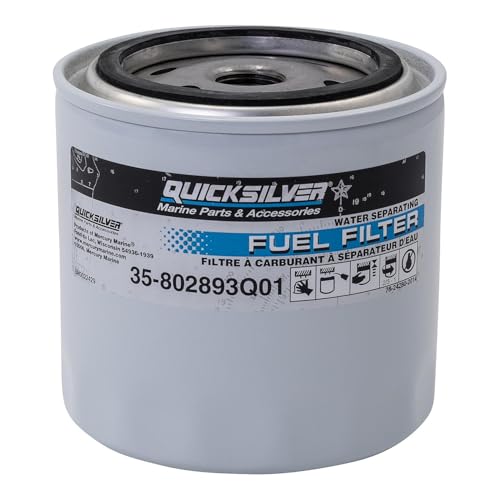
This filter is designed for Mercury and Mariner outboards, MerCruiser sterndrive, and certain inboard engines. It uses a 25-micron filtering element designed to remove fuel-borne contaminants while meeting Mercury Marine OEM specifications. Best for Mercury-focused fleets or when OEM compatibility is a priority. Better for engines that tolerate a slightly coarser filtration while still providing solid water separation. Limitations include its 25-micron rating, which may be less effective against the finest emulsified water than finer options.
Attwood 11841-4 Universal 10-Micron
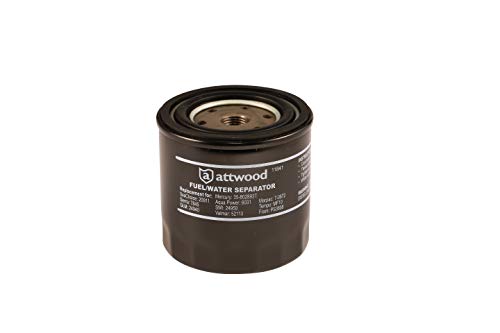
Attwood offers a universal 3/8″ port separator with a double gasket seal for enhanced performance. The 10-micron filter provides solid protection against fine particles and emulsified water. This option is well-suited for buyers seeking affordability without sacrificing essential filtration. Choose this if you want a straightforward, broadly compatible unit, but avoid it if you require a finer filtration than 10 microns or have a specialized installation that needs a different seal arrangement.
CARMOCAR Fuel Filter Water Separator

Designed for universal marine use, this filter replaces multiple Mercury and Yamaha part numbers. It features 3/8″ NPT ports for lower pressure drops and claims high efficiency at 10 microns, capturing small particles and emulsified water. Best for buyers needing a multi-replacement solution across several engine brands. Caution: verify the exact replacement part compatibility with your model’s fitment and mounting hardware before ordering.
Sierra International 18-7866
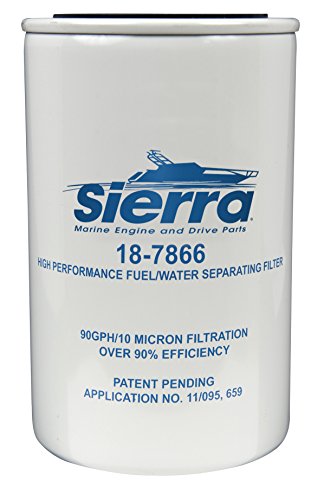
Sierra’s 18-7866 10-micron filter is aimed at protecting sensitive inboard, sterndrive, and outboard fuel injection systems. It’s described as universal fit and emphasizes high water removal efficiency in a compact form. Best for engines requiring reliable water separation with a consistent 10-micron standard. Limitations may include part availability or substitutions depending on the exact engine model and installation space.
Buying Guide: Key Considerations For Choosing A Boat Water Separator
What drainage and inspection features are most important? Look for a clear or transparent bowl on spin-on designs so you can inspect water content at a glance. A self-draining valve helps manage water without disassembly, but ensure it’s easy to access for regular checks.
How fine should filtration be? A 10-micron filter generally provides robust protection by capturing most free water and fine particulates. If your fuel quality is high and water intrusion is rare, a 25-micron or coarser element may suffice, though it trades off water removal efficiency for longer service between changes.
Are ports and connections compatible with your system? Check port size (commonly 3/8″ NPT or metric equivalents) and ensure the housing can fit within your fuel line routing. Universal fits are convenient but verify bracket mounting and bowl clearance in your boat’s layout.
Is OEM compatibility a priority? Some brands emphasize original equipment manufacturer specifications. If you rely on Mercury, Yamaha, or MerCruiser parts, a brand-aligned filter may offer simpler replacement and guaranteed fit.
What about maintenance and replacement ease? Favor spin-on designs with readily available replacement elements. If maintenance is done in remote areas, a filter with a straightforward drain and easy bowl inspection minimizes downtime.
How does this affect engine protection? A good water separator reduces water-related fuel delivery problems, helps prevent injector corrosion, and lowers the risk of fuel line varnish or microbial growth. Consider the operating environment and fuel quality to determine the necessary filtration level.
Frequently Asked Questions
- What is the main purpose of a water separator filter on a boat? It removes water from fuel and filters out particulates to protect the engine and fuel system components.
- What micron rating should I choose? A 10-micron filter offers strong protection for most marine fuels; 25-micron filters can be suitable in cleaner fuel scenarios but may miss finer emulsified water.
- Do I need OEM-specific filters? OEM-specific filters guarantee exact fit and compatibility for certain engines, but universal options can cover multiple brands while still providing solid filtration.
- How often should I replace a fuel water separator? Replacement intervals depend on fuel quality, engine usage, and manufacturer guidance. Inspect the bowl and drain water regularly and replace when visibly dirty or after a set maintenance period.
- Can I mix different brands in a system? It’s generally best to use matched or compatible components to avoid fitment or performance issues; ensure the ports and fittings align correctly.
- What installation considerations matter most? Ensure proper orientation, adequate clearance for the bowl, and leak-free connections. Confirm that the chosen filter supports your boat’s engine type and fuel system layout.