Best Carbon Monoxide Detectors for Boats and Marine Use
If you’re selecting a carbon monoxide detector for a boat, safety and reliability are key. This guide highlights five solid options tailored for marine environments and portable use, helping you pick detectors that work during power outages and in tight spaces. The top picks are best for recreational boats, small fishing craft, and travel trailers used on docks or marinas. A quick summary table follows to compare core features at a glance.
| Product | Best For | Notes |
|---|---|---|
| Kidde Carbon Monoxide Detector, AA Battery Powered (3rd Edition) | Portable use on boats or in cabins | Battery-powered, no wiring, 85 dB alarm |
| MTI Industries 62-541-MARINE-WT Marine Co Alarm White | Dedicated marine CO detection | Marine-specific model |
| First Alert CO710 Carbon Monoxide Detector with 10-Year Battery | Digital display on boats or RVs | 10-year battery and temperature display |
| MTI Industries 62-542-R-MARINE-WH Marine CO Alarm White | Another marine option | Marine-specific model |
| Kidde Carbon Monoxide Detector, AA Battery Powered (COB) | Travel-ready or cabin use | LED indicators, 85 dB alarm |
Kidde Carbon Monoxide Detector, AA Battery Powered (3rd Edition)
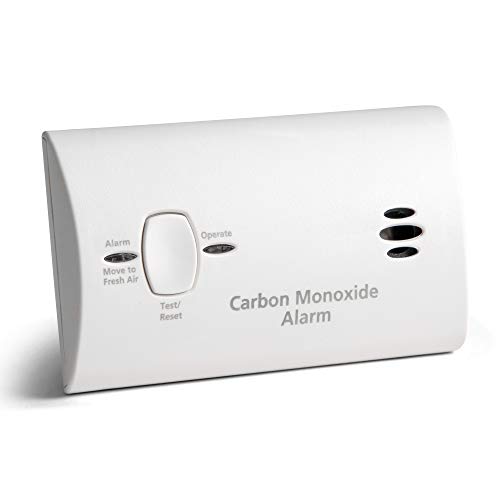
This portable CO detector uses an electrochemical sensor to detect carbon monoxide and runs on two AA batteries, so it works during power outages. It is suitable for boats where wiring is impractical or for cabin safety. The unit features a green LED for power and an 85 dB alarm with a red LED to indicate CO presence. It is best for boaters who want a battery-only, low-maintenance detector that can be mounted or placed on a surface.
Who it’s best for: Small- to mid-size boats needing a simple, portable detector without a wired installation. Why selected: Portable, battery-powered operation ensures continuous monitoring even when shore power isn’t available. Caution: Battery life can limit continuous monitoring; plan to replace or swap batteries as needed.
MTI Industries 62-541-MARINE-WT Marine Co Alarm White

This detector is designed specifically for marine environments, making it a practical choice for boats. It uses MTI’s marine-co alarm design to provide continuous CO monitoring in cabin spaces. Best for: boat owners seeking a dedicated marine CO alarm with straightforward installation. Limitation: Data on sensing technology is not detailed, so users should refer to manufacturer guidance for installation specifics.
MTI Industries 62-542-R-MARINE-WH Marine Co Alarm White
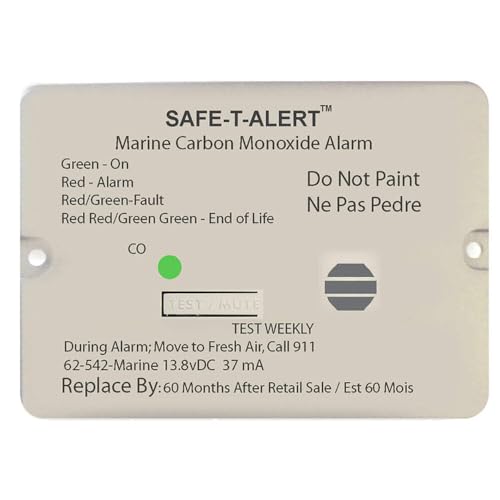
Another MTI marine CO alarm variant offers marine-grade design. It’s positioned for boats that require a robust, purpose-built CO monitoring solution in cabins or cargo areas. Best for: boats needing a second marine CO alarm in larger cabins or multiple compartments. Caution: The product listing provides limited technical details; check installation instructions for mounting height and venting considerations.
First Alert CO400 Carbon Monoxide Detector
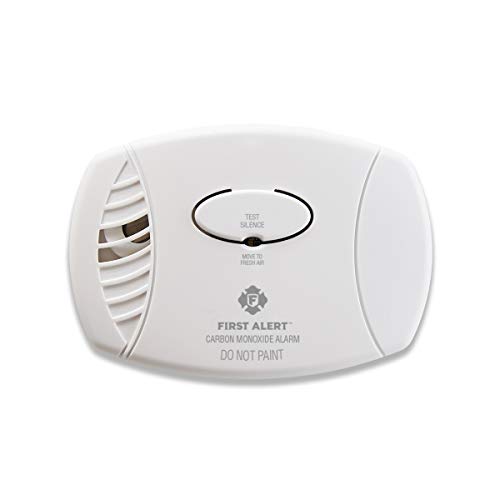
This battery-operated CO detector uses an advanced electrochemical sensor for accurate CO detection and provides continuous monitoring during power outages. It features an 85 dB alarm and a replaceable battery, making it a straightforward choice for boat cabins limited on electrical outlets. Best for: boaters who want a reliable, simple detector with a replaceable battery. Limitation: Smaller display and fewer environmental readings than digital display models.
Kidde Carbon Monoxide Detector COB (AA Powered)

This compact detector is designed for travel or small cabin spaces. It operates on two AA batteries and uses a LED status indicator with an 85 dB alarm. Best for: travelers or boaters who need a lightweight, portable CO detector with straightforward operation. Caution: As a portable unit, placement on a stable surface is important to avoid tipping or obstruction of sensor vents.
Kidde Carbon Monoxide Detector COBD with Digital Display

This model combines a loud 85 dB alarm with a backlit digital display and an AA-powered design. It is suitable for boat cabins where a digital readout helps monitor CO concentration at a glance. Best for: boaters who prefer a digital status readout along with portability. Limitation: Battery reliance means regular battery checks are essential for continuous protection.
MTI Industry Safe-T-Alert 85 Series CO/Propane Alarm

This model is described as a rugged, all-purpose alarm designed for RV environments and similar spaces. While not a dedicated marine unit, its dual-purpose approach can be useful on boats that mix CO monitoring with propane gas monitoring in enclosed compartments. Best for: boats needing a rugged alarm in mixed-use areas. Limitation: Not specifically marine-certified, so verify suitability for your vessel’s electrical and ventilation setup.
Buying Guide: How To Choose The Right Boat CO Detector
What type of boat and living space require CO monitoring?
For small cabins and tight quarters, a compact, battery-powered detector is often easiest to install and maintain. For larger boats with multiple compartments, consider multiple detectors or marine-specific models designed to withstand vibration, humidity, and intermittent power supply.
Battery vs. hard-wired options
Battery-powered detectors (AA or lithium) are portable and install without wiring, making them ideal for rental boats or temporary setups. Hard-wired or 10-year battery detectors provide ongoing protection with less maintenance but require electrical work or power sources on the boat.
Display and monitoring features
A digital or backlit display helps monitor CO levels at a glance, which is useful in dim cabins or boats with multiple sections. An audible alarm (typically 85 dB) is essential; LED indicators help confirm power status and CO presence without wakeful alarm conditions.
Sensor technology and lifespan
Most detectors use electrochemical sensors for CO detection. Sensor lifespan varies by model; some units specify a 10-year battery or a replaceable battery, which influences long-term maintenance planning.
Placement and installation tips
Place detectors at sleeping areas and near the galley or engine room where CO may accumulate. Mount detectors on walls or ceilings according to the manufacturer’s guidelines, ensuring vents are not obstructed. On boats, install detectors away from heat vents, cooking stoves, and direct exhaust sources to reduce false alarms.
Maintenance and safety checks
Test the unit regularly using the test button, replace batteries as recommended, and replace units about every 5–10 years depending on the model. If the detector alarms, evacuate and seek fresh air immediately. Do not ignore repeated alarms or inconsistent readings.
Frequently Asked Questions
- Can I use a home CO detector on a boat? Yes, but marine-specific models are typically designed to withstand humidity, salt exposure, and vibrations better than standard home detectors.
- What is the typical alarm level for CO detectors? Most devices alarm when CO levels reach dangerous thresholds, with audible alerts around 85 dB and visual indicators to signal a CO presence.
- Do I need multiple CO detectors on a boat? For larger boats or multi-compartment cabins, multiple detectors provide better coverage and quicker alerts in different areas.
- How long do batteries last in portable CO detectors? Battery life varies by model, but AA-powered units typically require periodic battery replacement to maintain continuous protection.
- Should I replace a CO detector after a single alarm? If CO is detected, evacuate and replace the unit if needed after testing and addressing the source of CO. Continuous alarms call for immediate maintenance checks.
- Are marine CO detectors required on boats? Requirements vary by region and vessel type; check local boating safety regulations for specific mandates on CO detection aboard your watercraft.