Best Bass Fishing Kayaks With Trolling Motors for 2026
If you want to stay on bass beds longer and fish more efficiently, a bass fishing kayak with a trolling motor is the right choice. These motors provide hands-free control, steady positioning, and extended time on the water. This guide highlights five top options that balance power, durability, and saltwater or freshwater suitability. It’s ideal for anglers who need precise maneuverability, longer battery life, and easy deployment on small craft.
Buying at a glance: the following table compares the five selected trolling motors by thrust, shaft length, and primary use to help you pick quickly.
| Product | Thrust | Shaft | |
|---|---|---|---|
| Minn Kota Endura C2 Transom-Mount | 30 lb | 30 in | |
| Minn Kota Terrova Bow-Mount with GPS | 55 lb | 36 in | Advanced position control with GPS |
| Newport Kayak Series 46lb Transom | 46 lb | 30 in | Saltwater and freshwater versatility |
| Black Haswing Cayman 55lb Bow Mount | 55 lb | 48 in | Quiet operation and extended battery life |
| Spolehli Saltwater Trolling Motor | 56 lb | Not specified | High thrust, brushless design with smart protections |
Minn Kota Endura C2 Transom-Mount: Best Budget Freshwater
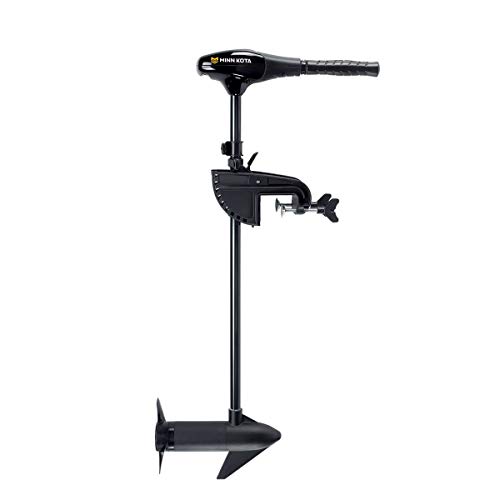
Best for budget-conscious anglers with freshwater kayaks. The Endura C2 focuses on straightforward control and reliable performance. Key features include a 6-inch telescoping tiller for comfortable day-long operation, a 10-position lever lock bracket for quick angle adjustments, and a reinforced composite body resistant to UV damage. It uses a power-prop designed to push through light vegetation, which helps you maintain position without getting bogged down in thick cover. This model is most suitable for freshwater bass kayaks where simple, dependable thrust is enough for typical pond and river settings.
Who it’s best for: beginners and anglers who want a basic, dependable motor without GPS or advanced electronics. Why chosen: it offers essential control, durability, and easy installation at a lower price point. Caution: less optimized for heavy vegetation in saltwater or thick aquatic cover; you may need to switch to a more robust model in rough conditions.
Minn Kota Terrova Bow-Mount With GPS: Best for Precision Positioning

Best for anglers who value precise position control and autopilot-like features. The Terrova Bow-Mount integrates GPS Spot-Lock technology, letting you hold position automatically or navigate with a micro remote or network app. It also features an easy Stow/Deploy system with Auto Park, enabling quick setups on the water. Digital Maximizer technology extends battery life by optimizing power use, which is crucial for all-day sessions in bass-heavy lakes. This motor suits kayaks where bow-mounting is feasible and anglers want hands-free, steady trolling with minimal drift.
Who it’s best for: experienced anglers seeking top-tier control and automation. Why chosen: it combines GPS hold, smart power management, and quick deployment. Caution: higher upfront cost and more complex installation compared to transom models.
Newport Kayak Series 46lb Transom: Saltwater Ready
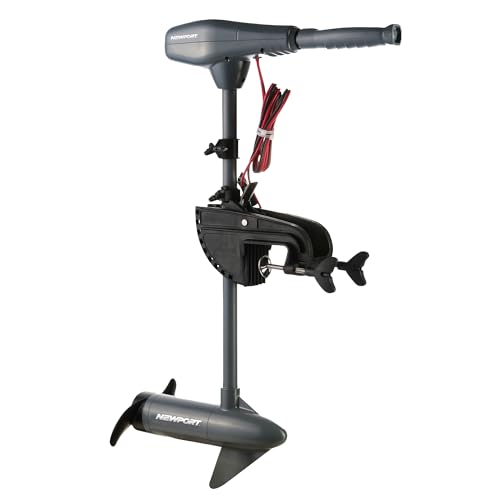
Best for kayaks that require a durable, saltwater-rated transom motor with good thrust. The 24-inch fiberglass shaft provides flexible depth control, while eight speeds (five forward, three reverse) give versatile trolling options. The motor head is aluminum with corrosion-resistant magnesium, zinc, and stainless-steel hardware designed for saltwater use. This makes it a solid choice for coastal bass fishing where exposure to salt air and spray is common. It pairs well with mid-sized kayaks needing reliable power without GPS.
Who it’s best for: saltwater and mixed-water anglers who want a robust transom motor with simple speed control. Why chosen: proven durability in corrosive environments and straightforward operation. Caution: no GPS or auto-navigation features.
Newport Kayak Series 36lb Transom: Compact Freshwater Power
Best for smaller or lighter kayaks where a compact, efficient motor is preferred. This 36-pound thrust model shares the same 24-inch fiberglass shaft and saltwater-rated hardware, offering reliable variable-speed control with a telescoping handle for easy grip and deployment. It’s a practical choice for anglers who fish lakes or ponds with moderate currents and need responsive control without extra weight on the bow. Caution: lower thrust compared to heavier models may limit pushing power in strong winds or heavy current.
Spolehli Saltwater Trolling Motor: Best for Power and Safety

Best for anglers who need high thrust, a modern brushless design, and built-in safety features. This model uses a brushless copper motor for lower maintenance and longer lifespan, an LED display for battery voltage, and 5 forward and 3 reverse speeds for refined control. A 5x protective system helps guard against common electrical issues, making it suitable for bass fishing in challenging conditions. It provides cruising power for bass beds while offering precise speed control for delicate presentations. Caution: brushless motors can require more careful installation and setup, and availability of spare parts may vary by region.
Buying Guide: How to Choose the Right Bass Fishing Kayak Trolling Motor
Key questions to guide your choice:
- What water conditions will you fish most often? Freshwater ponds vs. saltwater bays both matter for corrosion resistance and motor design.
- Is GPS or advanced position control important? If yes, a Terrova-style bow-mount with Spot-Lock adds value.
- What kayak type do you own? Transom mounts work well on many sit-on-top kayaks; bow-mounts require space and mounting hardware compatible with your craft.
- Do you need high thrust for wind and current? Heavier craft or faster trolling benefits from 46 lb or more thrust, especially in open water.
- What is your maintenance tolerance? Brushed motors are simpler but may require more upkeep; brushless designs reduce maintenance but can be pricier.
Frequently Asked Questions
- What is the difference between bow-mount and transom-mount trolling motors? Bow-mount motors offer precise steering and hands-free positioning, while transom mounts are typically easier to install and operate on smaller kayaks.
- Do trolling motors impact fishing performance? Yes, they provide steadier positioning and the ability to hold spots, which can improve cast consistency and cover time.
- Is GPS essential for bass kayaking? Not essential, but GPS-based features can substantially improve staying on productive spots with less drift.
- How important is shaft length? Longer shafts (30–36 inches) reduce prop depth issues in choppy water and help in deeper water scenarios.
- What should I consider for saltwater use? Look for corrosion-resistant housings and hardware, and ensure the motor is rated for saltwater use.
- Can I upgrade my existing kayak with a trolling motor? In most cases, yes, but you’ll need compatible mounting hardware, a battery system, and proper weight distribution for balance.