Best Bottom Coat Solutions for Boats: Top Antifouling and Barrier Coats
Answering the common question for boaters: the right bottom coat protects your hull from barnacles, algae, and corrosion while matching your boat type and water conditions. This guide highlights five dependable options across fiberglass, wood, steel, aluminum, and inflatable hulls. It helps you choose whether to use antifouling, ablative, or barrier coats, and notes practical limits for each product. Suitable buyers include frequent saltwater users, casual weekend sailors, aluminum-hull owners, and those with marinas enforcing low-VOC rules.
Summary table of selected products (best use cases at a glance):
- Rust-Oleum Marine Flat Boat Bottom Antifouling Paint (Quart) — Best for fiberglass, wood, steel; affordable, quick recoat
- TotalBoat Underdog Marine Antifouling Bottom Paint (Gallon) — Best for frequent use; robust protection in saltwater
- TotalBoat JD Select Ablative Antifouling Bottom Paint (Quart) — Best for easy maintenance; self-polishing film
- TotalBoat Aluminum Boat Barrier Coat (Gallon) — Best for aluminum hull protection; primer suitable for underwater metals
- TotalBoat Inflatable Boat Bottom Paint (Quart) — Best for Hypalon/PVC inflatable boats; durable when deflated
Rust-Oleum Marine Flat Boat Bottom Antifouling Paint

Best for: fiberglass, wood, or steel hulls needing a simple, economical antifouling solution. This paint slowly releases copper to deter fouling while offering a straightforward application process. Recoats in four hours enable faster launches, and coverage up to roughly 110 sq ft makes it suitable for small-to-mid-sized boats. Use caution with very heavy hulls or high-speed craft where higher-performance coatings may be preferred.
TotalBoat Underdog Antifouling Bottom Paint (Black, Gallon)
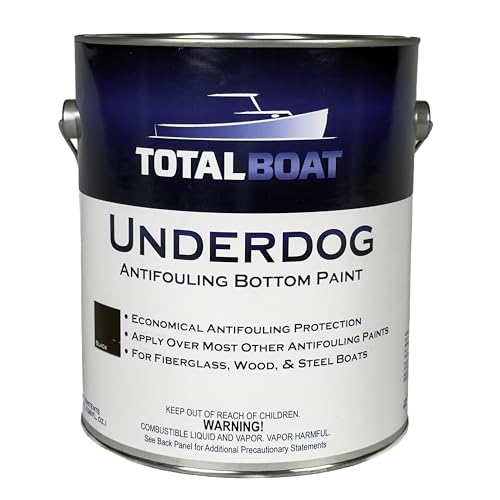
Best for: boats used frequently in saltwater with a need for economical, season-long protection. The copper biocide helps prevent barnacles and mussels from attaching to hulls, while the ablative film wears away over the season to minimize buildup. It works on properly prepared fiberglass, wood, steel, and iron bottoms. It’s especially suitable for sailboats, powerboats, and workboats that spend significant time in the water, though it may require reapplication sooner in harsh environments.
Limitation: while durable, this coating will wear with seasonal use, necessitating a repaint next season to maintain protection levels.
TotalBoat JD Select Ablative Antifouling Bottom Paint (Quart)

Best for: boats in salt or freshwater seeking low-odor, low-VOC options with easy cleanup. This ablative, self-polishing coating minimizes buildup, can be burnished for smoother performance, and requires no maximum dry time before launch. It’s compatible with fiberglass, wood, and steel bottoms and is designed to reduce sanding work next season. Ideal for marinas with environmental restrictions seeking a responsible paint option.
Limitation: self-polishing coatings gradually wear away, so the coating thickness reduces over time and you’ll plan reapplication after a season of use.
TotalBoat Aluminum Boat Barrier Coat (Gallon)

Best for: aluminum hulls and pontoon boats requiring robust underwater metal protection. This two-component epoxy primer provides a solid base that can be overcoated with bottom paints or other 1- or 2-part coatings. It dries quickly and allows for coatings without sanding between coats. Choose this when preparing an aluminum hull for long-term protection against corrosion and fouling, especially before adding antifouling layers.
Limitation: as a barrier coat, it’s not a stand-alone antifouling solution; it’s best used as a prep layer before using bottom paints on aluminum hulls.
TotalBoat Inflatable Boat Bottom Paint (1 Quart)

Best for: inflatable boats made with Hypalon, PVC, or rubber materials. This water-based ablative coating delivers reliable protection against barnacles and growth in both fresh and salt water while maintaining flexibility to resist cracking or flaking when tubes are deflated and rolled. It’s a practical choice for dinghies, tenders, and soft-sided boats that require a paint compatible with inflatable hulls.
Limitation: not suitable for rigid fiberglass or steel hulls where a traditional antifouling paint is typically preferred.
Buying Guide: Key Considerations For Choosing a Bottom Coat
What kind of hull are you protecting? Fiberglass, wood, steel, aluminum, or inflatable hulls each respond differently to antifouling, ablative, and barrier coats. Consider coating type based on water type (salt vs. fresh), boat usage, and maintenance preferences.
How often will you launch and haul? Ablative coatings shed material as you move, reducing buildup but requiring annual re-application. Non-ablative antifouling paints offer longer intervals but may require more sanding before reapplication.
Is environmental compliance a priority? Some regions limit volatile organic compounds (VOCs) and odors. Low-VOC, water-based formulas may be preferable in marinas or restricted yards.
Do you need a primer or barrier coat? Aluminum hulls, for example, benefit from a dedicated barrier coat to prevent corrosion before applying antifouling paints. Barrier coats also improve adhesion on challenging substrates.
What maintenance is feasible? Consider recoat times, ease of cleanup, and the likelihood of needing to sand between coats. Selecting a product with a reasonable dry time and straightforward reapplication supports smoother maintenance cycles.
Comparison at a Glance
- Best for quick projects: Rust-Oleum Marine Bottom Paint — simple, fast recoat, affordable.
- Best for frequent saltwater use: TotalBoat Underdog — economical, long-season protection.
- Best for low odor and easy cleanup: TotalBoat JD Select Ablative — low VOCs, no harsh fumes.
- Best for aluminum hulls: TotalBoat Aluminum Barrier Coat — corrosion protection, proper primer.
- Best for inflatable boats: TotalBoat Inflatable Bottom Paint — flexible, water-based, suitable for Hypalon/PVC.
FAQ
- Which coating lasts the longest between antifouling options? Ablative antifouling coatings tend to shed gradually as you move, while traditional hard antifouling coats resist buildup longer but may require more maintenance over time.
- Is a barrier coat necessary on aluminum boats? Yes, a dedicated barrier coat helps prevent galvanic corrosion and improves adhesion of subsequent bottom paints on aluminum hulls.
- Can I apply antifouling over old coatings? It depends on surface prep and compatibility. Most products require properly prepared, clean surfaces, and some may allow recoat over existing coatings if the manufacturer’s guidelines are followed.
- Are low-VOC paints as effective as traditional formulas? Many low-VOC and water-based coatings provide comparable protection, with added environmental and odor benefits. Performance may vary by product and conditions.
- Can I use inflatable boat paint on rigid hulls? No. Inflatable boat bottom paints are formulated for flexible materials like Hypalon and PVC; rigid hulls should use antifouling or ablative hull paints designed for solid substrates.
- How soon can I launch after applying these coatings? Launch times vary by product—some allow launch within hours, others require a longer cure period. Always follow the manufacturer’s guidance for best results.