Best Small Child Life Jacket Buyer’s Guide: Safe Picks for Little Swimmers
Answering the essentials for parents shopping for small-child life jackets: choose Coast Guard–approved options that fit securely, offer full mobility, and stay comfortable during water play. This guide highlights five reliable picks and explains who benefits most from each. Whether you’re headed to the pool, lake, or beach, these PFDs are selected for toddlers and young children in the small-weight range. The buyer’s table below summarizes key features to compare at a glance.
| Product | Best For | Weight Range | Notable Design |
|---|---|---|---|
| Oceans7 US Coast Guard-Approved Kids Life Jacket | Toddler to young child water play | 33-55 lbs (child size; adjust if over 45 lbs) | Open-sided for flexible movement |
| Stohlquist Child PFD Life Jacket | Active kids; easy retrieval | 30-50 lbs | Grab collar and full-arm mobility |
| Sportstuff Child Type III Life Jacket | General boating and quick-response situations | Various children sizes | Open sides with three belts and crotch strap |
| Gogokids Toddler Swim Vest | Toddlers learning to swim | 22-60 lbs | Secure zip and dual buckles with crotch strap |
| O’Neill Child Superlite Life Vest | Active kids needing mobility | One size for children several weights | Minimal bulk, snug fit |
Note: This table provides quick reference. Always verify size labels and proper fit before water use. The selected products are chosen for availability, safety design, and ease of use for caretakers and children alike.
Oceans7 US Coast Guard-Approved Kids Life Jacket
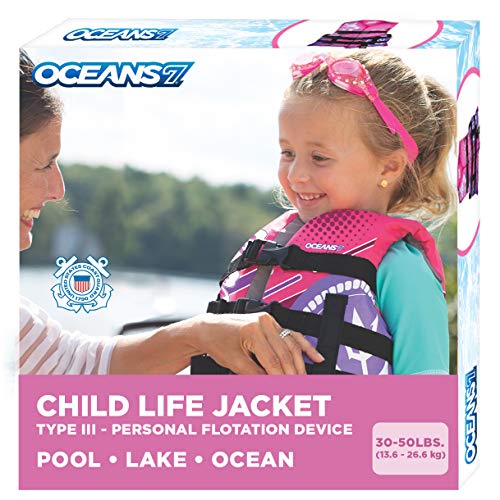
Best for: Parents seeking a Coast Guard–approved option with a comfortable open-sided design. This PFD fits children weighing 33-55 pounds and offers three adjustable straps for a secure feel. If a child weighs toward the upper end of the range, consider the youth size option.
Why selected: The open-sided construction enhances mobility during pool and beach play, while the USCG approval signals standard safety compliance. The floating foam is designed to prevent the vest from riding up when fastened properly.
Caution: Fit varies by child; ensure the vest sits securely and does not rise above the head when worn correctly.
Stohlquist Child PFD Life Jacket
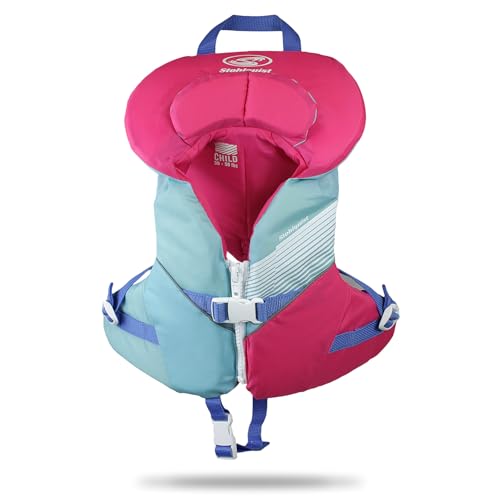
Best for: Kids who require easy-grab handles and secure head support for safety while learning to swim. Weight range recommended is 30-50 pounds.
Why selected: The grab collar facilitates quick retrieval, and the adjustable crotch strap keeps the vest from riding up. The design emphasizes full arm mobility, helping children move comfortably in the water.
Caution: The single quick-release buckle should be checked for proper engagement before every use.
Sportstuff Child Type III Life Jacket

Best for: Boating and watercraft use where a lightweight, flexible jacket is preferred. Suitable for many kids, with an emphasis on better mobility.
Why selected: Open sides promote ventilation and cooler wear, while the three body belts with quick-release side buckles provide quick securing. A crotch strap adds safety against riding up.
Caution: Check all buckles for secure closure before each use and ensure the vest fits snugly to prevent ride-up during active movement.
Gogokids Toddler Swim Vest
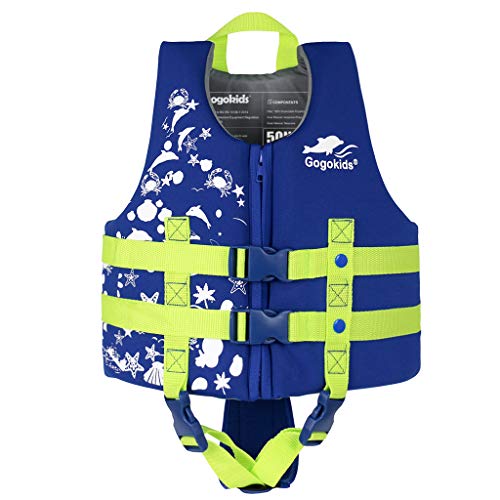
Best for: Toddlers who need reliable buoyancy with secure closure and a comfortable fit for pool and beach activities.
Why selected: The vest uses UV-resistant neoprene and EPE foam, offering sun protection and reliable buoyancy. Dual adjustable straps ensure a snug wrap, replacing restrictive arm floaties for better movement.
Caution: Ensure the zip and buckles are fully secured; avoid over-tightening, which may restrict arm movement.
O’Neill Child Superlite USCG Life Vest

Best for: Active children who need a snug, low-bulk vest for mobility during swimming, boating, or water sports.
Why selected: USCG Type II approval with minimal bulk and easy on/off helps maintain movement in water activities. The lightweight foam and coated outer shell combine strength with comfort.
Caution: Fit is critical for safety; make sure the vest sits flat on the chest and doesn’t ride up when arms move above the head.
Buying Guide: Key Considerations For Small-Child Life Jackets
- Safety certification: Always choose USCG-approved or equivalent standards to ensure minimum buoyancy and performance requirements.
- Size and weight range: Check the labeled weight range and try to fit the child with the vest worn with a snug fit. If the child is near the upper limit, opt for the next size up if available.
- Fit and mobility: Look for open-sided designs, crotch straps, and grab handles for easy assistance and better range of motion during play.
- Closure systems: Quick-release buckles and strong zippers improve safety and ease of use, especially for independent wearers.
- Material and comfort: Neoprene or soft foam provides comfort for prolonged wear and reduces chafing. Consider sun-protective covers for outdoor use.
- Usage context: For quick-response needs or general boating, prefer Type III PFDs; for infants or toddlers, ensure the product matches weight and age recommendations.
FAQ
- What does USCG approval mean for a child life jacket?
It indicates the vest meets specific buoyancy, fit, and performance standards designed for safety in the water.
- How do I determine the correct size for my child?
Check the labeled weight range on the vest and fit it with the child wearing light clothing; the vest should sit snugly without riding up.
- Is an open-sided life jacket better for toddlers?
Open-sided designs can offer improved ventilation and mobility, which is helpful during active water play.
- What safety features should I look for beyond buoyancy?
Grab handles, crotch straps, and secure closures help keep the vest in place and allow quick assistance.
- When should I replace a life jacket?
Replace if the fabric shows significant wear, straps are stretched, or foam compression reduces buoyancy.
- Can a vest be used for infants?
Yes, but only if it is specifically labeled for infants and within the appropriate weight range. Always follow the manufacturer’s guidance.