Best 6 Channel Marine Amplifiers for Boats and Watercraft
Finding the right six-channel marine amplifier hinges on durability, power, and flexible speaker configuration. This guide highlights five reliable models that balance waterproofing, efficiency, and onboard sound quality for different boaters. The listed products are best for: multi-speaker setups on small to mid-size boats, recreational and saltwater environments, and users seeking easy wiring and solid protection from moisture. Use the quick-reference table below to compare core details at a glance.
| Product | Brand | Channels | Key Benefit | Best For |
|---|---|---|---|---|
| KICKER 48KMA6006 | KICKER | 6 | Conformal-coated PCB and rust-resistant hardware | Moisture-prone environments |
| Rockville RXM-S6 | Rockville | 6 | High power, marine-grade durability | Boat systems needing strong output |
| Pioneer GM-ME600X6 | PIONEER | 6 | Class D efficiency, protection features | Low heat and long sessions |
| Pyle PLMRA620 | Pyle | 6 | Bridgeable channels and universal compatibility | Flexible speaker configurations |
| Wet Sounds HTX-6 | Wet Sounds | 6 | Compact, high-output marine amp | Premium small-footprint installs |
Kicker 48KMA6006 KMA600.6 6x100w 6-Ch Weather-Resistant Full-Range Amplifier

The KICKER 48KMA6006 is designed for six full-range channels with a compact footprint. It features conformal-coated circuit boards to repel moisture and rust-resistant hardware, making it well-suited for open water or wet environments. The design emphasizes a small footprint, allowing flexible mounting in tight compartments. This model is best for boat owners who want durable, weather-ready amplification without sacrificing space. A potential limitation is that high-power sessions require proper heat management and venting in enclosed installations.
Rockville RXM-S6 2600W Peak/660W RMS 6-Channel Marine Amplifier
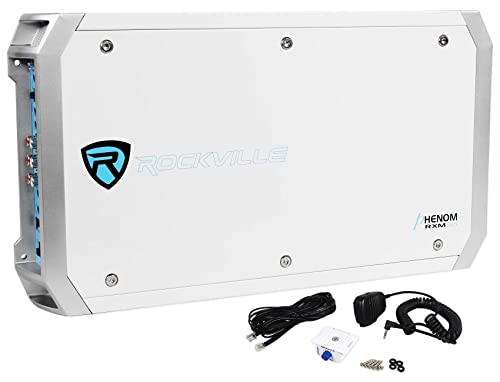
Rockville RXM-S6 delivers 2600W peak and 660W RMS across six channels, making it a strong option for boats needing robust audio across multiple speakers. It features a conformal-coated PCB and stainless steel screws to resist moisture and dust. Versatility stands out with support for 6, 4, or 3-channel configurations, enabling flexible connections for full-range speakers, subwoofers, or wakeboard systems. A consideration is ensuring proper cooling in compact installations to maintain peak performance.
Pioneer GM-ME600X6 6-Channel Marine Amplifier

Pioneer GM-ME600X6 uses Class D technology for efficient power with reduced heat, ideal for longer on-water playback. It includes a waterproof detachable connector and a Protection Control System (PCS) to guard against transients and short circuits. This model suits boaters seeking reliable efficiency and built-in protection in a compact form factor. A limitation is that some installations may require careful routing of the detachable connector to ensure a weatherproof seal.
Pyle PLMRA620 6 Channel Marine Amplifier Receiver

Pyle PLMRA620 is a six-channel bridgeable amplifier with a heavy-duty aluminum heatsink and a bridge mode option. It offers IP-01 marine rating and gold-plated speaker outputs to resist corrosion, supporting flexible channel configurations for various speaker setups. It’s a practical pick for boaters who want bridgeable versatility in a shielded, weatherproof package. A potential drawback is that the IP-01 rating indicates basic water exposure protection; consider higher-grade sealing for extreme salt spray environments.
Wet Sounds HTX-6 6 Channel Marine Amplifier

Wet Sounds HTX-6 emphasizes high-output performance in a compact chassis, making it attractive for premium, space-conscious marine installations. While it specializes in delivering strong power in a small footprint, buyers should verify compatibility with existing head units and speakers to ensure the system meets listening expectations in open-water conditions. This model is best for boaters prioritizing premium build quality and space efficiency over raw, oversized amplification.
Buying Guide
- What features matter most on a marine amplifier? Look for weatherproofing (conformal coatings), saltwater resistance, solid heat sinking, and easy mounting. Conformal-coated PCBs and stainless hardware extend longevity in salt-air environments.
- How should I size the amplifier for my speakers? Match RMS power per channel with your speaker wattage rating. For bridged configurations, ensure the total power does not exceed the speaker’s continuous rating.
- Is Class D better for boats? Generally yes, due to higher efficiency and less heat, which is advantageous in limited space. However, reliability of the specific model matters, so consider reviews and protection features.
- What about wiring and protection? Choose amplifiers with protection systems (short circuit, thermal, overload) and preamp outputs for future upgrades. Proper grounding and corrosion-resistant terminals reduce maintenance needs.
- Which installation considerations matter most? Ensure adequate ventilation, away from direct spray when possible, and use marine-grade wiring with grommets to prevent chafing. Routing should minimize noise and interference.
Frequently Asked Questions
- What is a six-channel marine amplifier best for? It powers multiple speakers across zones and can drive subwoofers in larger boats, improving sound dispersion and balance.
- Should I choose a weatherproof or saltwater-rated model? For exposed locations, select a model with conformal coating and stainless hardware for long-term reliability.
- Is Bluetooth important in a marine amp? Bluetooth adds convenience for wireless streaming, but wired connections often offer more consistent audio in high-interference environments.
- Can a six-channel amp be bridged? Many models support bridge mode for pairing channels to drive a sub or primary speaker cluster, expanding system flexibility.
- How do I prevent corrosion on marine amps? Use marine-grade connectors, corrosion-resistant mounting hardware, and seal any exposed entry points to reduce salt exposure.
- What maintenance is recommended? Periodic inspection of connections, cleaning of dust and salt residues, and testing protection features help ensure continued performance.