Best Topside Paint for Boats: A Practical Buyer’s Guide
Answer: For above-the-waterline boat surfaces, durable oil- or polyurethane-based topside paints offer the best balance of flexibility, adhesion, and long-lasting color. This guide highlights five top options that suit common boat types and decks, from fiberglass to wood and metal. The best choice depends on your boat’s material, climate, and maintenance goals. The listed products are chosen for reliability, finish quality, and ease of application.
Buyer profiles:
– New boat owners seeking a straightforward, one-coat ready-topside option.
– DIYers aiming for high-gloss, long-wear finishes on fiberglass or wood.
– Budget-conscious skippers who want durable, easy-to-apply coatings for frequent maintenance.
– Owners needing a non-slip deck finish for safety alongside appearance.
This article helps match each profile to suitable products and practical limitations.
Product Summary Table
- Rust-Oleum Marine Coatings Topside Paint, Quart, White — Oil-based, fast-drying, suitable for fiberglass, wood, or metal above the waterline.
- TotalBoat Wet Edge Topside Marine Paint, Quart — High-gloss polyurethane, 1-part formula, above-waterline use, durable and easy to apply.
- Rust-Oleum 207000 Marine Coatings Topside Paint, Quart, Semi-Gloss White — Oil-based, flexible finish, quick to touch, 100 sq ft coverage.
- TotalBoat Wet Edge Topside Marine Paint, Gallon — Premium polyurethane, long-lasting gloss and chemical resistance, above-waterline use.
- TotalBoat Marine Topside Boat Paint Primer, Quart — One-part primer for topside paints, prepares surfaces for better adhesion.
Rust-Oleum Marine Coatings Topside Paint, Quart, White

Best for: fiberglass, wood, or metal above the waterline where a flexible, fast-drying oil-based finish is desired. This product dries to the touch in 1–2 hours and covers up to 100 sq ft, making it a practical choice for small to medium boats. It’s favored for ease of leveling and a smooth finish that resists cracking as it ages. A potential limitation is odor and cleanup requirements typical of oil-based paints, and it’s best suited for above-waterline use only.
TotalBoat Wet Edge Topside Marine Paint, Quart

Best for: boat hulls above the waterline needing a durable, high-gloss finish with strong color and gloss retention. This 1-part formula is easy to apply via brush, roller, or spray and remains versatile for boats, RV exteriors, doors, and trim. The product is designed to resist fading, cracking, and peeling, making it a solid option for multi-season beauty. Limitation: as a waterline-sealed finish, it’s important to follow surface preparation guidelines for top performance.
Rust-Oleum 207000 Marine Coatings Topside Paint, Quart, Semi-Gloss White

Best for: above-waterline surfaces where a flexible, oil-based topcoat with easy leveling is desired. It dries quickly to touch and covers about 100 sq ft, supporting mid-size boats with a glossy, durable finish. Caution: oil-based paints require proper ventilation during application and solvent-based cleanup, and surface prep remains critical for adhesion.
TotalBoat Wet Edge Topside Marine Paint, Gallon

Best for: larger boats or jobs that require fewer re-coats with a premium polyurethane finish. The gallon size supports longer projects and provides robust scratch and chemical resistance, ideal for multi-season use on power and sailboat hulls alike. Better for: owners seeking a showroom-grade gloss and longevity. Caution: higher initial cost and weight may require more careful handling during application.
TotalBoat Marine Topside Boat Paint Primer, Quart
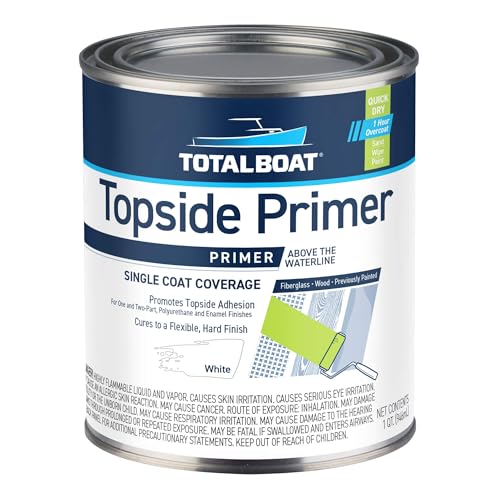
Best for: fiberglass and wood surfaces in need of a durable, flexible undercoat for 1-part and 2-part polyurethane or enamel topside paints. It covers in one coat, seals the surface, and is chromate-free and lead-free. Choose this if you want maximal adhesion and a solid base for brighter or more color-retentive topcoats. Limitation: a second coat might be required for higher build on rough surfaces.
TotalBoat Marine Topside Boat Paint Primer for Fiberglass and Wood, White

Best for: surfaces that require a single-coat primer for flexible, long-lasting topside finishes. This primer is designed to prepare fiberglass, wood, and gelcoat for 1-part or 2-part paints while improving adhesion and finish quality. It’s suitable for above-waterline use and supports a smooth, durable undercoat. Limitation: like other primers, it works best with compatible topcoats from the same brand or noted formulations.
Rust-Oleum 207005 Marine Coatings Topside Paint, Quart, Battleship Gray

Best for: above-waterline surfaces where a neutral gray can reduce glare and match or update a vessel’s look. This oil-based option provides flexible performance, quick curing, and good leveling. A caution: color-matching might require additional coats to achieve a uniform finish across large panels.
Buying Guide: Key Considerations For Topside Paint
- Surface compatibility: Choose products labeled for fiberglass, wood, or metal above the waterline. Ensure the coating adheres to your deck, hull, or trim surfaces.
- Finish type: Oil-based topside paints typically offer good leveling and flexibility; polyurethane-based finishes deliver high gloss and chemical resistance. Consider the climate and UV exposure for gloss retention.
- Application method: Some paints are 1-part and easy to apply by brush or roller; others require spray equipment or a more careful brush technique. Plan for ventilation and safety when using solvent-based products.
- Cure time and recoat window: Quick-drying options allow faster project completion but require careful handling shortly after application. Check recoat times for scheduling multiple coats.
- Coverage: Most quart cans cover roughly 100 sq ft, while gallon sizes fit larger boats. Calculate deck area to estimate quantities and waste.
- Durability vs. ease: Higher-gloss, tougher finishes resist scratching and fading but may be more sensitive to surface prep. Balance maintenance needs with application complexity.
- Primer needs: Some topside systems pair with dedicated primers for better adhesion and a smoother finish. Decide if you need a bonding primer first.
- Safety and environmental factors: Follow local regulations for paint disposal, use proper PPE, and ensure good ventilation during application.
Frequently Asked Questions
- What is topside paint best used for?
Topside paints are designed for surfaces above the waterline on boats, such as hulls, decks, trim, and companionways, offering protection from sun, salt, and weather.
- Should I choose oil-based or polyurethane topside paint?
Oil-based finishes provide strong leveling and flexibility, while polyurethane finishes deliver durable gloss and chemical resistance. Consider climate, maintenance, and desired appearance when selecting.
- Do I need a primer before topside paint?
Some products include or require primers for best adhesion, especially on fiberglass or repaired surfaces. Primer improves coverage and smoothness.
- How many coats are typically needed?
Most topside paints require 1–2 coats for solid color and durability, with primers or undercoats adding build or adhesion as needed.
- What maintenance is required after painting?
Regular cleaning with non-abrasive cleaners helps preserve gloss and color. Address any chips or scratches promptly to prevent underlying material exposure.
- Is painting above the waterline safe for DIY?
Yes, with proper ventilation, protective gear, and surface preparation. Follow product directions for safe usage and cleanup.