Best Automatic Bilge Pump Switches for Boats: Reliable, Easy to Install
Answering the common buyer question, these automatic bilge pump switches provide reliable, hands-free control to protect vessels from unwanted water accumulation. They suit skippers who want simple installation, solid durability, and dependable automatic operation. For easy comparison, the table below highlights five strong options across price and technology tradeoffs.
| Product | Voltage | Control Type | Best For | Notes |
|---|---|---|---|---|
| Rule 35A Marine Rule-A-Matic Switch | 12V | Automatic | Vessels needing mercury-free reliability | Durable, easy install |
| SEAFLO 3-Way Bilge Pump Switch Panel | 12/24V | Automatic/Off/Manual | Versatile control on larger setups | Includes 15A fuse |
| CREATORELE Automatic Bilge Pump Float Switch | 12/24/32V | Float with auto | Pond, pool, and boat use | 51mm activation, 20/10/8A ratings |
| SEAFLO Electric Field Bilge Switch | 12/24V | Automatic | Solid-state reliability | No float, advanced sensing |
| QWORK 2 Pack Heavy-Duty Bilge Switch | 12/24/32V | Automatic | High-traffic installations | Ultrasonic welded seals |
This introductory note is hidden for accessibility; the table above provides essential product comparisons at a glance.
Rule 35A Marine Rule-A-Matic Switch
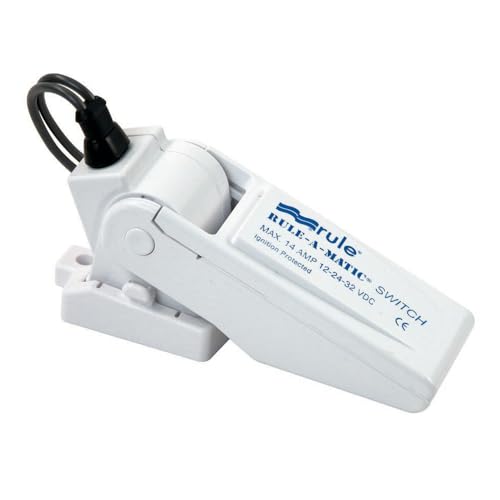
The Rule 35A provides reliable automatic bilge control. It activates the bilge pump when water rises, reducing the need for manual checks and helping protect the vessel from unexpected flooding. Best for skippers seeking mercury-free, durable, marine-grade components and straightforward wiring for quick installation.
- Best for: Boats requiring automatic, maintenance-friendly bilge control.
- Why chosen: Mercury-free, corrosion-resistant housing enhances longevity in harsh marine environments.
- Caution: Ensure correct wiring to avoid false activations in rough seas.
SEAFLO 3-Way Bilge Pump Switch Panel

This panel switch combines automatic control with an Off and Manual position, offering flexible pump management for boats with more complex bilge systems. It includes a built-in 15A circuit breaker and supports 12V and 24V systems. Best for: more complex installations where a dedicated panel control matters.
- Best for: Boats needing float-switch driven auto with manual override.
- Why chosen: Three-position control increases operator flexibility and safety.
- Caution: Check fuse protection and wire gauge to match pump load.
CREATORELE Automatic Bilge Pump Float Switch
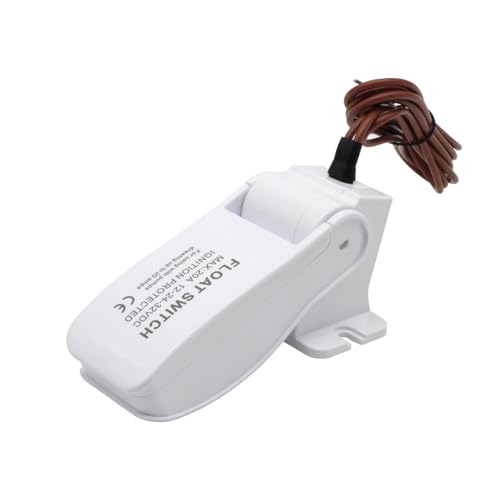
CREATORELE’s float switch activates at 51mm and deactivates at 20mm, delivering reliable automatic bilge performance. It supports multiple voltages (DC12V/24V/32V) with different current ratings. Best for: Boats needing precise water-level control across various power configurations.
- Best for: Versatile voltage compatibility on mixed electrical systems.
- Why chosen: Large silver contacts promote stable electrical contact with bilge pumps.
- Caution: Verify current range matches your pump and avoid beyond-rated loads.
SEAFLO Electric Field Bilge Switch

This solid-state bilge switch uses electric field sensing to detect water presence without moving parts, ensuring consistent automatic activation and shutdown. It supports 12V/24V with solid performance in environments where mechanical failure points need to be avoided. Best for: Boats requiring high reliability with minimal moving parts.
- Best for: Low-maintenance operation in harsh marine conditions.
- Why chosen: No float reduces wear and tear in areas with turbulent bilge water.
- Caution: Consider enclosure and wiring length to minimize potential interference.
QWORK 2 Pack Heavy-Duty Bilge Switch

The QWORK pair offers robust control for boats and vessels with demanding bilge pump needs. It supports multiple voltages (12/24/32V) and high current handling via ultrasonic welding seals for reliability. Best for: Installers needing redundancy and strong sealing in tough environments.
- Best for: High-load, long-life bilge pump deployments.
- Why chosen: Ultrasonic welding seals create a tight, leak-proof build.
- Caution: Ensure pairing with pumps within the rated current to prevent overload.
Buying Guide: Key Purchase Considerations
How Do You Choose Between Automatic And Manual Bilge Switches?
Automatic switches activate the bilge pump when water is detected, while manual switches require operator action to run the pump. For typical small- to mid-sized boats, automatic switches reduce the risk of flood and keep monitoring hands-free. Manual overrides are useful on boats with irregular water levels or during testing.
What Voltage And Current Rating Do You Need?
Most marine bilge switches operate at 12V or 24V. Select a switch with a current rating at or above your pump’s draw. A higher rating increases reliability under load and reduces heat buildup in challenging conditions.
What Type Of Sensing Mechanism Is Best?
Float switches rely on a mechanical float buoy, while solid-state electric field switches detect water presence without moving parts. Float switches are simple and affordable; solid-state switches offer fewer mechanical failures but may be more sensitive to environmental factors.
Is A Panel Or A Standalone Switch Better?
Panel switches provide centralized control and are ideal for boats with multiple bilge components. Standalone switches are easier to install in simple bilge configurations and can be more affordable for small crafts.
What About Durability In Harsh Environments?
Look for mercury-free, corrosion-resistant housings and moisture-tight seals. Marine-grade construction and compliance with IP ratings help ensure long-term reliability in saltwater environments.
Warranty And Support Considerations
A longer warranty, such as four years, signals confidence in product durability. Consider brands offering easy return policies and helpful installation documentation.
FAQ
- Q: Do automatic bilge switches need annual maintenance?
A: Most do not require frequent upkeep, but periodic inspection of wiring and seals helps prevent corrosion and corrosion-related faults. - Q: Can I install a bilge switch myself?
A: Yes, most panels and standalone switches are designed for straightforward wiring; follow the manufacturer’s wiring diagram and safety precautions. - Q: Are all bilge switches compatible with 12V and 24V systems?
A: Some models support both voltages; always verify voltage compatibility with your boat’s electrical system before purchasing. - Q: What should I do if the pump runs continuously?
A: Check for water on the bilge floor, test the float or sensing element, and ensure the line isn’t clogged or blocked by debris. - Q: Is a solid-state bilge switch better than a float switch?
A: Solid-state switches offer fewer moving parts and potential wear, but float switches are simple, affordable, and widely used.