Best Marine Boat Switch Panel Solutions for 12V Systems
Find the right marine boat switch panel to manage multiple 12V or 24V circuits on your vessel. This guide highlights five reliable options, each best for specific needs like USB charging, voltmeter monitoring, or rugged waterproofing. Ideal buyers include boaters needing organized, accessible control panels, RV and trailer owners outfitting mobile setups, and off-road enthusiasts who rely on reliable power distribution.
| Product | Best For | Key Benefit |
|---|---|---|
| DaierTek 6 Gang Marine Rocker Panel | Waterproof panels with USB charging | Dual LED backlit switches and a cigarette lighter socket |
| Nilight 90101E 5Gang | Integrated voltmeter and protection | Digital voltmeter and 15A fuse provide safety |
| Kohree 6 Gang Marine Boat Panel | USB charging plus voltage monitoring | USB QC 3.0, digital voltmeter, USB switch |
| FXC 5 Gang Aluminum Panel | Durable aluminum, blue LEDs | IP66 waterproof, dual USB, voltmeter |
| GGTA 8 Gang Waterproof Panel | Higher channel count | 8 switches plus circuit breakers, IP67 rating |
DaierTek 6 Gang Marine Rocker Panel

- Dual LED Marine Switch: Lower LED stays on for easy dark-room locating; designed for 12V systems in boats, cars, RVs, UTVs.
- Cigarette Lighter Socket: Accepts 12V–24V accessory plugs, suitable for phone charging via compatible car chargers.
- Dual USB Ports: 5V 2.1A and 5V 1A ports expand charging for electronics.
Best for: Boat owners who want a compact, lit control panel with built-in USB charging and a cigarette lighter socket. Limitation: The feature set focuses on USB charging and illumination; additional built-ins may be desired for more circuit types.
Marine Switch Panel Waterproof, 8 Gang
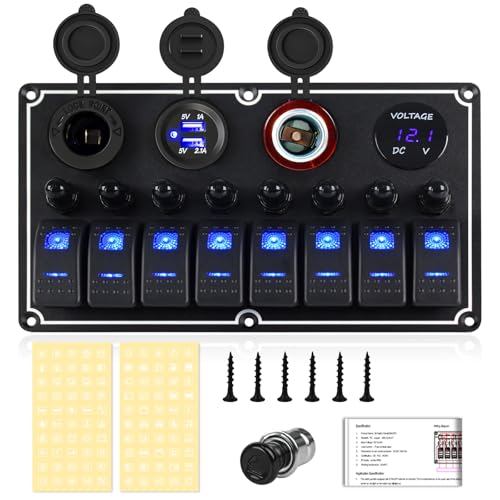
- Waterproof panel with dual USB charger, socket voltmeter, and cigarette lighter socket.
- Inclined buckles on each switch to keep components secure on the panel.
- Pre-wired design with 20A per way for safer connections.
Best for: Users needing eight channels with included USB charging and voltage monitoring. Limitation: Aluminum or plastic panel materials vary; verify saltwater exposure tolerance for your environment.
Kohree 6 Gang Marine Boat Panel

- Upgraded USB Switch with power-saving feature to turn off USB charging when not in use.
- 6-gang panel includes blue LED indicators, dual QC 3.0 USB ports, voltmeter, and 12V socket.
- Built-in safety with fuses and protection against short circuits and reverse polarity.
Best for: Boaters needing USB fast charging and a digital voltage readout in one compact unit. Limitation: USB power management requires user awareness to maximize battery life.
FXC Waterproof Marine Boat Panel 5 Gang
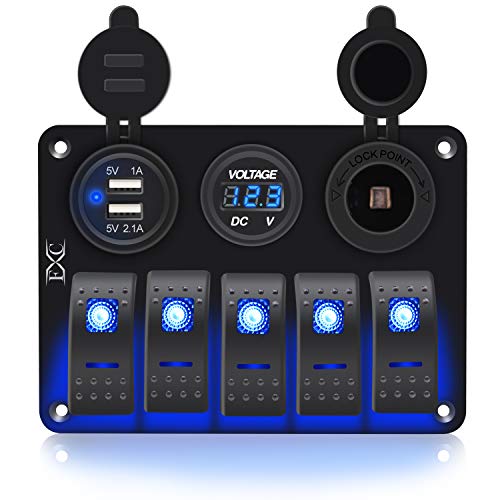
- 5-gang blue LED panel with 12V cigarette socket, voltmeter, and dual USB outlets.
- Aluminum construction with IP66 waterproof rating for rugged marine use.
- Safety features include short circuit and overload protection; suitable for 12V–24V systems.
Best for: Those seeking a rugged, corrosion-resistant panel with a compact 5-gang layout. Limitation: Fewer channels than larger panels; may require expansion for additional circuits.
GGTA Marine Boat Switch Panel Waterproof

- 8-gang blue LED marine switch panel with circuit breakers for added protection.
- Supports DC12V and DC24V, pre-wired design for easier installation.
- Panel front rated IP67 with watertight gasket for marine exposure.
Best for: Boatbuilders needing a higher-channel, rugged option with integrated circuit breakers. Limitation: Larger footprint requires more installation space.
Buying Guide
What to consider when choosing a marine switch panel
- Voltage compatibility: Most panels support 12V and 24V systems; confirm your boat’s voltage before selecting.
- Channel count: Determine how many circuits you need to control. Start with a panel that covers your current needs with room to expand.
- Protection features: Look for built-in fuses or circuit breakers and reverse-polarity protection to safeguard equipment.
- Waterproofing and durability: For exposed applications, prioritize IP66 or IP67 ratings and corrosion-resistant materials.
- USB charging and accessories: If you rely on mobile devices, ensure USB ports are QC-enabled and supported by a voltmeter to monitor power.
- Ease of installation: Pre-wired designs and included screws or mounting hardware simplify setup on boats or RVs.
- Display and indicators: LED indicators help locate switches in low light; voltmeters help monitor battery health in real time.
How to compare panels quickly
- Compare channel count and each channel’s current rating (amps) to match your load.
- Note whether a panel includes a voltmeter and USB charging alongside standard switches.
- Assess panel material and mounting style (aluminum vs. plastic) for durability in marine settings.
Best practices for installation and maintenance
- Use proper wiring gauges and follow marine-grade installation standards.
- Seal mounting areas to prevent water intrusion; use gasket or sealant as recommended by the manufacturer.
- Test each circuit after installation and verify that protection devices trip correctly under fault conditions.
FAQ
- What is the difference between 6-gang and 8-gang panels?
- Do these panels require professional installation?
- Is a voltmeter essential on a marine panel?
- Are all panels waterproof?
- Can I mix USB charging with other high-power loads on the same panel?
- What installation space should I plan for?
Six- and eight-gang panels provide different numbers of controlled circuits. Choose based on how many devices you need to manage on your boat; more channels offer greater expansion but require more space.
Simple pre-wired designs often allow DIY installation with basic electrical skills. For complex boat wiring, consult a professional to ensure proper safety and compliance.
A voltmeter helps monitor battery health and electrical safety, especially on boats with long trips or complex setups. It’s highly beneficial for proactive maintenance.
Most marine-rated panels use IP66 or IP67 protection. Check the specific rating and ensure seals are intact after installation.
Yes, but ensure the total load does not exceed the panel’s rated amperage. Use distributed loads and proper fusing to prevent overloads.
Refer to each product’s dimensions and cutout sizes. Allow extra room for wiring and mounting hardware to simplify future maintenance.