Best Fuel Treatments for Boats: Enzyme Boosts, Stabilizers, and Cleaners
Answering the top buyer question: which fuel treatment is right for a boat? This guide highlights five proven options, explained for boaters seeking engine reliability, ethanol compatibility, and cleaner fuel systems. Best for frequent boaters, anglers, and casual cruisers alike, these products focus on preventing ethanol damage, reducing gum and varnish, and improving fuel economy. The table below compares the five picks to help you choose quickly.
| Product | Best For | Key Benefit |
|---|---|---|
| STAR BRITE Star Tron Enzyme Fuel Treatment – Concentrated Formula 32 Fl. Oz. | Boats with mixed fuel types | Enzyme technology for cleaner fuel delivery and easier starts |
| Star Tron Enzyme Fuel Treatment – Small Engine Formula | Small engines and older boats | Addresses ethanol issues and stabilizes old gasoline |
| STA-BIL 360 Marine Fuel System Treatment, 32 oz | Regular boat owners seeking overall system cleaning | PAE-based cleaner for injectors, lines, pumps; corrosion protection |
| STA-BIL 360 Marine Fuel System Treatment, 8 oz | Emergency fills and smaller fuel tanks | Cleans system and protects against ethanol damage |
| Quicksilver Quickare Fuel Treatment Additive, 12 Oz | Comprehensive varnish and gum removal | Helps maximize engine performance across gas blends |
STAR BRITE Star Tron Enzyme Fuel Treatment – Concentrated Formula

Enzyme technology helps engines start more reliably and run cleaner after inactivity. It is designed to prevent and cure ethanol-related problems, including poor performance and rough idling, offering peace of mind on water or land. By removing gum and varnish, it supports improved fuel economy and smoother operation. Best for boats with mixed fuel sources or periods of inactivity, especially where ethanol issues are common. Caution: concentrated formulas require correct dosing per label to avoid overuse.
STAR BRITE Star Tron Enzyme Fuel Treatment – Small Engine Formula

This version targets small engines and older gasoline. It uses enzyme technology to ease starts after months of inactivity and suppress ethanol-related problems, helping engines maintain efficiency and smoother operation. Best for smaller boats, outboard motors with older fuel, and equipment stored for extended periods. Caution: use as directed to ensure compatibility with existing fuel systems and avoid mixing with incompatible additives.
STA-BIL 360 Marine Fuel System Treatment, 32 oz
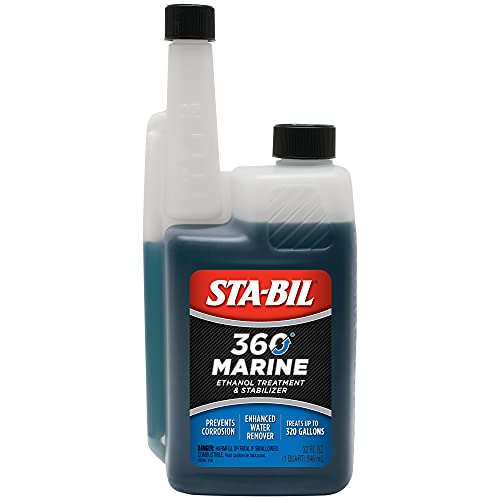
Clean fuel system with PEA-based additives to remove water, gum, and varnish from injectors, lines, and pumps. Provides corrosion protection for in-season use and internal parts, while improving fuel performance for better mileage and power. Best for boats with ethanol blends or stored fuel prone to moisture. Caution: continue regular maintenance; avoid exceeding recommended doses to prevent any additive buildup.
STA-BIL 360 Marine Fuel System Treatment, 8 oz

Compact treatment that treats approximately 80 gallons, focusing on ethanol damage prevention and moisture removal. A practical option for smaller boats or tanks, and for on-the-go maintenance. Best for seasonal boats needing quick, portable treatment. Caution: ensure proper dosing for your tank size to avoid ineffective treatment.
Quicksilver Quickare 8M0047920 Fuel Treatment Additive

Designed to maximize performance across all gasoline grades and ethanol blends. It cleans varnish and gum deposits from fuel lines, tanks, carburetors, injectors, intake valves, and spark plugs. Best for boats needing comprehensive cleaning of the fuel system and injector components. Caution: follow dosage guidelines to avoid excessive cleaning agents in the fuel system.
Buying Guide
- What problem are you solving? If ethanol-related issues are your main concern, choose products marketed to address ethanol problems. For maintenance and protection, enzyme-based or cleaner formulas may be preferable.
- Fuel system scope—Are you targeting entire system cleaning or just stabilizing aging gasoline? Larger bottles often cover more gallons and longer storage periods, while smaller bottles suit quick treatments.
- Engine type and usage—Small engines or outboards may benefit from specific small-engine formulations, while larger boats benefit from marine-grade cleaners and corrosion protection.
- Storage and usage—Consider how frequently you boat and how long fuel sits in tanks. Enzyme fuels and stabilizers help during long storage; cleaners are useful for ongoing maintenance.
- Compatibility—Check ethanol fuel compatibility with your engine and fuel system materials to avoid unintended reactions or residues.
- Application dosing—Accurate dosing ensures effectiveness. Overuse can lead to unnecessary buildup; underuse may leave deposits behind.
FAQ
- Do fuel treatments work with ethanol blends? Yes. Many formulas are designed to prevent and treat ethanol-related issues like varnish, gum, and moisture-related problems.
- Can I use more than one product at a time? It’s generally not necessary and can cause conflicting formulations. Use one treatment as directed by its label and consult the manufacturer if you plan to combine.
- Which product is best for older boats? The Star Tron Small Engine Formula and STA-BIL 360 Marine treatments are commonly recommended for older systems needing ethanol problem mitigation and cleaner fuel delivery.
- How often should I treat fuel in a seasonal boat? For boats stored between uses, consider enzyme-based stabilizers or cleaners before storage, and a maintenance treatment before the next season starts.
- Will these treatments improve mileage? Many formulations claim improved fuel economy by reducing deposits in the fuel system, which can enhance combustion efficiency over time.
- Are there any precautions? Always follow label directions, avoid mixing products, and test on a small fuel sample if your vessel has unique fuel considerations.