Best Marine Circuit Breaker Panels for Safe Boat Electrical Systems
When choosing a marine circuit breaker panel, the goal is clear: reliable protection for your boat’s DC or AC circuits while keeping wiring tidy and easy to troubleshoot. The top picks below suit different boat sizes and power needs, from small fishing boats to larger yachts. Use these options to prevent short circuits, manage fuse or breaker loads, and facilitate quick maintenance. Best for: boaters who want robust, plug-and-play protection with clear fault indicators and organized wiring.
| Product | Best For | Key Benefit |
|---|---|---|
| Blue Sea Systems ST Blade 12-Circuit | Higher‑demand DC systems | 12 circuits with integrated ground and 100 A capacity |
| Blue Sea Systems ST Blade 6-Way | Smaller DC installs | Compact 6 circuits with negative bus, 100 A capacity |
| DAIERTEK 12-Way Fuse Block | DC systems with LED fault indication | LED indicator for blown fuses, tidy wiring |
| Noblequest AC Main 6-Position Panel | Marine AC power protection | Pre-wired, includes 30 A main and backlit indicators |
| WUPP 12-Volt Fuse Block (6/12 Circuits) | Compact, damp-proof DC panels | LED fault indicators, organized ground bus |
Blue Sea Systems ST Blade 12 Circuit with Ground and Cover

This is a 12‑circuit blade fuse block with integrated negative bus and a removable insulating cover. It is rated for up to 100 amps total capacity and supports up to 30 amps per circuit when using standard ATO or ATC fuses, making it suitable for higher‑demand DC systems. The clear protective cover includes a secure push‑button latch, spare fuse storage, and recessed label areas for straightforward circuit identification. Best for: larger DC systems on mid‑to‑large boats where clear fault indication and easy maintenance matter most.
Who should consider this: boatowners needing a robust, expandable DC distribution hub with a defined space for labeling and quick fuse checks. Why chosen: the twelve‑circuit layout provides ample room for future circuits, while the integrated ground helps reduce wiring complexity. Caution: ensure compatible ATO/ATC fuses are used to meet the per‑circuit limits.
Blue Sea Systems ST Blade 6 Way Circuits with Negative Bus
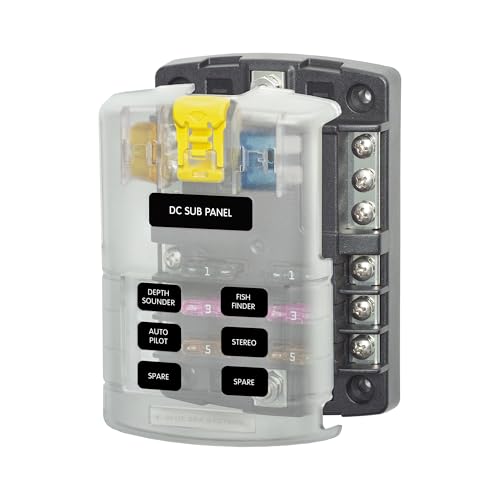
This option provides six fused circuits with a negative bus in one compact block and a 100‑amp total capacity. It includes a clear insulating cover with latch, spare fuse storage, and recessed label areas for circuit identification. Best for: small to medium DC installations on boats where space is limited but you still need reliable distributed protection.
Why this selection works: the smaller footprint helps fit into tight electrical panels while maintaining the same fault‑finding conveniences as larger models. Caution: limited to six circuits, so plan for additional circuits if your system grows.
DaierTek 12‑Way Fuse Block With LED Indicator

This 12‑way fuse block offers LED indicators that illuminate when the corresponding fuse is blown. It has 12 dedicated fuse jacks and wiring locations with a protective cover to keep cables tidy. The panel supports up to 100A per unit and up to 30A per circuit, using ATC/ATO fuses. Best for: boaters who want quick fault identification and neat wiring in a marine DC environment.
Reason for selection: LED fault signaling helps technicians quickly locate issues without testing each circuit. Limitation: performance depends on fuse type; ensure you select appropriate fuses for your loads to avoid nuisance indicators.
AC Main Circuit Breaker Panel 6-Position
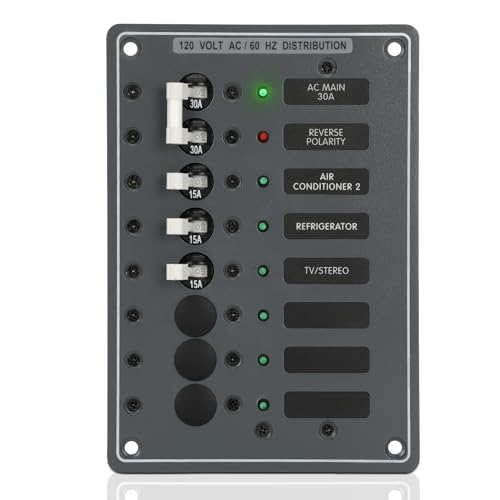
This 6‑position AC main breaker panel is designed for marine use, combining a 30A double‑pole master with three 15A branch breakers and three empty slots. It comes with pre‑wiring and a red reverse polarity LED indicator, plus a green LED to show when the circuit is ON. Best for: vessels needing robust AC protection with room to grow and clear status indicators.
Why pick this: it integrates circuit protection and switching in one enclosure, reducing complexity in the AC side of the system. Caution: only a subset of slots are pre‑wired; expansion requires careful planning and labeling.
WUPP Boat Marine Fuse Block Panel with LED Indicator
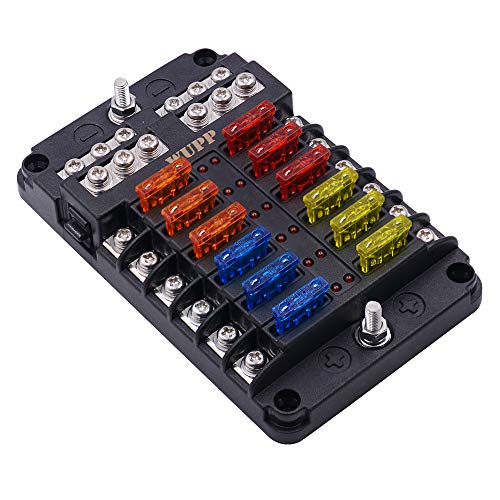
This 12‑circuit DC fuse block features a damp‑proof cover and a negative bus, with a red LED warning indicator for blown fuses. It uses 32V DC inputs and supports up to 100A total with 30A per circuit. The kit includes fuses and emphasizes neat wiring with dedicated fuse jacks and grounding points. Best for: boaters who need a compact, weather‑resistant DC distribution hub with clear fault signaling.
Why it stands out: the LED indicator helps identify faults quickly in marine environments. Limitation: ensure the enclosure and cover seal properly to preserve damp‑proof performance in harsh conditions.
WUPP 12 Volt Fuse Block with 6 Circuits
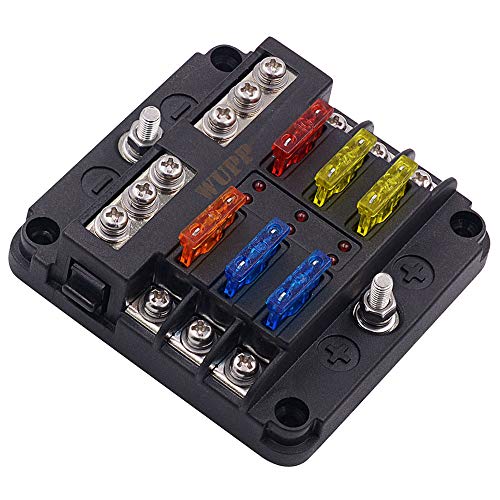
This six‑circuit DC fuse block provides LED fault indicators and a damp‑proof cover, with a universal 32V input and up to 100A total, 30A per circuit. It uses nickel‑plated copper bus bars for reliability. Best for: practical, compact DC installations in boats or RVs where space is at a premium.
Why this is a useful pick: a balanced option between size and circuit count, with clear fault signaling. Caution: the LED indicator relies on the fuse circuit; plan fuse budgeting to avoid indicator misreads during expansion.
Buying Guide: How To Choose The Right Marine Circuit Breaker Panel
What power type do you need to protect? Decide whether your system is primarily DC (common on smaller boats) or AC (typical for larger vessels and onboard appliances). DC panels often emphasize negative bus integration and compact layouts, while AC panels highlight master breakers and backlighting for nighttime use.
How many circuits and what loads are planned? Match the number of circuits to your current and planned future loads. If you anticipate growth, choose panels with spare slots or higher per‑circuit amperage ratings. For high‑demand systems, look for blocks rated at 100 A total capacity with 30 A per circuit where applicable.
Is fault indication important? LED indicators and built‑in fault signaling help pinpoint blown fuses and short circuits quickly, reducing downtime and maintenance effort on the water.
How rugged should the enclosure be? Marine environments require corrosion‑resistant materials and damp‑proof or waterproof covers. Consider IP ratings, gasket seals, and how the panel will be mounted in a wet or salt‑air environment.
How easy is wiring and labeling? Choose panels with integrated ground/bus bars and recessed label areas to streamline troubleshooting and future expansion. A clear labeling system helps non‑expert crew maintain the system.
What installation and maintenance considerations exist? Pre‑wired panels with backlit LEDs reduce nighttime confusion. Ensure compatibility with your fuses (ATO/ATC for DC panels, appropriate breakers for AC panels) and verify available spare slots for future circuits.
FAQ
Q: Do these panels support both DC and AC systems?
A: The list includes mainly DC fuse blocks and one AC main breaker panel. Ensure you choose the panel type that matches your boat’s electrical system (DC or AC).
Q: What does a 100 A total capacity mean?
A: It indicates the maximum current the entire panel can handle across all circuits combined. Exceeding this limit can cause overheating or failure.
Q: Are LED indicators essential for marine panels?
A: LED fault indicators can speed up troubleshooting by showing which circuit has blown fuses, which is valuable for on‑board maintenance.
Q: How important is the negative bus connection?
A: A negative bus simplifies wiring by providing a common return path for multiple circuits, improving reliability and ease of fault finding.
Q: Should I buy a panel with spare slots?
A: Yes, spare slots allow you to expand circuits without reconfiguring the entire panel, useful for evolving electrical needs on a boat.