Best Water Shoes for Boating and Rowing
Answering the needs of rowers and boaters, these water shoes are designed for grip, quick-dry comfort, and foot protection on wet decks, docks, and riverbeds. The top picks below suit different buyers: casual rowers who dock and stroll, frequent boaters who encounter slippery surfaces, and outdoor enthusiasts who mix paddling with beach or shore activities. Use this guide to compare fit, traction, and drying performance to choose the right pair for your boating adventures.
| Product | Brand | Key Benefit | Best For |
|---|---|---|---|
| WateLves Water Shoes | WateLves | Sturdy traction and quick-drying protection | Casual boaters and dockside strolls |
| UBFEN Water Shoes Aqua | UBFEN | Breathable, sock-like fit with reliable wet-surface grip | Frequent water activity on boats and piers |
| SEEKWAY Water Shoes | SEEKWAY | All-round protection with strong grip and easy slip-on | Outdoor sports near water and on boats |
| ATHMILE Hiking Barefoot Water Shoes | ATHMILE | Wide toe design with quick-dry performance | Kayaking, boating, and river trips |
| Maxome Water Shoes | Maxome | Five-toe design with drainage for fast drying | Beach, river, and dock activities |
Note: Each product is listed with its official features to help you compare traction, drying speed, protection, and fit. The selections emphasize versatility for a range of boating scenarios, from deck wear to shore excursions.
WateLves Water Shoes for Boating and Everyday Water Fun

Traction: Sturdy soles provide grip on wet surfaces, helping prevent slips on boat decks and docks. Quick-Drying: The fabric and sole design promote rapid drying to reduce odor and discomfort. Protection: The soles shield feet from sharp objects and minor hazards near water. Best for: Casual boaters who need reliable on-deck traction and everyday wear around splashing water. Limitation: Non-bulky cushioning may be less protective on rough terrain.
UBFEN Water Shoes Aqua For Boating And Beach Days

Reference features: Breathable sock-like comfort powered by a 92% polyester mesh upper and 8% spandex, 1.2mm lightweight construction, and a 5mm cushioned insole with ventilation channels. Best for: Boaters who want a snug, barefoot-like feel with stable grip on wet, slick surfaces. Limitation: Some users may prefer heavier cushioning for long periods of wear.
SEEKWAY Water Shoes For Quick-Dry Outdoor Fun

Reference features: Thick rubber soles with 3D non-slip treads for grip on slippery surfaces; elastic vamp for a snug fit; easy slip-on design with lightweight construction. Best for: Boat outing days requiring reliable traction and convenient on/off wear. Limitation: Fit may vary with foot width due to elastic upper design.
DLGJPA Quick-Dry Water Shoes For Beach And Boat
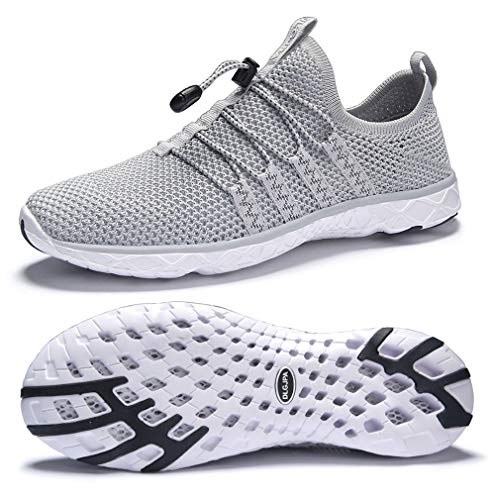
Reference features: Anti-slip rubber sole, breathable upper mesh, quick-drying with strategic drainage; elastic straps for width adjustment and quick heel pull tab. Best for: Boaters who need adjustable fit and practical quick-dry performance. Limitation: May run slightly narrow for wide feet.
ATHMILE Hiking Barefoot Water Shoes For Boating

Reference features: All-round protection with thick rubber soles and toe cap; breathable upper with new fitting technology; nine drainage design for quick water exit. Best for: Kayaking, river trips, and general boating where toe protection and quick drying matter. Limitation: Toe protection may feel bulkier for ultra-light activities.
Water Shoes Men Women By Maxome

Reference features: Five-toe design with a cushioned, protective toe guard; drainage holes on the sole for quick water release; thick foam arch-support insert for comfort. Best for: Boaters and beachgoers who want a unique toe-protection design and fast drying. Limitation: Five-toe design may feel unusual for those used to standard shoe shapes.
Buying Guide
What should I look for in rowing and boating water shoes?
- Traction: Seek non-slip, textured outsoles for wet decks, docks, and slippery rocks.
- Drainage and quick-dry: Look for perforations or holes in the sole and a breathable upper to reduce water retention.
- Protection: A toe cap or reinforced sole helps prevent injuries from sharp objects near water.
- Fit and comfort: An adjustable or elastic upper can improve lockdown without laces that may snag on gear.
Which features matter most for different boating activities?
- Casual rowing or dock walking: Prioritize grip and quick-dry comfort with a lightweight feel.
- Open-water proximity or snorkeling: A more protective sole and broader toe box can improve stability and protection.
- Kayaking or canoeing: A snug, flexible fit with excellent drainage supports quick transitions between water and shore.
How should I choose size and width?
Sizes can vary by brand; consult the size chart and read user notes for width recommendations. If you’re between sizes, consider the pair with a slightly roomier upper or adjustable straps for a secure lock.
Care and maintenance tips
- Rinse with fresh water after exposure to saltwater to prevent corrosion and odor.
- Air dry away from direct heat to preserve elasticity and sole integrity.
- Clean the drainage holes to maintain optimal water flow.
FAQ
- What’s the main purpose of rowing shoes for boating?
- Are five-toe shoes better for boating?
- How important is drainage in water shoes?
- Can water shoes replace traditional sandals on a boat?
- Should I buy a larger size for thick socks?
To provide grip on wet surfaces, quick-dry comfort, and foot protection on decks, docks, and shorelines.
They offer toe protection and a unique fit, but may feel unfamiliar to those used to standard shoes.
Very important; proper drainage speeds drying, reduces odor, and keeps feet cooler during activity.
For many boaters, yes, especially when traction and protection are priorities. For certain fashion or formal occasions, sandals may still be preferred.
Consider a half-size up if you plan to wear thicker socks, but avoid excessive looseness which can reduce stability.