Best Fishing Kayaks With 500+ Lb Capacity for Serious Anglers
Answering common buying questions, these fishing kayaks offer strong weight capacity, solid stability, and practical storage for gear. They are suited for anglers who carry multiple rods, bulky gear, or a full day on the water. The following selections prioritize models with 500 pounds or more of rated capacity and include clear reasons to choose each one. This guide compares capacity, stability, storage, and comfort to help you pick the right option for solo or small-group adventures.
| Product | Capacity Notes | Best For |
|---|---|---|
| TT KAYAK Modular Fishing Kayak | 573 lbs capacity | One-person, modular setup, cart included |
| BKC Brooklyn 12.5 Tandem Sit-On-Top | 600 lbs capacity | Two to three people, big gear needs |
| WETURE Inflatable Tandem Kayak | 507 lbs capacity | Portable, quick setup, storage flexibility |
| Pelican Catch Mode 110 Fishing Kayak | Not listed, high stability features | Premium stability, adjustable layout |
| Pelican Catch Classic 100 Angler | Not listed, front and rear storage | Compact but stable for daily trips |
Modular Fishing Kayak With Cart & Paddle
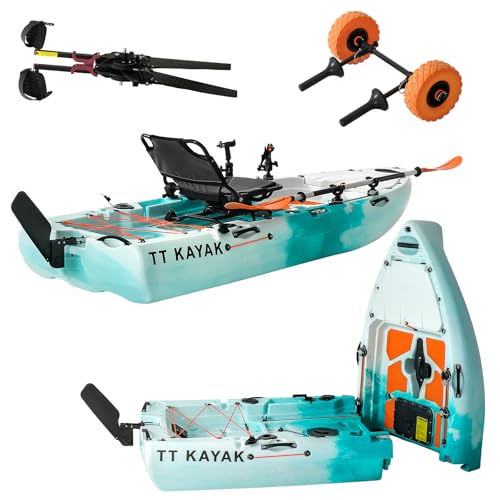
The TT KAYAK 110″ modular fishing kayak splits into two sections, delivering a total capacity of 573 lbs and a width that supports stable standing casts. It ships with a complete kit including a kayak cart and a 87″ aluminum paddle. This configuration emphasizes versatility for anglers who want easy transport and flexible rigging. Best for solo anglers who need a high-capacity hull with easy loading and unloading. A potential limitation is assembly and reconfiguration time when switching between 2-piece setup and full-length mode.
Brooklyn 12.5 Tandem Sit-On-Top

The Brooklyn 12.5 Tandem Sit-On-Top is designed for two to three people with a 600 lb capacity. Its 12.5-foot length and wide 34-inch beam provide stability for standing casts and comfortable long days on the water. It features six rod holders (4 flush + 2 articulating) for flexible rigging, making it a strong choice for families or small groups carrying multiple rods and gear. Choose this if you need tandem versatility and ample gear capacity; avoid if you require fast single-person setup or compact storage.
WETURE Inflatable Kayak 2 Person

The WETURE two-person inflatable kayak offers a 507 lb weight capacity in a portable package. It includes two seats, two paddles, two tail fins, and a pump for quick setup and breakdown. The tandem design makes this a practical option for travelers or anglers who need a compact, easily transported option with sufficient storage for gear. Best for occasional use or trips requiring air-inflated transport; note that paddle efficiency may be impacted by inflatable hull rigidity compared with rigid kayaks.
Pelican Sentinel 100X Angler

The Pelican Sentinel 100X Angler emphasizes versatile storage with the ExoPak removable compartment and four rod holders. Its lightweight design supports easy maneuverability, and the ExoPak allows pre-loading gear before a trip. Best for anglers who want a light, modular setup with flexible gear access. Limitations include capacity specifics not listed in some listings; verify exact figures before purchase if capacity is a priority.
Pelican Catch 110HDII Sit-On-Top

The Pelican Catch 110HDII features a pedal system and an Ergocast seat, designed to enhance comfort during long sessions. It includes four gear rails for accessory customization and is built to accommodate a range of fishing setups. Best for anglers who value pedal-driven maneuverability and a premium seating experience. A potential limitation is the need for additional storage or transport solutions for the pedal system in smaller vehicles.
Buying Guide: Key Considerations For 500+ Lb Capacity Fishing Kaysaks
- Capacity and weight distribution: Ensure the kayak’s rated capacity comfortably exceeds your gear plus body weight. Consider how weight is distributed when standing or moving around the cockpit.
- Stability vs. speed: Wide hulls offer better initial stability for casting; narrow hulls reduce drag and may improve tracking. Decide which balance suits your typical fishing terrain.
- Storage and rigging: Look for front and rear tank wells, hatches, and multiple rod holders. Confirm the placement and accessibility of storage for gear, drinks, and safety items.
- Seat comfort and adjustability: Seating affects comfort during long days. Seats with height adjustments, lumbar support, and breathable materials are advantageous for extended trips.
- Portability and setup: For inflatable or modular designs, assess how easy the kayak is to inflate, assemble, and transport. A included cart or paddle eases loading.
- Material and durability: HDPE rotomolded hulls resist UV and impact; inflatable hulls require proper care to maintain rigidity and longevity.
- Maintenance and accessories: Consider the availability of replacement parts, paddles, rods, and tackle storage options compatible with your chosen model.
Frequently Asked Questions
- What capacity should I look for if I carry lots of gear? — Aim for at least 500–600 lbs total capacity, considering your weight and all equipment.
- Are inflatable kayaks suitable for fishing? — Inflatable designs can offer portability and enough capacity but may require careful inflation and seating setup for stability and long-term durability.
- Is tandem capacity important for solo anglers? — Tandem or modular models can still work for solo use, but ensure seating and rigging support a comfortable solo setup.
- What is the advantage of a pedal system? — Pedal systems improve hands-free maneuverability, which can be beneficial around weeds, shallow water, or when reeling in fish.
- How many rod holders do I need? — A typical fishing kayak uses 2–4 rod holders; additional tracks and eyelets allow more customized rigging for different fishing styles.
- How should I transport a high-capacity kayak? — Check your vehicle’s roof rack or trailer capacity and ensure the hull length fits with secure straps and proper padding.