Best Toddler Life Vest Coast Guard Approved for Safe Water Fun
When choosing a toddler life vest that is Coast Guard approved, look for reliable brands, clear weight ranges, and secure fit features. This guide highlights five top options for infants and young children, with clear guidance on who each vest is best for, potential limitations, and how to choose the right size. The selections cover pool, beach, lake, and boating activities, helping parents pick the right level of buoyancy, comfort, and adjustability for early-water adventures.
| Product | Weight Range | Best For |
|---|---|---|
| Stearns Child Life Jacket with Heads-Up Flotation | 30–50 lb | Face-up flotation and heads-up design for beginners |
| Dark Lightning Baby/Infant Life Vest | Under 30 lb (infant to toddler) | Infants and toddlers who need a secure headrest and grab handle |
| Oceans7 US Coast Guard-Approved Kids Life Jacket (Type III) | 33–55 lb | Open-sided design with adjustable straps for growing kids |
| Airhead TREASURE Life Jacket | 30–50 lb | Comfortable, secure fit for kids on water play |
| SwimWays Bluey Life Jacket | 33–55 lb | Character-themed vest with swim trainer features |
Stearns Child Life Jacket With Heads-Up Flotation

Reference: USCG Approved, weighs 30–50 pounds, with a heads-up neck float designed to keep the child’s face above water. Best for parents seeking straightforward floatation with a face-up position during early swimming activities. The design supports hands-off supervision at shallow water depths. Limitations may include reduced mobility for more active movement as children grow and gain confidence.
Best for: Toddlers who need reliable face-up flotation and a simple, stable fit. Why selected: Strong safety design from a trusted brand with clear weight guidance and head support. Caution: Check fit around the neck area as the small head supports can restrict movement for completely independent swimmers.
Dark Lightning Coast Guard Approved Baby/Infant Life Vest

Reference: Suitable for infants and toddlers under 30 pounds, featuring a headrest, leg strap, and grab handle for snug control during water activities. Best for very young children who require extra head support and a secure fit in initial water experiences. Limitation: may be too bulky for toddlers near the upper weight limit of the infant size; ensure proper adjustment for safe use.
Best for: Infants and smaller toddlers needing a secure, stable fit with head support. Why selected: Comprehensive features (headrest, leg strap, grab handle) aimed at early-water safety. Caution: Fit testing is important to prevent slippage or discomfort during movement.
Oceans7 US Coast Guard-Approved Kids Life Jacket
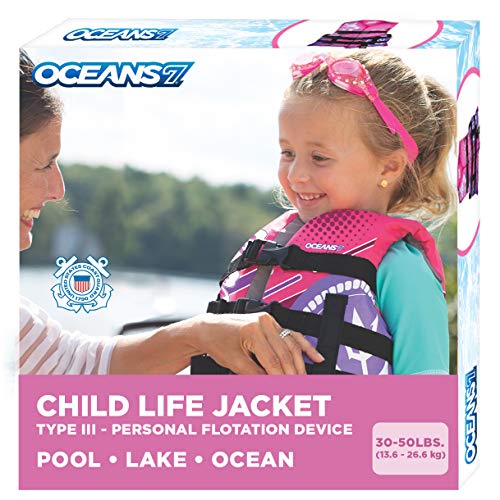
Reference: Type III PFD with open-sided design and three adjustable straps. Best for growing children who need a flexible fit and comfortable mobility. Notable for longer wear as the child grows within the weight range. Limitation: actual comfort and sizing vary with chest and torso dimensions; ensure a secure, snug fit at the shoulders and chest.
Best for: Children in the 33–55 pound range who need adjustable, open-sided support. Why selected: Open sides and extra adjustability help accommodate growth. Caution: Do not exceed the weight range for this model to maintain buoyancy and fit.
Airhead TREASURE Life Jacket

Reference: USCG Approved for infants and children 30–50 pounds, featuring a front zipper, adjustable waist belt, and crotch strap for extra security. Best for water play and boating where quick, secure fastening matters. Limitation: bulky zippers and straps may take longer to put on than simpler vests; ensure quick readiness in emergent situations.
Best for: Kids who need a secure, enclosed-feel vest with dependable fasteners. Why selected: Combines safety with a kid-friendly design and durable materials. Caution: Verify exact weight and torso dimensions before purchase for proper fit.
SwimWays Bluey Life Jacket

Reference: USCG-approved life vest designed for 33–55 pounds, featuring a 2-in-1 design with a swim trainer concept and Bluey-themed graphics. Best for fans of the character seeking confidence in the water with an encouraging, recognizable motif. Limitation: the combination design may feel bulkier than single-function vests for very active swimmers.
Best for: Kids who enjoy character themes and want a dual-purpose vest for pool or beach days. Why selected: Appeals to engagement and swimming confidence while meeting safety standards. Caution: Confirm sizing if your child is near the lower or upper end of the weight range for a snug fit.
Buying Guide
Key factors to consider when choosing a toddler life vest include weight range, open or closed sides, additional adjustment features, and ease of donning. For beginners, consider vests with clear size guidelines and a design that promotes a face-up position when possible. Open-sided designs tend to offer better mobility as children grow, while closed-sided vests can feel more secure but may limit movement in the chest area.
Fit and comfort are essential. Look for adjustable straps across the shoulders and waist, crotch straps for extra security, and grab handles for quick assistance. Material quality matters for quick-drying performance and durability in water exposure. Character-themed vests can enhance a child’s willingness to wear the vest, but ensure that the design does not compromise safety or buoyancy.
Usage context matters. For pool time and calm waters, a comfortable, secure vest with easy fastening is ideal. For boating and open water, select models with robust fasteners, head support, and stable buoyancy. Always supervise children in and around water, and replace any worn or damaged life vests promptly.
FAQ
- What does USCG Approved mean for a toddler life vest? It means the vest meets U.S. Coast Guard standards for personal flotation devices, including buoyancy, fit, and labeling for weight ranges.
- How do I choose the right size for my toddler? Match the vest to the child’s weight range on the label and ensure the vest fits snugly at the shoulders and chest without restricting movement.
- Should I prefer open-sided or closed-sided vests? Open-sided vests offer more flexibility or growth room, while closed-sided vests can feel more secure for younger children who are learning to float.
- Is a headset or headrest important? For infants and early floaters, a headrest and grab handle can aid support and rescue, but always monitor your child closely.
- Can a life vest replace supervision? No. A life vest improves buoyancy but does not replace attentive supervision around water.
- What should I do if a vest seems too bulky? Try a smaller size within the recommended weight range or select a vest with adjustable straps and fewer bulkier features.