Best Kayak Loaders for Roof Racks to Make Hauling Easier
Answering the common buyer question: these kayak loaders help one person load and secure a kayak onto a roof rack with less strain. They are best for solo travelers, small to mid-size boats, and vehicles with varying crossbar setups. The top picks below emphasize ease of use, compatibility, and secure loading, so you can match the loader to your vehicle and gear. A quick comparison table of the selected products follows to help you decide at a glance.
| Product | Best For | Key Benefit |
|---|---|---|
| TOOENJOY Heavy-Duty Kayak Lift Assist Roof Rack | Small to mid-size kayaks, solo loading | Smart-Lift mechanism for easy raising/lowering |
| Codinter Kayak Roller | Standard sedans and SUVs | Strong suction cups with rotating foam for hull protection |
| Apaspoil Kayak Roller | Vehicles with rear window access | Triangular structure for higher load capacity |
| Malone SeaWing/Stinger Combo | Single kayak users with universal fit | Self-aligning Stinger system and corrosion-resistant saddles |
| Yakima SweetRoll Rooftop Loader | Versatile bar types | Rollers and adaptive base for easy loading |
TOOENJOY Heavy-Duty Lift Assist For Kayaks
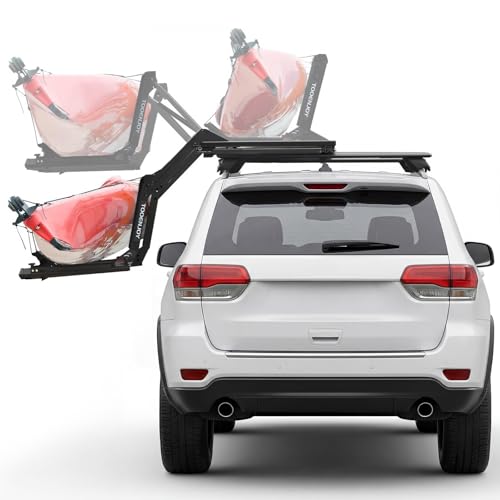
The TOOENJOY lift is designed for 100 lbs capacity and is aimed at back-saving loading for kayaks and other gear. Best for solo users who frequently need to raise and lower loads with minimal effort. The Smart-Lift mechanism is a central benefit, allowing controlled movement up and down. The unit notes compatibility caveats: you may need extended crossbars or an accessory adapter for fixed, non-extendable crossbars. This is a practical choice for lighter recreational kayaks or smaller craft, where single-hand maneuverability matters. A potential limitation is the need for compatible crossbars, which may require additional purchases.
Codinter Kayak Roller With Suction Mount

The Codinter roller uses heavy-duty suction cups and C-type aluminum bars to mount on the rear window area of sedans and SUVs. It supports up to 220 lbs and includes a rotating foam pad to protect the hull during loading. Best for vehicles without roof crossbars or for those who prioritize a suction-based mounting approach. It is not suitable for cars with vertical rear windows, so verify your vehicle configuration first. A drawback to consider is that suction performance can vary with glass angles and weather conditions.
Apaspoil Kayak Roller With Suction

The Apaspoil loader features a triangular structure to boost weight capacity up to 280 lbs and uses heavy-duty suction cups with a red safety indicator to monitor suction status. It installs quickly with a snap-in design and requires no tools. Best for users who need higher load capacity and a simple, tool-free setup. A potential limitation is the reliance on suction cups, which may be less stable on certain vehicle glass angles or in adverse weather. The red indicator helps users verify suction integrity before loading.
Malone SeaWing/Stinger Combo For Kayaks
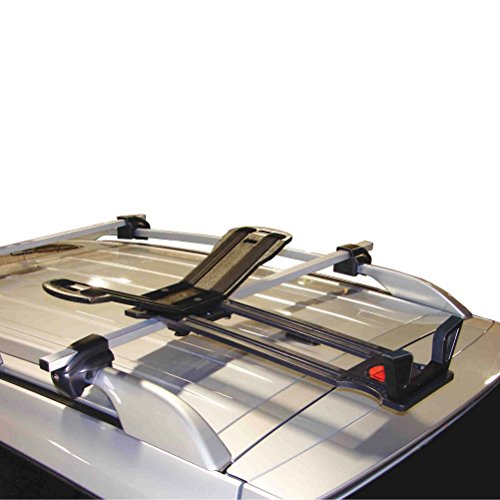
The Malone system uses SeaWing saddles with corrosion-resistant polycarbonate and a Stinger self-aligning V-Block. Designed for one kayak loading, with a total capacity listed around 75 lbs and 32″ width compatibility. Best for users who want a robust, long-term carrier with a smart alignment feature. The combo approach can simplify setup but may require careful positioning to ensure the Stinger lines up with the hull during loading. Heavy-duty durability is a key benefit here, with clear advantage for regular kayak users.
Yakima SweetRoll Rooftop Loader

The Yakima SweetRoll integrates dual front and rear saddles with rollers for easier loading on a variety of bar types. Its adaptive base automatically adjusts to the boat during loading, reducing manual alignment. Best for versatility across Yakima round, square, factory, or aerodynamic bars. It’s a strong choice for users who want a highly forgiving, easy-to-use system. A potential limitation is that installation complexity can vary with different bar configurations, so proper mounting is essential for optimal performance.
ECOTRIC Universal Kayak Loader

ECOTRIC offers a universal fit with adjustable arms for kayaks, canoes, and larger gear. Its gravity-assisted T-shape design simplifies solo loading, and soft straps help prevent hull damage. The loader supports up to 100 lbs and is height-adjustable to match vehicle height. Best for budget-conscious buyers who still want a straightforward loading solution. A limitation is that gravity-assisted loading may require a stable loading surface and careful movement to avoid misalignment during the initial lift.
Rhino-Rack Universal Side Loader

The Rhino-Rack Side Loader is built for one-person operation, allowing you to pivot your load onto the crossbars. It fits most roof racks and includes multiple adapters for compatibility. Best for taller vehicles or when roof access is restricted. The main limitation is setup complexity and the need to ensure secure attachment to the rack before loading. It’s particularly helpful if you frequently load long gear like kayaks in tight spaces or above a tall vehicle roof.
Buying Guide: Kayak Loaders For Roof Racks
- Compatibility: Verify crossbar type, distance, and vehicle window or roof configuration. Some loaders require extended crossbars or adapters for fixed rails.
- Load Capacity: Match the capacity to your kayak weight and any additional gear you plan to carry. Consider a margin for safety and future gear.
- Loading Mechanism: Choose between gravity-assisted, suction-based, or electric/smart-lift designs. Electric or assisted options reduce effort but may require more maintenance and compatibility checks.
- Hull Protection: Look for padded or foam-supported contact points to prevent hull damage during loading and transport.
- One-Person Usability: If solo loading is a priority, favor systems designed for single-person operation with clear alignment features.
- Weather and Surface Considerations: Suction-based options depend on glass angle and weather; rooftop-based rollers rely on crossbar stability.
- Installation and Tools: Tool-free snap-in designs are convenient, but some models require basic tools for secure mounting. Assess your DIY comfort level.
- Durability: Corrosion resistance and sturdy construction extend overall lifespan, especially for frequent use near saltwater or harsh conditions.
Frequently Asked Questions
- Do kayak loader systems require professional installation? Most can be installed by the user with vehicle-specific fitting instructions; some models may require additional adapters.
- Can I use these loaders with any kayak? Most loaders support standard recreational kayaks up to their stated weight limit; check width and hull shape compatibility.
- Are suction-based loaders reliable in cold weather? Suction performance can decline in very cold temperatures or on certain glass angles; test before use in harsh conditions.
- Is a single-loader system enough for heavy or oversized kayaks? For heavier loads, a higher-capacity or multi-point system may be safer and easier to maneuver.
- What is the best loader for tall vehicles? Side-loading or pivot-based systems tend to reduce effort for loading on taller vehicles.
- How should I maintain these loaders? Regularly inspect locking mechanisms, straps, pads, and suction integrity; replace worn parts promptly.