Best VHF Marine Radio Antenna Picks for Clearer Sea-Waring Communication
For boaters and maritime hobbyists, a reliable VHF marine radio antenna is essential for clear voice communication and safety. This guide highlights five well-rounded antennas, suitable for different vessels and mounting setups. The selections emphasize durability, signal gain, and ease of installation, helping you choose based on your mounting point, cable length, and preferred brand. Ideal buyers include small-boat owners upgrading from stock antennas, coastal sailors needing better range, and cruisers seeking lower maintenance gear.
Summary of top picks:
| Product | Best for | Key Feature | Cable Length |
|---|---|---|---|
| Retevis MA06 | Small boats, RA27/RM20 users | 3.5 dBi fiberglass, waterproof | 7 m |
| Long Range Antenna (eifagur) | Versatile mounting | 2.5 dBi, 50 Ohm | 5 m |
| HYS 43.3″ (2nd Gen) | General purpose, durable | 3.0 dBi, 50 Ω | 7 m |
| UAYESOK 44” | Home or mast mounting | 3.0 dBi, fiberglass | 7 m |
| Tram Pretuned 46″ | All marine bands | 3 dBd gain, fiberglass | RG58 included |
Retevis MA06 VHF Marine Antenna

The MA06 is a fiberglass, waterproof VHF antenna designed for Retevis RA27 RM20 and similar radios. It delivers a 3.5 dBi gain across the 156-163 MHz band and ships with a 43.3-inch mast and a 7-meter (approximately 23 feet) RG-58 coaxial feeder with PL-259 connector. Built for harsh marine environments, it is IP66-rated for corrosion resistance and long life. This option is best for small to mid-sized boats where a dependable, relatively compact antenna is needed and the user prefers Retevis-compatible setups.
Who it’s best for: boaters using RA27 RM20 or compatible VHF radios who want a rugged fiberglass antenna with ample cable length for flexible mounting. Why chosen: it balances rugged construction with solid gain and simple installation. Caution: its 7-meter feed line may require careful routing to avoid damage on crowded helm layouts.
Key details:
- Frequency: 156-163 MHz
- Gain: 3.5 dBi
- Construction: Fiberglass, IP66 waterproof
- Length: 43.3 inches
- Coax length: 7 m with PL-259
Long Range VHF Marine Antenna by eifagur

The eifagur model targets versatility with a 156-163 MHz band and a 2.5 dBi gain. It comes with a 16.5-foot (5 m) low-loss RG-58 coax and a PL-259 connector, allowing flexible installation on masts or high points. Its 50-ohm impedance aligns with common VHF devices for improved receive and transmit clarity. This antenna is a solid choice for sailors who require a longer run of coax and straightforward on-deck mounting, especially when upgrading from basic whips.
Who it’s best for: boaters seeking a straightforward, budget-friendly upgrade compatible with multiple VHF devices. Why chosen: good balance of gain, ease of installation, and a longer coax run helps keep wiring tidy and protected. Caution: 2.5 dBi is modest compared to higher-gain options, so far-range gains may be limited in very poor visibility or heavy hull interference.
Key details:
- Frequency: 156-163 MHz
- Gain: 2.5 dBi
- Impedance: 50 Ohm
- Coax length: 5 m
- Power handling: up to 50 W
HYS 43.3-Inch VHF Marine Antenna

This HYS antenna uses fiberglass construction and a 43.3-inch length to deliver a 3.0 dBi gain across the 156-163 MHz range. It ships with a 22.9-foot (7 m) RG58 low-loss coax and a built-in nylon ratchet mount for straightforward mast or rail mounting. The design supports IP-rated weather resistance for daily marine use. It’s a good pick when you need higher robustness and straightforward installation with a longer run of coax.
Who it’s best for: sailors requiring a rugged, easy-to-mount option with solid mid-range gain. Why chosen: durable fiberglass body, wide horizontal beam pattern, and a long coax run for flexible deck layout. Caution: the 3.0 dBi gain is moderate; for very remote operations, higher gain could be advantageous.
Key details:
- Frequency: 156-163 MHz
- Gain: 3.0 dBi
- Impedance: 50 Ω
- Coax length: 7 m
UAYESOK VHF Marine Base Antenna
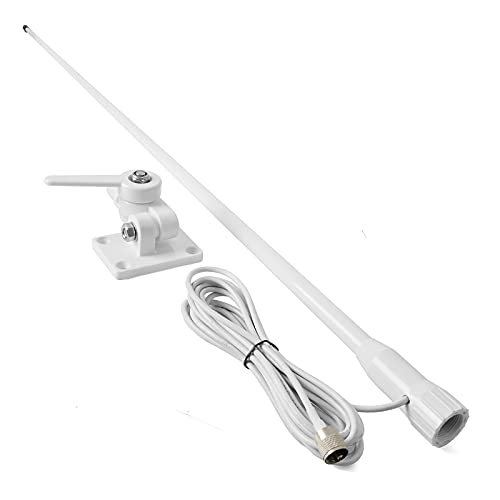
The UAYESOK base antenna stands 44 inches tall and uses fiberglass for durability in marine environments. It includes a 7-meter low-loss RG-58U cable with PL259 termination, and features a 50-ohm impedance and a 3 dBi gain. The antenna is designed for anti-corrosion performance and smooth, glossy finishes that resist exposure to sun and salt. It suits helms and mast-top mounting where a medium-gain, weather-ready solution is desired.
Who it’s best for: boat owners needing a reliable mast-top or deck-mount solution with straightforward setup. Why chosen: balanced provide-at-a-glance specs, good durability, and compatible 7 m cable length for flexible installation. Caution: 3 dBi is a middle-ground gain; users needing maximum range might prefer higher-gain models.
Key details:
- Frequency: 156-163 MHz
- Gain: 3 dBi
- Impedance: 50 Ω
- Height: 44 inches
Tram Pretuned VHF 46-Inch Antenna

The Tram Pretuned VHF antenna covers the full marine band with a 3 dBd gain, using a 46-inch fiberglass whip. It ships with RG58 cable and a PL-259 adapter, and is designed for rachet mounts to simplify on-deck installation. Its broad frequency coverage and fiberglass construction make it a versatile option for boats needing a single antenna to handle multiple channels and radios.
Who it’s best for: buyers wanting a single, all-band marine antenna with easy mounting and broad compatibility. Why chosen: the 3 dBd gain provides a good mix of range and consistency across the band, and the fiberglass build supports durability. Caution: 46 inches is longer than compact setups; ensure you have clearance on low-deck mounts.
Key details:
- Frequency: All marine band
- Gain: 3 dBd
- Length: 46 inches
- Includes: RG58 cable, PL-259 adapter
HYS Low-Profile VHF Marine Antenna

This HYS model emphasizes a low-profile design with a 156-163 MHz operating range and 2 dBi gain. It includes 16.4 feet (5 m) of RG58 coax with PL259, suitable for boats where a compact antenna reduces windage while maintaining reliable communication. The rubberized antenna element is designed for resilience in salt air and sun, making it fit for daily use on small to midsize craft.
Who it’s best for: owners prioritizing a discreet, low-profile antenna that still delivers dependable VHF performance. Why chosen: compact footprint, reliable basic performance, and included high-quality coax for stable connections. Caution: 2 dBi is the lowest gain in this lineup; range in rough seas may be more limited than higher-gain options.
Key details:
- Frequency: 156-163 MHz
- Gain: 2 dBi
- Coax length: 5 m
- Impedance: 50 Ω
Buying Guide: Choosing the Right VHF Marine Antenna
What mounting scenario fits your boat?
Consider whether you will install the antenna on a mast, rail, or deck. Mast-top mounts typically benefit from taller antennas for more line-of-sight, but require careful clearance. Deck or rail mounts favor compact profiles to reduce wind resistance.
How much gain do you need?
Higher gain (3 dBi and above) improves reception and transmission over longer distances, especially in open water. If you operate close to shore or in crowded harbors, a mid-range gain antenna often suffices and saves space and cost.
What about coax length and quality?
A longer, low-loss coax helps maintain signal integrity, but excessive length can complicate routing. Look for standard RG-58 or similar with PL-259 connectors. Ensure the cable length matches your installation needs without excessive slack.
Durability matters in salt, spray, and sun
Fiberglass construction and IP-rated seals (e.g., IP66) offer durability in harsh marine environments. A rugged outer housing reduces the risk of moisture ingress and mechanical damage during docking or rough seas.
Compatibility and future-proofing
Choose antennas that match your current VHF radios and the common brands in your fleet. If you plan to upgrade radios, consider models with universal 50-ohm impedance and broad band coverage to minimize future changes.
FAQ
- Q: Do higher dBi gains always mean better performance?
- A: Higher gain can extend range, but it may narrow the beam and require precise aiming. Consider your typical operating area and mounting position.
- Q: Is fiberglass better than stainless for marine antennas?
- A: Fiberglass is lighter, buoyant, and highly resistant to corrosion, making it common for marine use; stainless hardware adds durability where needed.
- Q: How important is coax length?
- A: Sufficient coax length provides flexible mounting but excess length can introduce signal loss. Choose the length to fit your install without excessive slack.
- Q: Can I install any antenna on any boat?
- A: Most antennas are compatible with standard 50-ohm VHF radios, but verify impedance, connectors, and mounting hardware for your specific setup.
- Q: Should I buy a low-profile antenna?
- A: Low-profile models reduce wind resistance and are ideal for small boats or low-clearance areas, though they may offer lower gains.