Best Radar Arch Options for Boats: Top Picks for 2026
Finding the right radar arch or arch-mounted radar solution for a boat depends on your boat size, mounting needs, and whether you want a dedicated arch or a versatile T-top/arch hybrid. This guide highlights five top picks that balance durability, adaptability, and ease of installation. They’re suited for different buyers: do-it-yourself boaters, commercial skippers adding navigation gear, or weekend anglers upgrading their radar visibility. The table below compares key aspects to help you decide quickly.
| Product | Best For | Mount Type | Adjustability | |
|---|---|---|---|---|
| Oceansouth Boat Arch/Radar Arch | Moderate beam boats seeking stainless steel arch | Free-standing stainless steel frame | Adjustable up to 43″ height | Supports up to 87″ beam width |
| Dolphin T Top Radar Arch | Smaller to mid-size T-tops needing universal fit | Aluminum, attaches to T-top joints | Adjustable width | Enhances T-top reinforcement |
| lawai’a Dolphin Radar Arch Fishing Tower | Large boats needing tall, adjustable arch | Anodized aluminum tower | 54″ height, width adjustable 82–109″ | Sturdy stainless-like durability with aluminum |
| Cruze Wakeboard Tower (Radar Arch) | Pontoon or family boats needing multi-use arch | Tower with top bracket | Forward/backward installation option | Universal fit 80″–106″ beam |
| APT-F-150-01 Aluminum Radar Mount | Radar mounting on cabin roof or arch | Direct mount on structure | 6″ height, adjustable for multiple radomes | Broad radar compatibility |
Oceansouth Boat Arch/Radar Arch
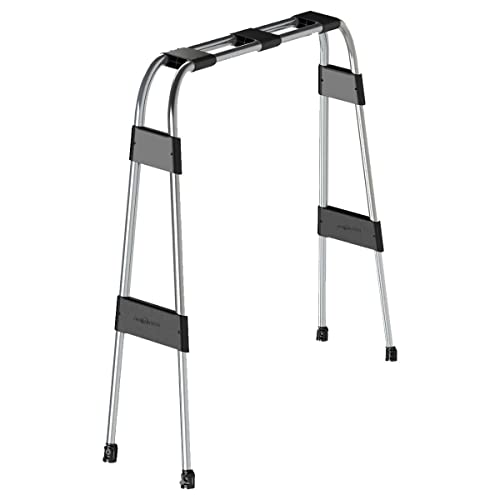
The Oceansouth radar arch uses a 1 1/4” 316 stainless steel tube frame, offering substantial rigidity for radar and antenna mounts. It is adjustable, with a maximum height of 43″, and compatible with boats up to 87″ beam width. Best for buyers who want a sturdy, corrosion-resistant free-standing arch for mid-sized vessels. Limitation: installation may require precise alignment to preserve beam clearance on narrower boats.
Dolphin T Top Radar Arch (Seamax)

This universal-fit arch is designed to work with Dolphin T-Tops, featuring 2 U-shaped handles and a 20″ x 20″ aluminum plate for secure mounting. The design supports radar installation while reinforcing the T-Top frame. Best for boats with existing Dolphin T-Tops seeking enhanced radar visibility without major structural changes. Caution: ensure your T-Top joints can tolerate added loads from a radar arch, especially on smaller frames.
lawai’a Dolphin Radar Arch Fishing Tower

The lawai’a 54-inch tall fishing tower elevates radar and antenna equipment for improved range and visibility. It offers an adjustable width from 82 to 109 inches, making it versatile across many boat sizes. Best for anglers or captains needing greater elevation and flexibility. Limitation: taller towers may affect clearance on low-profile boats or garages; verify vertical space on your vessel.
Cruze Wakeboard Tower Radar Arch (Pontoon Boats)

The Cruze Wakeboard Tower is designed for pontoon boats and supports forward or backward installation. It includes a complete mounting kit to fit beams from 80″ to 106″. Best for families seeking a multi-use arch for wakeboarding gear and radar equipment. Limitation: pontoon-specific design may not suit non-pontoon hulls without modification or adapters.
APT-F-150-01 Aluminum Radar Mount

This aluminum radar mount is 150mm (6″) high and designed for compatibility with Garmin, B&G, Lowrance, Raymarine, and Simrad radars. It’s intended for cabin roofs, arches, or flybridges, preventing radar shifting at high speed. Best for owners upgrading a radar system with flexible mounting options. Limitation: may require drilling and precise alignment to maintain horizon visibility and avoid obstruction from cabin features.
Buying Guide
What should you consider when choosing a radar arch or mount?
- Boat type and size: Arch height, width, and mounting method should fit your hull and beam width without obstructing movement or vision.
- Material and corrosion resistance: Stainless steel and anodized aluminum resist marine exposure, but consider local salt use and maintenance needs.
- Radar and antenna compatibility: Check diameter, weight, and mounting pattern to ensure the arch or mount can support your radar model.
- Mounting method: Free-standing arches are easier to install on open decks; T-top integrations require compatible frames and reinforcement.
- Elevation and coverage: Taller arches boost radar range but may affect clearance in garages or bridges; balance elevation with space.
- Adjustability: Look for adjustable heights or widths to accommodate different seas and configurations.
Practical considerations
- Installation effort: Free-standing arches may need more structural anchoring; T-top options rely on existing frames.
- Weight distribution: Added weight on the arch can affect boat handling; ensure mounting points can handle stress.
- Aesthetics and resale value: A well-matched arch improves appearance and may help resale, but avoid bulky setups on small boats.
- Maintenance: Regularly inspect fasteners, coatings, and joints for corrosion or fatigue.
Frequently Asked Questions
- What is the main benefit of a radar arch?
It raises radar visibility, extends horizon range, and provides mounting space for antennas and lights. - Can I install a radar arch on any boat?
Most arches are designed for specific beam widths and hull types. Check compatibility with your boat’s dimensions. - Are stainless steel arches better than aluminum?
Stainless steel offers higher corrosion resistance in saltwater, while aluminum is lighter and easier to modify. - Do radar arches require professional installation?
Depending on the boat and arch type, some installations can be DIY, but critical mounts and wiring may require a professional. - Will a radar arch affect speed or fuel efficiency?
Properly installed arches add weight but are typically engineered to minimize drag; incorrect installation can impact performance. - How do I choose between a free-standing arch and a T-top arch?
Free-standing arches suit open decks and larger boats; T-top arches integrate with existing frames and are ideal when you already have a T-top.