Best Water Heaters for Boats: Reliable Hot Water on the Go
Whether you’re cruising offshore, camping aboard, or maintaining a small yacht, having dependable onboard hot water is essential. This guide highlights five top boat-friendly water heaters, chosen for compact spaces, marine-grade build, energy efficiency, and straightforward installation. Best for anglers, liveaboards, or weekend sailors who want steady hot water without a heavy system.
| Product | Capacity | Power | |
|---|---|---|---|
| Kuuma 6 Gallon Water Heater | 6 gallons | 120V, 1500W | Yes |
| Camco 11841 Kuuma Water Heater | 11 gallons | 120V, 1500W | Yes |
| Kuuma 11810 6-Gallon Water Heater | 6 gallons | 120V, 1500W | Yes |
| Whale F600 Water Heater | 6 gallons | 120V | Yes |
| Whale S600 Water Heater | 6 gallons | 120V | Yes |
Kuuma 6 Gallon Water Heater for Marine Use

Best for compact boats needing reliable hot water in tight spaces. This 6-gallon Kuuma unit runs on 120V, delivering up to 1500W for quick hot water access. Front-mount and rear-heat-exchange design support flexible installation on smaller vessels. Choose this if space is a priority and you want a proven marine-grade heater. A potential limitation is the 6-gallon capacity, which may require a recharge interval on high-demand days.
Camco 11841 Kuuma Water Heater — 11 Gallons

Best for crews that want more hot water from a single unit without doubling up heaters. The 11-gallon capacity provides a larger reservoir, ideal for longer trips, multiple sinks, or higher daily usage. It uses 120V and 1500W like the smaller Kuuma model, with front heat exchange and back-mount options for flexible installation. Better for larger boats or families; note that it’s heavier and requires more space than the 6-gallon model.
Kuuma 11810 6-Gallon Water Heater
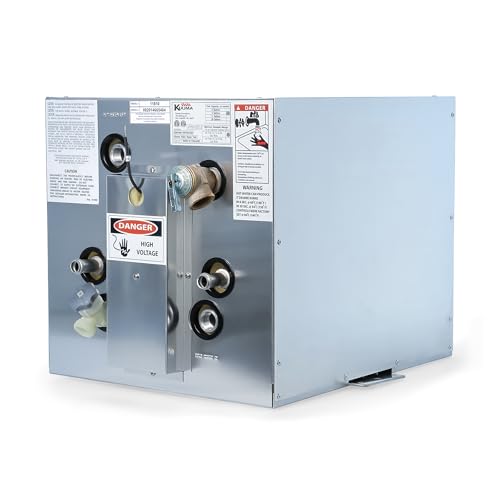
Best for boats needing stable hot water with a compact profile. This 6-gallon Kuuma unit emphasizes consistent performance and efficient heat exchange within a marine aluminum tank. It operates at 120V and 1500W, matching other Kuuma models in power. Choose this if you want a reliable, space-conscious option; a potential limitation is the standard 6-gallon size that may require monitoring on high-demand days.
Whale F600 6-Gallon Water Heater

Best for boats that want rugged construction and dependable hot water. The Whale F600 offers a 6-gallon capacity with a front heat exchanger design and galvanized steel housing for durability in marine conditions. It emphasizes long service life and reliable performance. Caution: physical size and mounting orientation should be verified against your vessel’s layout to avoid clearance issues.
Whale S600 6-Gallon Water Heater
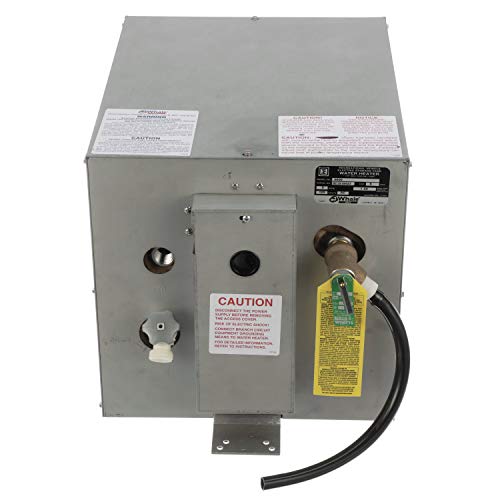
Best for those who prefer rear-heat-exchanger configurations. The Whale S600 mirrors the 6-gallon capacity and 120V operation, with a different heat-exchanger arrangement that may suit certain installation layouts. It is best for boats with a rear-mount space or when a specific heat-exchanger orientation is needed. Limitation: the rear-exchanger design may influence mounting options on some hull layouts.
Buying Guide: Key Considerations For Boat Water Heaters
- Capacity vs. usage: Match gallons to daily hot water needs. 6-gallon units suit single-sink boats; 11-gallon options better for families or longer trips without frequent reheating.
- Electrical requirements: All listed models use 120V and around 1500W. Ensure your boat’s electrical system and shore power setup can handle the load and that circuits are appropriately rated.
- Heat exchanger orientation: Front vs. rear heat exchanger affects mounting flexibility. Check your vessel’s available space and mounting surfaces before selecting a model.
- Durability and materials: Marine aluminum tanks and galvanized or rugged housings improve lifespan in saltwater environments. Consider corrosion resistance and ease of maintenance.
- Ease of installation: Consider existing plumbing compatibility, available space, and whether a front-m mount or back-mount configuration fits your bilge or cabinet.
- Maintenance and serviceability: Look for heaters with straightforward access panels and clear replacement part availability for long-term reliability.
- Installation safety: Confirm proper ventilation, blocking to reduce vibration, and electrical code compliance aboard a vessel.
Frequently Asked Questions
- How much hot water can a 6-gallon marine heater provide per day?
Answer: It depends on usage, but a typical 6-gallon unit can support several showers or multiple dishwashing cycles before needing a heat cycle or refill. - Can these heaters run on engine heat instead of shore power?
Answer: The listed models operate on 120V electrical supply. Some boats may use engine-driven or alternative heating methods, but these specific units are designed for electric operation. - What is a heat exchanger and why does it matter?
Answer: A heat exchanger transfers heat efficiently between the heating element and the water, improving recovery times and reducing energy waste. Front vs. rear orientation affects mounting. - Is a larger capacity always better for boats?
Answer: Not necessarily. A larger capacity provides more hot water but requires more space and power. Choose capacity based on typical trip length and crew size. - Are these heaters safe for marine use?
Answer: Yes. All listed models are designed for marine installation with materials and seals rated for saltwater environments, but proper installation and periodic maintenance are essential. - Will these heaters fit in small cabins or galleys?
Answer: Many 6-gallon models are compact and suitable for tight spaces; always verify dimensions and clearance before purchasing.