Best Fuel Additives for Boats to Improve Performance and Longevity
Finding the right fuel additive can prevent ethanol-related issues, improve starting reliability, and boost fuel economy for maritime engines. This guide highlights five top choices that are well-suited for boaters—from casual weekend cruisers to small-outboard power users. Each option targets common problems like gum buildup, water in fuel, and corrosion. Read on to compare how these products perform and who should buy them.
Summary of chosen products
- Star Tron Enzyme Fuel Treatment (Concentrated) – Best for: general use, all-engine compatibility
- STA-BIL 360 Marine Fuel System Treatment – Best for: comprehensive fuel system cleaning
- STA-BIL Marine Tune-Up Fuel Treatment – Best for: carbureted engines needing carb/ injector cleaning
- STA-BIL 360 Marine Fuel System Treatment (32 oz) – Best for: larger fuel systems needing cleaner injections and protection
- Star Tron Enzyme Fuel Treatment (Small Engine Formula) – Best for: small engines and old gasoline recovery
Star Tron Enzyme Fuel Treatment – Concentrated Formula

Product highlights: Enzyme technology helps engines start more reliably and run cleaner, even after inactivity. It addresses ethanol-related problems, including rough idling and reduced fuel economy, and aims to prevent gum and varnish buildup to improve fuel delivery.
Best for: General boat owners and outboard users who want a versatile fuel stabilizer that supports cleaner combustion. Choose this if you need a concentrated, all-around enzyme treatment that works across engines.
Caution: Data supports enzyme-fueled cleaning but performance may vary with extreme ethanol blends or very old fuel stored for long periods.
STA-BIL 360 Marine Ethanol Treatment and Fuel Stabilizer

Product highlights: Cleans the entire fuel system using PEA additives, removing water, gum, and varnish. Provides corrosion protection and is designed for in-season cleaning while protecting internal parts. Aims to improve gas mileage and engine longevity.
Best for: Boat owners who want a robust cleaner and corrosion fighter that supports in-season maintenance. Choose this if you prioritize corrosion protection and comprehensive system cleaning.
Caution: For very small tanks, follow dosing guidance to avoid over-treatment and ensure compatibility with your fuel type.
STA-BIL Marine Tune-Up Fuel Treatment

Product highlights: Focused on cleaning carburetors and injectors, aiming to fix rough-running engines and eliminate water in the fuel. It treats up to 20 gallons, offering a quick, targeted tune-up option.
Best for: Boaters with carbureted engines or older fuel systems needing injector or carburetor cleaning. Choose this when rough running is a noticeable issue and you want a compact, easy-to-use solution.
Caution: Not ideal for very large fuel systems or modern direct-injection engines that require different formulas.
STA-BIL 360 Marine Fuel System Treatment (32 oz)
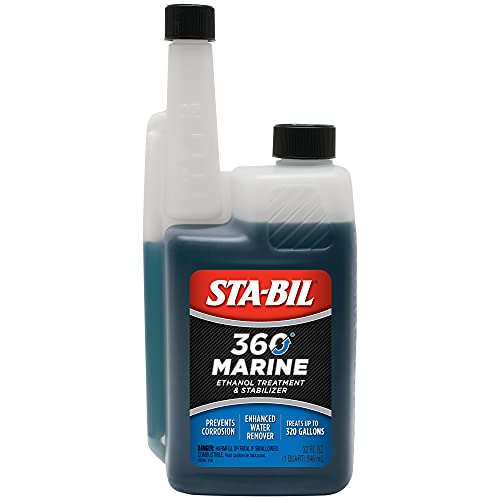
Product highlights: A fuel system cleaner and injector cleaner designed for boats and watercraft. It removes water, prevents corrosion, and protects against ethanol damage, with a focus on improving overall fuel system performance.
Best for: Boats with a need for regular fuel system cleaning and ethanol protection across larger fuel capacities. Choose this if you want a dedicated system cleaner that supports sustained engine reliability.
Caution: Follow dosage recommendations for your tank size to ensure effective cleaning without over-treatment.
Star Tron Enzyme Fuel Treatment – Small Engine Formula

Product highlights: Designed to rejuvenate and stabilize old gasoline in small engines. Uses enzyme technology to promote easier starts and smoother operation after storage. Addresses ethanol-related problems and aims to improve fuel economy.
Best for: Boaters with small engines or older gas that sit unused for long periods. Choose this if you need a compact formula tailored for small outboards or handheld tools.
Caution: Not a substitute for routine fuel stabilization for large or high-usage marine engines; verify compatibility with your specific model.
Buying Guide
What should you consider when choosing a marine fuel additive?
- Engine type and fuel system: Direct-injection, carbureted, or 2-stroke outboards may respond differently to enzyme versus cleaner formulations.
- Storage and ethanol exposure: If your fuel sits idle for weeks or months, a stabilizer that prevents varnish and water buildup is valuable.
- Cleaning vs stabilization balance: Some products emphasize system cleaning, while others focus on stabilization and fuel economy. For mixed needs, a multi-faceted formula is preferable.
- Tank size and dosing: Larger tanks require higher volumes; ensure the product you choose matches your boat’s fuel quantity and usage pattern.
- Compatibility: Check whether the product is formulated for ethanol-blended fuels (E10, E15, etc.) and for marine environments to avoid corrosion and varnish.
Practical comparison snapshot
- Best for all-around maintenance: Star Tron Concentrated or Small Engine Formula.
- Better for frequent cleaning and corrosion protection: STA-BIL 360 Marine equivalents.
- Choose this if you want targeted carburetor/injector cleaning: STA-BIL Marine Tune-Up.
FAQ
- Q: Do fuel additives really improve boat performance? A: They can reduce ethanol-related issues, clean the fuel system, and support smoother operation, depending on the engine type and fuel quality.
- Q: How often should I treat my boat’s fuel? A: Follow manufacturer dosing instructions based on tank size and usage. For boats stored seasonally, stabilization is important.
- Q: Are enzyme-based additives safe for all engines? A: Enzyme formulations are designed for broad compatibility but always verify with your engine type and fuel source.
- Q: Can I use more than the recommended amount? A: No, excessive dosing can lead to foaming, incomplete combustion, or residue buildup; stick to labeled guidance.
- Q: Which product is best for ethanol damage prevention? A: Several STA-BIL and Star Tron options address ethanol-related issues; select based on engine type and tank size.
- Q: Is a separate fuel stabilizer needed if I use a cleaner? A: Many products combine cleaning and stabilizing functions, but if fuel sits for long periods, a dedicated stabilizer is advisable.