Best Boat Heat Exchangers for Efficient Onboard Heating and Cooling
When choosing a heat exchanger for a boat, you want reliable marine-grade performance, corrosion resistance, and ease of installation. The top options below are selected for boating use, with clear indications of who they’re best for and why they stand out. This guide helps buyers compare marine heat exchangers for engines, hot water, and cabin heating, so you can pick the right model for your vessel.
| Product | Best For | Why It Stands Out |
|---|---|---|
| Kuuma 11810 6-Gallon Water Heater | Boats needing steady hot water | Marine aluminum tank with an efficient heat exchanger and 120V power; compact 6-gallon capacity |
| Whale S600 Water Heater | Reliably supplied hot water on larger boats | Rear heat exchanger design; rugged construction; 6-gallon capacity |
| Whale F600 Water Heater | Boats requiring front heat exchanger | Front heat exchanger configuration; durable build; 6-gallon capacity |
| Marine Engine Water Cooler (Titanium Exchanger) | Diesel engines under demanding use | Titanium exchanger for stable heat transfer; corrosion-resistant cast iron housing |
| AB Plate Heat Exchanger 4×12 | Compact, high-efficiency water-to-water transfer | 316L stainless steel plates with copper brazing; robust, high-pressure capable |
Kuuma 11810 6-Gallon Water Heater
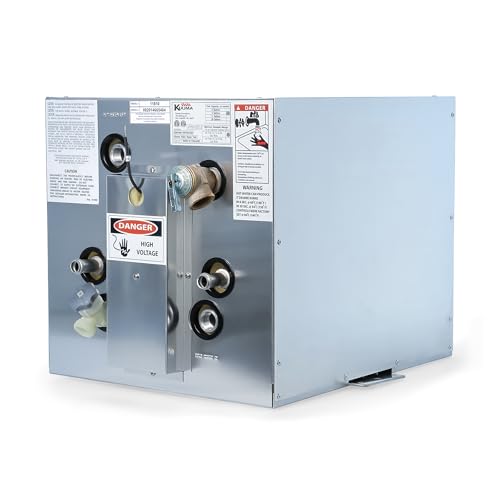
Brand: Kuuma
- Marine Water Heater with an efficient heat exchanger
- Capacity: 6 gallons; Electrical input: 120V, 1500W
Best for: Boat owners who need a reliable, self-contained hot water supply with straightforward 120V operation. This model is selected for its marine-grade construction and compact size, which fits many cabin layouts. Limitation: Uses electrical power; performance depends on available shore power or a generator.
Whale S600 Water Heater
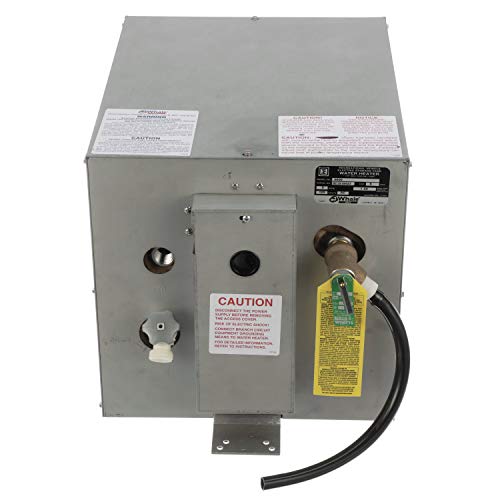
Brand: Whale
- 6-gallon capacity with rear heat exchanger
- Durable construction designed for marine use
Best for: Boats requiring a dependable heat-exchange configuration with a rear-facing setup. Choose this if your installation favors a rear-positioned exchanger for space planning. Caution: Front- or rear-exchanger layout affects mounting options and plumbing routes; verify clearances before install.
Whale F600 Water Heater

Brand: Whale
- 6-gallon capacity; front heat exchanger
- Durable galvanization and marine-ready construction
Best for: Boats that require a front-exchanger configuration to suit forward-facing installations. This model is selected for ease of servicing and solid marine durability. Caution: Front-exchanger layout may influence access to service ports; confirm plumbing clearance during planning.
AB Pool Heat Exchanger 155kBtu

Brand: AB
- Stainless steel 316L; 1 1/2″ & 1″ FPT ports
- Rated for up to 155 kBtu/hr; suitable for water-to-water heating
Best for: Boats or small vessels needing a compact, high-efficiency water-to-water exchanger for cabin heating or domestic hot water. Limitation: This unit is sized more for steady, higher-output needs; ensure your system can feed it adequately.
AB Water To Water 10×10 30 Plates Exchanger

Brand: AB
- 30 brazed 4″x12″ plates; 1″ MPT
- 316L stainless steel with copper brazing edges
Best for: Boats that need a robust plate heat exchanger for efficient heating transfer and compact installation. Choose this if you require a high-capacity, closed-loop heat transfer with strong corrosion resistance. Caution: Brazed plate designs require precise torquing and leak testing during installation.
Buying Guide: Key Considerations For Boat Heat Exchangers
- Purpose: Hot water vs. engine cooling vs. cabin heating. Select a unit designed for your primary need (hot water on deck vs. engine cooling down below).
- Material and corrosion resistance: Marine environments demand stainless steel 316L, titanium, or robust alloys. Consider saltwater exposure and chemical treatment in your choice.
- Exchanger type: Plate, shell-and-tube, and finned-tan options each have strength and installation trade-offs. Plate exchangers offer compactness and high efficiency; shell-and-tube models tend to be robust and serviceable.
- Flow and capacity: Match BTU/hr or gallon capacity to your vessel’s demands and climate. A mismatch leads to inadequate heating or cooling.
- Installation space and access: Ensure clearance for ports, fittings, and service access. Some models favor rear or front mounting depending on layout.
- Power and energy use: Electric heaters require shore power or a generator; non-electric options rely on engine heat or solar preheating where available.
- Maintenance: Corrosion resistance, gasket lifespan, and ease of cleaning impact long-term reliability. Stainless and titanium components typically offer extended service life.
- Safety and compatibility: Check compatibility with your boat’s plumbing system, water quality, and temperature demands. Confirm rated pressure and temperature ranges before purchase.
FAQ
- What type of heat exchanger is best for a small boat hot water system?
– A compact marine water heater with an integrated heat exchanger (like Kuuma) suits small spaces and shore power setups. - Can heat exchangers be used for both engine cooling and cabin heating?
– Yes, plate or shell-and-tube exchangers can be configured for either engine cooling loops or cabin heating, depending on plumbing and capacity needs. - Is titanium more durable than stainless for marine exchangers?
– Titanium offers excellent corrosion resistance in saltwater, but weight and cost are considerations. Stainless 316L is a common, robust alternative. - Do Front and Rear exchanger configurations affect installation?
– Yes. Front-exchanger models may require different mounting and access routes than rear-exchanger designs; plan plumbing and service access accordingly. - What maintenance helps extend exchanger life?
– Regular leak checks, descaling if needed, and ensuring ports are clean and free of debris help maintain efficiency and prevent leaks. - Are there non-electric options for boat heating?
– Yes, some marine exchangers rely on engine heat or solar-assisted systems, reducing electricity dependency.