Best Cabin Fans for Boats and RVs: Comfort on the Go
Finding the right fan for a boat cabin or RV means prioritizing low power draw, durable construction, and flexible mounting. This guide highlights five top options that balance efficiency, quiet operation, and fuel- or battery-friendly performance. Ideal buyers include boat owners needing reliable 12V cooling, RV travelers seeking quiet, low-draw airflow, and portable enthusiasts who value compact, installable designs. Below, you’ll see a quick product snapshot and detailed notes to help you compare at a glance.
| Product | Best For | Power & Installation |
|---|---|---|
| TN TONNY DC 12V Marine Fan | Small boats and RVs needing adjustable airflow | 12V brushless motor; low power draw; screw-mounted; 180° adjustable head |
| Seachoice 12V DC Oscillating Fan | Fixed cabins and cargo areas with wall mounting | 6 in. fixed mount; 90° oscillation or stationary; built-in On/Off |
| TN TONNY 3-Speed DC 12-24V Marine Fan | Cabins or caravans needing adjustable speed and portability | 12-24V; 3 speeds; 360° rotation; easy screw or adhesive install |
| SEEKR BORA II | Compact, energy-conscious marine/RV cooling | 12V/24V auto-sensing; 6″ compact; magnetic base; 3 speeds |
| RoadPro RP-1179 Car Fan | Heavy-duty metal construction for vehicles | 7.5″ diameter; 2 speeds; 10 ft cord |
TN TONNY DC 12V Marine Fan — Quiet Cabin Cooling

- Features a long-life brushless motor with low power draw; suitable for marine and RV use.
- Three speed settings (low, medium, high) via a push button.
- Hardwire installation to boat or RV electrical system; 180° adjustable head.
Best for: Small boats or trailers where a discreet, low-profile fan is needed and a direct-wiring setup is possible. This model focuses on durability and battery-friendly operation, making it a solid choice for battery-powered vessels and off-grid sites.
Caution: Hardwire installation requires basic electrical wiring knowledge; improper wiring could affect performance or safety.
Seachoice 12V DC Oscillating Fan, 6 in.
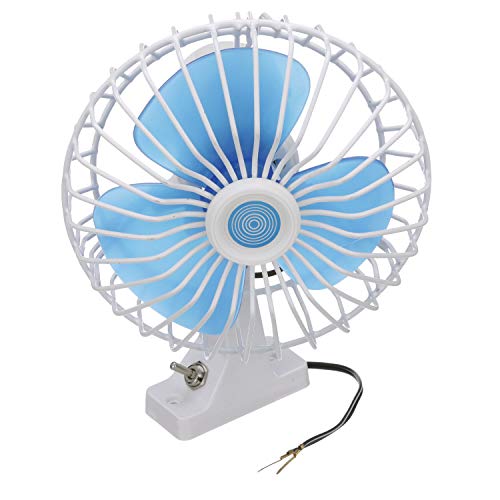
- Fixed-mount, ideal for boats, cars, trucks, and RVs with a simple On/Off control.
- 90-degree oscillation option or stationary positioning for focused airflow.
Best for: Cabins where a fixed, space-saving solution with straightforward operation is desired and where oscillation can cover a wider area. The built-in switch makes it quick to operate.
Caution: Fixed-mount design limits versatility if you frequently relocate or reconfigure the space.
TN TONNY 3-Speed DC 12-24V Marine Fan
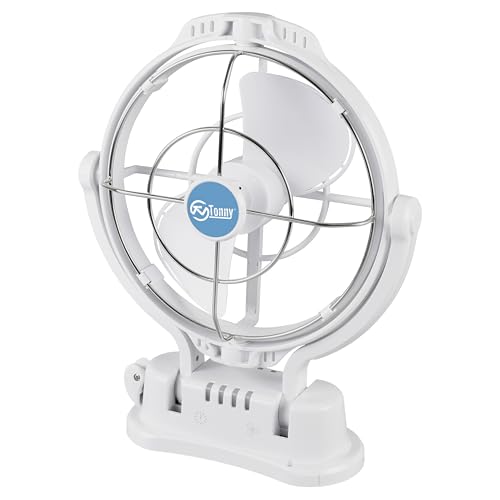
- Energy-saving brushless motor with long lifespan and low power draw.
- Three speeds plus 360° rotation to reduce dead angles; easy install with screws or double-sided adhesive.
- Silent operation suitable for cabins, caravans, and boats.
Best for: RV and boat users who want a robust, three-speed fan that can rotate fully to cover multiple zones from a single unit.
Caution: May require secure mounting to withstand movement and vibration aboard boats or during travel.
SEEKR BORA II 12/24V Cabin Fan

- Auto-sensing 12V/24V operation with dual power options on USB or plug-in.
- 6″ compact design with a strong magnetic base for versatile placement.
- Three speeds deliver airflow up to a practical range for small cabins and desks.
Best for: Cruisers and RVers who value magnetic mounting and dual power options for flexible use on metal surfaces or desks.
Caution: Magnetic mounting relies on compatible metal surfaces; uneven surfaces may affect stability.
RoadPro RP-1179 Car Fan

- 7.5″ metal construction with two-speed operation and a long 10-foot DC cord.
- Heavy-duty design suitable for vehicles where durability is a priority.
Best for: Vehicles and boats requiring a rugged, metal fan with extended cord length for flexible mounting and reach.
Caution: Metal construction adds weight; ensure mounting hardware can support the unit in motion.
Buying Guide: Cabin Fan Considerations for Boats and RVs
Power, mounting, and airflow are central to choosing a cabin fan. Consider the space size, battery capacity, and whether you need fixed mounting or portable placement. Key questions to guide your choice:
- What voltage does your system support (12V or 24V), and is auto-sensing important for you?
- Do you prefer a fixed mount or a portable, magnetic, or screw-in option?
- Is noise level a priority, and how important is maximum airflow (CFM) versus energy use?
- Will the fan need to operate on batteries or be hardwired to the vessel’s electrical system?
- What space constraints exist in your cabin, and can the fan reach all areas with oscillation or rotation?
Practical guidance: For small cabins or desks, compact 6″ fans with dual power options and magnetic bases (like SEEKR Bora II) offer flexibility and space efficiency. For fixed mounting in a boat’s head or galley, fixed-mount models with adjustable heads and 90° or 180° movement can maximize coverage. If you prefer a rugged workhorse for transit vehicles, metal-bodied units with longer cords (like RoadPro) provide durability and reach.
Frequently Asked Questions
- How do I choose between 12V and 24V fans?
- Is painting or mounting necessary for most marine fans?
- Can a fan be used on battery power alone?
- What’s the benefit of a magnetic base fan?
- Are oscillating fans better for larger cabins?
- What installation considerations matter for boats?
12V fans are common in most boats and RVs; 24V models are typical in larger or heavier electrical systems. Choose based on your onboard power setup and device compatibility.
Most marine and RV fans require mounting, either with screws or adhesive. Ensure a secure installation to handle vibrations during travel.
Many models offer low-power operation and battery-friendly settings, but battery capacity will determine runtime. Check the motor type and speed settings for efficiency.
A magnetic base enables flexible placement on metal surfaces, saving space in tight cabins. Ensure a clean, flat metal surface for best adhesion.
Yes. Oscillating fans distribute airflow more evenly across a larger area, reducing hot spots and improving comfort in bigger spaces.
Vibration resistance, salt corrosion resistance, and secure mounting are critical. Use sealed wiring and corrosion-resistant hardware where possible.