Best Clear Bottom Paint for Boats: Clear, Low-Odor Options for Your Hull
Answering the top buyer question: what clear or low-odor bottom paints help boats stay clean without harsh fumes? This guide highlights options that keep barnacles and weed growth at bay while remaining easy to apply and cleanup. It’s especially helpful for boaters who run in marinas with environmental rules, or those who want minimal sanding at season’s end. The list targets users who need predictable performance on fiberglass, wood, steel, or aluminum hulls in salt or freshwater environments.
Summary table of selected products:
| Product | Best For | Material Suitability | Notes |
|---|---|---|---|
| TotalBoat JD Select Ablative Antifouling Bottom Paint (Quart) | Season-long protection; easy cleanup | Fiberglass, Wood, Steel | Low odor, water-based |
| Rust-Oleum Marine Flat Bottom Antifouling (Quart) | Budget-friendly antifouling | Fiberglass, Wood, Steel | Slow copper release; quick recoat |
| TotalBoat JD Select Ablative Antifouling Bottom Paint (Gallon) | Same as quart, larger area | Fiberglass, Wood, Steel | Low VOCs; easy cleanup |
| TotalBoat Underdog Antifouling (Gallons) | Frequent-use boats with trailering | Fiberglass, Wood, Steel, Iron | Economical, durable |
| TotalBoat Underdog Blue Antifouling (Gallons) | Same as above with color choice | Fiberglass, Wood, Steel, Iron | Holds up to trailering/beaching |
TotalBoat JD Select Ablative Antifouling Bottom Paint (Quart)

Best for: boats that stay in saltwater or freshwater and need a single-season antifouling film. This ablative coating wears away gradually as the boat moves, reducing future buildup. It suits fiberglass, wood, and steel hulls and is noted for low odor and easy cleanup with soap and water.
What to know: It is a water-based, low-VOC option suitable for marinas with environmental restrictions. Use when you want a burnishable finish for smoothness and potential speed gains. Choose this if you want a familiar, widely compatible ablative system.
Rust-Oleum 396967 Marine Bottom Antifouling (Quart)

Best for: budget-conscious boaters needing effective bottom protection on common hull materials. This product releases copper slowly to deter fouling and can be recoated in a few hours, allowing faster turnarounds. It covers up to about 110 sq ft per quart, which helps plan small-to-medium vessel projects.
What to know: It is suitable for fiberglass, wood, or steel hulls but is more chemical-reliant than some water-based options. Opt for this if you want a straightforward, economical antifouling solution and don’t require ultra-low odor or ultra-low VOCs.
TotalBoat JD Select Ablative Antifouling Bottom Paint (Gallon)

Best for: larger boats or frequent-care routines needing a longer outreach between purchases. The gallon size mirrors the quart’s formula but covers more area, maintaining low odor and easy soap-and-water cleanup. It is ideal for saltwater or freshwater use on fiberglass, wood, and steel hulls.
What to know: As with the quart, this is an ablative, self-polishing coating that reduces sanding work next season. Choose this if you plan larger projects or want fewer fill-ins during the same season.
TotalBoat Underdog Antifouling (Gallons)
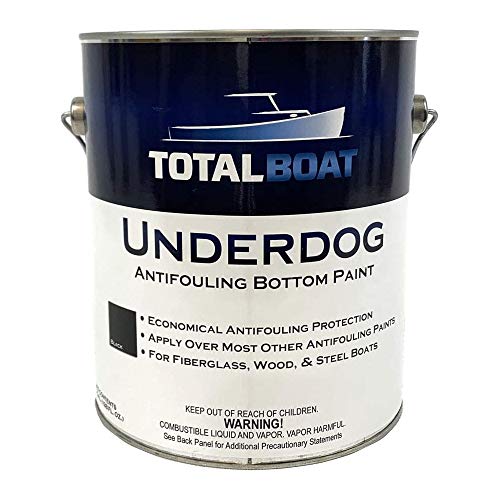
Best for: boats that are often used and moved, including trailering and frequent launching. The Underdog line emphasizes economical per-season protection with a durable finish that withstands rough handling and various water types. It’s suitable for fiberglass, wood, steel, and iron hulls and keeps barnacles and mussels at bay.
What to know: The coating releases fresh biocide as water flows under the hull, helping prevent attachment. It’s a good pick when you want a budget-friendly option that still performs under typical boating use. Avoid if you’re seeking ultra-low VOCs or a solvent-based alternative.
TotalBoat Underdog Antifouling (Blue, Gallon)

Best for: similar to the standard Underdog, but with a color option to help visually track coverage or to satisfy personal preference for hull appearance. It offers economical, single-season protection and is designed for frequent-use boats, including sailboats and power boats in various saltwater conditions.
What to know: It shares the same biocide-release mechanism as other Underdog products and is intended for properly prepared fiberglass, wood, steel, and iron hulls. Consider this if you want a color choice and straightforward application without sacrificing performance.
TotalBoat Inflatable Boat Bottom Paint (1 Quart)

Best for: inflatable boats made of Hypalon, PVC, or rubber that require a flexible, durable coating. This water-based ablative antifouling is formulated to resist cracking when deflated and rolled up, with 25% copper providing protection against barnacles and growth in both fresh and saltwater.
What to know: Pick this for inflatables where a flexible, non-cracking finish matters. It is not a heavy-duty option for rigid hulls but excels where bendy, collapse-prone vessels are common.
Buying Guide
What should you consider before buying?
- Hull material compatibility: Most products target fiberglass, but some work on wood, steel, or aluminum. Confirm your hull type before choosing.
- Water type and season length: Saltwater environments often demand stronger antifouling performance; freshwater may allow lighter coatings. Consider how long you need protection per season.
- Ablative versus non-ablative: Ablative coatings wear away over time, reducing buildup but requiring reapplication. Non-ablative, harder films resist wear longer but may require more sanding later.
- VOC and odor: For marina restrictions, low-VOC and low-odor options are preferable. Water-based formulas usually meet these needs.
- Application and drying: Look for quick recoat windows and short launch times if you need faster turnaround.
- Environmental and cleanup: Water-based products simplify cleanup with soap and water and are friendlier to marinas.
How to choose between quart and gallon sizes?
Quart containers are suitable for small boats or touch-ups. Gallons cover more area and often reduce per-foot costs for larger vessels. If you have more than one hull or a long-term project, a gallon may be more economical, but ensure you can store any unused portion properly to avoid wastage.
Application basics for best results
- Proper surface prep is essential, including cleaning and sanding as required by the product instructions.
- Follow the manufacturer’s mixing and application guidelines, including dry times and recoat windows.
- Apply in a well-ventilated area and wear appropriate protective gear, especially with solvents or copper-based biocides.
- Avoid applying in extreme temperatures or high humidity to prevent peeling or poor adhesion.
FAQ
- Q: Are these paints safe for marinas? A: Many listed options are low-VOC and water-based, designed for marina environments with restricted fumes.
- Q: How long does antifouling protection typically last? A: Season-long protection is common for ablative formulas, but durability depends on water type and usage patterns.
- Q: Can I switch between ablative and hard antifouling paints? A: Switching types often requires proper surface preparation and may not be ideal; follow product guidelines.
- Q: Do I need a primer before applying antifouling paints? A: Most antifouling products are self-contained, but some hull materials may benefit from a prep wash or etching step as directed.
- Q: How do I choose between quart and gallon for a small boat? A: A quart is usually enough for smaller hulls or touch-ups; a gallon reduces frequent re-orders for larger boats.
- Q: Is copper-based antifouling safer for the environment? A: Copper biocides are common; select products with low VOCs and follow local environmental guidelines to minimize impact.