Best Trailer Dollies for Boat Trailers: Easy Moving, Clear Comparisons
The best trailer dollies for boat trailers deliver reliable maneuverability, balance, and ease of use. This guide targets buyers seeking rugged, portable solutions for moving boat, utility, or small trailers around driveways, docks, or storage lots. Each top pick below suits different needs—from low-maintenance solid tires to heavy-duty powered options. Choose based on weight capacity, terrain, and whether you want manual or electric operation. The table highlights five strong choices with core specs to compare quickly.
| Product | Capacity | Tire Type | ||
|---|---|---|---|---|
| MaxxHaul 70225 Trailer Dolly | 600 Lbs | 12″ Pneumatic | Manual | Small to mid-size trailers on varied surfaces |
| YOLANDO Trailer Dolly | 600 Lbs | 12″ Solid | Manual | Rust-free steel and easy one-person operation |
| JY PERFORMANCE Trailer Dolly | 600 Lbs | 12″ Solid | Manual | Low-maintenance handling and light boats |
| Dapzeosnry Heavy Duty Trailer Dolly | 1200 Lbs | 15.2″ Pneumatic | Manual | Heavier boat trailers and RVs |
| VEVOR Electric Trailer Dolly | 3600 Lbs | Pneumatic Tires | Electric (800W) | Mid-to-heavy trailers with motorized help |
MaxxHaul 70225 Trailer Dolly

Best for: small to mid-size trailers with mixed surfaces. This dolly handles up to 600 pounds tongue weight, making it suitable for many boat trailers. Its 12-inch pneumatic tires cushion uneven ground, helping you maneuver along driveways or grassy paths with less effort. The steel construction promises durability for regular use in storage lots or docks. A potential limitation is that pneumatic tires require air checks and may need maintenance over time.
YOLANDO Trailer Dolly

Best for: one-person operation with a focus on rust resistance and simple maintenance. This dolly features a 600-pound capacity and a black powder-coated steel frame for durability. It uses 12-inch solid tires that do not require air and provide stable handling on concrete, asphalt, or smooth gravel. The long handle improves leverage, reducing strain during pushing or pulling. A caveat is that solid tires provide less cushioning on very rough terrain compared to pneumatic tires.
JY PERFORMANCE Trailer Dolly
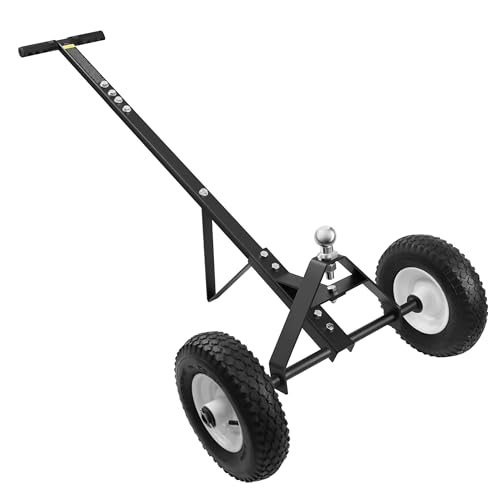
Best for: budget-conscious buyers needing solid, dependable manual movement. The JY PERFORMANCE model mirrors other 600-pound capacity dollies with 12-inch solid tires and a powder-coated steel frame. It’s designed for moving small trailers around homes, cabins, or seasonal storage yards. A limitation to note: it relies entirely on manual effort, which may be tiring for frequent or large-scale repositioning.
Dapzeosnry Heavy Duty Trailer Dolly

Best for: heavier boats, utility trailers, and RVs that require more than 600 pounds of tongue weight. This model pushes capacity to 1200 pounds and uses 15.2-inch pneumatic tires for better traction across grass, gravel, and uneven surfaces. An integrated 8-inch universal swivel caster enhances maneuverability in tight spaces. A caution: greater weight means more careful handling to avoid tipping when navigating slopes.
VEVOR Electric Trailer Dolly

Best for: users seeking motorized assistance for mid-to-heavy trailers. The VEVOR Electric Trailer Dolly offers up to 3600 pounds of towing capacity and 600 pounds of tongue weight. An 800W motor and a steel frame support smoother, less labor-intensive maneuvering. Its 13 x 4.5-inch pneumatic tires enable solid performance on multiple surfaces, while the anti-tip design adds stability during turns. Consider charging needs and the weight of the unit when storing in tight spaces.
Buying Guide: Key Purchase Considerations
What capacity do you need? For most small-to-mid-sized boat trailers, 600 pounds of tongue weight is sufficient. Heavier boat trailers or RVs may require models with 1200 pounds or motorized assistance. Consider the maximum tongue weight and trailer gross weight you anticipate.
Manual vs. electric. Manual dollies are simple, affordable, and reliable but require physical effort. Electric dollies reduce labor and are ideal for frequent repositioning or heavier trailers, but add cost and require charging and electrical considerations.
Tire type and terrain. Pneumatic tires provide better shock absorption on grass and gravel but need maintenance. Solid tires require less upkeep and perform well on smooth surfaces but offer less cushion over rough ground. If you park on uneven or grassy lots, pneumatic tires tend to perform better.
Build quality and durability. Look for a steel frame with a powder-coated finish to resist rust and corrosion, especially in marine environments. A wide base and a well-balanced hitch connection improve stability, reducing the risk of tipping.
Ease of storage and use. Consider handle length, ease of hitching to different trailer heights, and whether the dolly includes an adjustable height or swivel components for tight spaces.
FAQ
- What is tongue weight and why does it matter? Tongue weight is the downward force a trailer places on the hitch ball. Choosing a dolly with adequate capacity ensures safe, stable maneuvering and reduces the chance of tipping during turns or on uneven surfaces.
- Are pneumatic tires better than solid tires for boat trailers? Pneumatic tires offer better shock absorption on uneven ground, which helps when moving trailers on grass, dirt, or gravel. Solid tires are maintenance-free but less forgiving on rough terrain.
- Should I get a manual or electric trailer dolly? Manual dollies are inexpensive and simple but require physical effort. Electric dollies are easier for heavy or frequently moved trailers but cost more and need power.
- Can these dollies move a trailer on slopes? Yes, but capacity and design matter. Heavier-duty models with wider bases and swivels provide more stability on slopes. Always use proper hitching and level positioning to reduce tipping risk.
- What maintenance is needed? For pneumatic tires, check air pressure and tread; for all steel frames, inspect for rust and wear. Lubricate moving parts as recommended by the manufacturer to extend life.
- Are these suitable for kayaks or small watercraft trailers? Yes, most listed models target small to mid-size trailers and watercraft setups, depending on capacity. Always verify tongue weight and total trailer weight before use.