Best Boat Motor Fin for Improved Planing, Stability, and Control
If you’re searching for a fin to improve planing, stability, and handling on your boat motor, you’re in the right place. These hydrofoil stabilizers are designed for outboard motors and stern drives in a wide horsepower range, from 5 HP up to 300 HP. This guide highlights five top options, explaining who each product is best for, and why it stands out. Ideal buyers include boaters seeking faster planing, smoother rides through wakes, and better engine efficiency. A quick summary table below helps you compare at a glance.
| Product | Best For | |
|---|---|---|
| Doel-Fin Hydrofoil Stabilizer | General improvement for 5–150 HP outboards | 5–150 HP |
| Universal Whale Tail (5–150 HP) | Stability during acceleration for small to mid engines | 5–150 HP |
| Stingray Starfire Hydrofoil | No-drill installation and wide hp range (40–300 HP) | 40–300 HP |
| Stingray Classic Senior 2 | Reliable lift for multiple boat sizes (40–300 HP) | 40–300 HP |
| Universal Whale Tail Carbon Design (40–300 HP) | Enhanced performance with carbon-design styling | 40–300 HP |
Doel-Fin Hydrofoil Stabilizer for 5 to 150 HP Outboard Motors

The Doel-Fin hydrofoil stabilizer is designed for 5–150 HP outboards and stern drives, with a compact footprint of H 10-1/4 inches by W 8-1/4 inches. It claims to improve planing characteristics by raising the stern more quickly, which can enhance overall stability and handling. This option is best for anglers and casual boaters seeking a straightforward upgrade without extensive installation steps. The product warns it is not compatible with Volvo Penta outdrives, which is a key limitation to check against your motor setup.
Best for: Small to mid-range outboard engines where a simple, proven hydrofoil can speed planing and stabilize the stern.
Why selected: It covers a broad 5–150 HP range and provides a clear, surface-level improvement in planing behavior, with a no-drill approach implied by its standard hydrofoil design.
Limitation: Not compatible with Volvo Penta outdrives; verify engine model before purchase.
Universal Whale Tail Hydrofoil Stabilizer Fin Kit (5-150 HP)
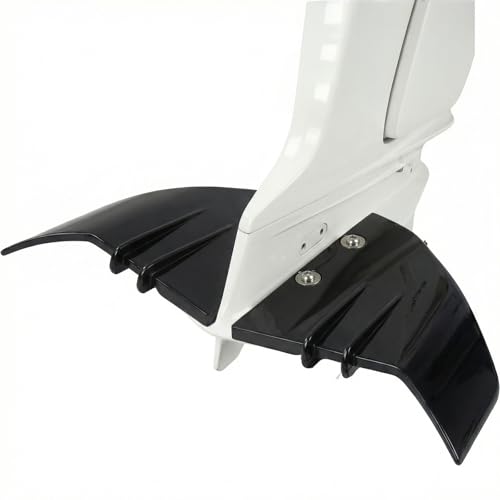
This kit is tailored to 5–150 HP outboards and stern drives, with dimensions of H 7.5″ and W 7″. It aims to reduce front-end lift during acceleration, leading to a more balanced, controlled ride. Users typically notice better stability in chop and wakes, contributing to smoother overall operation. The design emphasizes a stable wake-cutting profile to minimize porpoising and chine-walking in many common boats.
Best for: Boaters seeking a compact, balanced solution for light-to-mid power motors.
Why selected: The mid-range size supports a wide swath of small to mid-size boats, offering a tangible stability benefit during acceleration.
Limitation: May not deliver dramatic lift improvements on high-performance vessels outside the 5–150 HP range.
Stingray Starfire Hydrofoils for 40–300 HP (No-Drill)

The Stingray Starfire hydrofoil is a no-drill installation option designed for 40–300 HP engines. It emphasizes increased engine lift, better stability, and higher top speeds with a sleek, durable construction. This model is popular for sailors and power boaters who want a visually striking, high-performance option that minimizes installation complexity. The kit is built to reduce vilation, chinewalking, and porpoising while improving planing efficiency.
Best for: Larger outboards where a high-lift, no-drill solution is desirable.
Why selected: It offers a robust lift profile across a broad hp range and is marketed as highly durable for demanding water conditions.
Limitation: No-drill installation may not be compatible with all mounting configurations; verify fit with your motor.
Stingray Classic Senior 2 Hydrofoils (40–300 HP)

The Classic Senior 2 hydrofoils are designed for 40–300 HP engines and touted as a popular no-drill option. They claim to deliver lift and stability across a wide range of boat sizes, reducing vacitation, ventilation, and chinewalking. The single-piece design is noted for its reliability and ease of use, making it a practical choice for boaters seeking consistent performance gains without complex installations.
Best for: Boats with moderate to high horsepower seeking a durable, easy-install hydrofoil.
Why selected: It’s a widely used, no-drill option that supports a broad hp range while emphasizing reliability in rough water.
Limitation: Availability of finish colors (black/white/grey) may vary by stock, and some hull configurations may require check for alignment.
Universal Whale Tail Carbon Design (40–300 HP)

This carbon-design hydrofoil is sized for 40–300 HP engines, with dimensions H 14.5″ x W 17.0″. The carbon design implies a lightweight, rigid profile aimed at maximizing stability and lift. It’s positioned as a high-performance option for larger boats that demand stronger lift characteristics and improved trackability through rough water and wakes.
Best for: Larger boats or those needing stronger lift in choppy water.
Why selected: The carbon design emphasizes stiffness and efficiency, which can translate to noticeable gains in planing speed and stability for higher horsepower setups.
Limitation: Carbon-design visuals may not suit all aesthetic preferences, and installation must confirm motor compatibility.
Buying Guide: How To Choose The Right Hydrofoil For Your Boat Motor
Performance goals vary by boat and water conditions. When choosing a hydrofoil, consider engine horsepower, mounting compatibility, ease of installation, and the typical water environment you operate in. For small-to-midrange motors (5–150 HP), the Doel-Fin and Universal Whale Tail options offer straightforward improvements with relatively simple installation. For larger engines (40–300 HP), Stingray models provide greater lift and stability, with no-drill variants or robust single-piece designs that suit stricter performance demands.
Important questions to ask yourself include: Does your motor allow for a secure, no-drill installation? Do you frequently operate in rough water or wake-prone conditions, where enhanced stability matters most? Is weight and drag a concern, or do you prioritize maximum lift for planing speed?
Tips for choosing include: match the HP range to your motor, verify compatibility with your gearcase and mounting pattern, assess installation effort, and review real-world feedback on planing speed, stability, and ride quality in water conditions you encounter. Carbon-design fins may offer extra stiffness for high HP setups, but ensure they fit your hull and mounting hardware.
FAQ
- What hp range should I consider for a hydrofoil? Choose a hydrofoil that covers your motor’s horsepower; common ranges are 5–150 HP for smaller boats and 40–300 HP for larger boats.
- Do these fins require drilling? Some options are no-drill, while others may require simple mounting. Always confirm installation requirements for your specific model.
- Will a hydrofoil improve fuel efficiency? By reducing drag during acceleration and improving planing efficiency, some boats experience smoother operation that can translate to fuel savings, though results vary by hull and conditions.
- Are carbon-design fins worth the extra cost? Carbon fins can offer higher stiffness and lift, which is beneficial for larger, faster boats, but ensure compatibility with your hardware and aesthetic preferences.
- Can I install a hydrofoil on any outboard motor? Most hydrofoils target common outboard and stern drive configurations; always verify compatibility with your exact motor model and mounting pattern.
- What should I avoid when selecting a hydrofoil? Avoid options not compatible with your engine type, or those that require complex installation that could affect mounting integrity or warranty terms.