Best Pedal-Driven Fishing Kayaks for American Anglers
Answering a shopper’s question about hands-free propulsion and stable tracking, pedal-drive fishing kayaks offer a practical blend of speed, power, and maneuverability. This guide highlights top pedal kayaks suited for assorted waters—rivers, lakes, and coastal bays. Whether you’re a seasoned angler or a casual paddler, each pick below is chosen for stability, storage, and ease of use. The top five options balance portability, performance, and value, helping you decide which model matches your fishing style and transport needs.
Buyer profile quick look:
- Best for portable setups: Spatium Pedal Kayak and Brooklyn 8.0 Foldable Kayak
- Best for long, steady paddling: Brooklyn 12.0 Pro and Pelican Catch Kicker 110 HDII
- Best for all-around recreational fishing: Danrelax Inflatable Kayak
Comparison At A Glance
| Product | Type | Best For | Notes |
|---|---|---|---|
| Danrelax Inflatable Kayak | Inflatable with Pedal System | Travelers, casual anglers | Premium PVC, sturdy floor, gear storage |
| Pelican Catch 110HDII | Sit-on-Top Pedal Kayak | All-day fishing | HyDryve II, Ergocast seat |
| Brooklyn 12.0 Pro | Pedal Kayak with Propeller | Long-distance paddling | High-efficiency propulsion, rudder |
| Spatium 11.5ft | Inflatable Pedal Kayak | Versatile waterways | 360° seat, motor-ready option |
| Old Town Malibu Pedal Solo | Sit-on-Top Pedal Kayak | Recreational use | Comfortable seating, ample storage |
Danrelax Inflatable Kayak With Pedal System

Best for: Anglers who value portability without sacrificing paddle power. This inflatable model uses heavy-duty PVC, a reinforced floor, and a 20mm aluminum pedal system with a robust steering rudder. It supports fishing gear via two swivel rod holders, front bungee cords, and a detachable fin for stability.
Why chosen: The combination of durability, integrated pedal propulsion, and a roomy deck makes it a strong all-around choice for river or lake fishing trips where storage space is a concern.
Caution: As an inflatable, setup time and air pressure maintenance are factors to consider for multiple outings in a single trip.
Pelican Catch 110HDII — HyDryve Pedal System

Best for: Anglers who prioritize comfort on long runs and steady gear access. The HyDryve II pedal system provides efficient propulsion, while Ergocast G2 seating supports extended sessions. Four accessory rails help you customize setups with rods, cameras, or lights.
Why chosen: Comfort-first seating and flexible mounting options set this model apart for sustained fishing trips in shallow or moderately choppy water.
Caution: The propeller-driven system may require acclimation for users switching from traditional paddling, especially in vegetation-heavy areas.
Brooklyn 12.0 Pro Single Pedal Kayak

Best for: Anglers needing long-range capability and precise steering. Its propeller drive enables hands-free propulsion, and the included rudder offers responsive navigation in variable conditions.
Why chosen: A stable 12-foot hull with efficient propulsion is ideal for anglers who want to cover larger areas while keeping gear within reach.
Caution: Heavier hull relates to greater storage needs and transportation considerations for compact vehicles or tight garages.
Brooklyn 8.0 Foldable Pedal Kayak
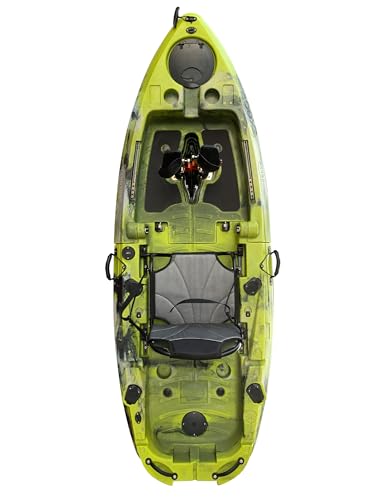
Best for: Urban dwellers or those with limited storage who still want pedal-powered fishing. The foldable design fits narrow storage spaces and car trunks. Pedal-drive is paired with a rudder for improved control while paddling and fishing.
Why chosen: The compact footprint and quick setup make it an appealing option for apartment living or frequent travelers who value portability.
Caution: Foldable models may require care during setup to avoid pinching or misalignment of components.
Pelican Catch Kicker 110 HDII

Best for: Anglers who want ergonomic seating and stable tracking in balanced, compact form. The Ergoboost seating and HyDryve II pedal system enable extended sessions with comfortable posture.
Why chosen: Its combination of comfort-oriented seating and reliable rudder control makes it a dependable option for river or lake fishing with varied terrain.
Caution: Pedal systems require periodic inspection for smooth operation and could need maintenance to preserve performance over time.
Spatium 11.5ft Pedal Drive Kayak

Best for: Anglers who need a flexible, water-friendly platform with easy conversion between modes. Its flipper fin pedal drive is designed to handle weeds, docks, and shallow flats.
Why chosen: The ability to switch from pedal to electric tail fin makes it a compelling choice for versatile setups where power demands change throughout a trip.
Caution: The system requires attention to ensure the flipper mechanism remains clear of debris in dense vegetation.
Old Town Malibu Pedal Solo

Best for: Recreational paddlers seeking comfort and practicality on rivers and calm lakes. It offers adjustable seating, ventilation, and a roomy stern area for gear.
Why chosen: A balance of comfort, storage, and traditional pedal propulsion makes it a good all-rounder for casual fishing outings and family trips.
Caution: Heavier models may require more storage space and effort during transport compared with lighter, compact designs.
Buying Guide: Pedal-Drive Fishing Kayak Essentials
What water conditions matter most?
Consider the typical waters you’ll navigate. Flatwater lakes favor stable hulls and reliable rudder control, while rivers or coastal waters benefit from nimble steering, draft clearance, and weed-shedding pedal systems.
How important is storage and portability?
Inflatable or foldable models excel in portability, easy storage, and car-trunk compatibility. Rigid hulls generally offer higher stability and tracking but require more dedicated storage space.
Which pedal system design fits your fishing style?
Propeller-driven pedals offer long-distance efficiency; flipper fins provide maneuverability in weeds and shallow areas; and a pedal-to-electric conversion option gives flexibility for varying trip lengths.
What seating and comfort features should you prioritize?
Look for adjustable seating, back support, and ventilation for hot days. Ergonomic chairs reduce fatigue during long sessions and support better posture while casting.
How do you assess gear compatibility?
Check for accessory rails, rod holders, and deck space. A model with expansion rails and secure bungee points helps you organize gear, cameras, and coolers for quick access.
Maintenance considerations
Inflatable models require regular air pressure checks; pedal systems need lubrication and occasional inspection for wear. Rudder assemblies should be examined for smooth operation and alignment.
FAQ
- Q: Are pedal kayaks faster than traditional paddled kayaks? A: Pedal systems typically improve speed and efficiency over longer distances, reducing upper-body fatigue and enabling hands-free casting.
- Q: Can I use these kayaks in saltwater? A: Many are designed for multi-water use, but confirm material compatibility with salt exposure and rinse after each trip to extend life.
- Q: Do pedal kayaks require special licenses or certifications? A: In the U.S., pedal kayaks generally do not require special licenses beyond standard boating safety practices, but check local regulations.
- Q: Is a rudder necessary on a pedal kayak? A: A rudder improves directional control, especially in windy or current-prone conditions, and complements pedal propulsion.
- Q: Which is easier to store, inflatable or rigid pedal kayaks? A: Inflatable or foldable models are easier to store in limited spaces, while rigid kayaks offer stability and robust performance but need more storage.
- Q: How should I choose between 8-foot and 12-foot models? A: Shorter models are more maneuverable and easier to transport; longer models track better and carry more gear, ideal for extended trips.