Best Fiberglass Cloth for Boats: Top Reinforcements for Repairs and DIY Projects
If you’re planning fiberglass repairs or DIY boat upgrades, choosing the right fiberglass cloth is essential. This guide highlights five top options that balance strength, flexibility, and ease of use for American boaters and hobbyists. The best pick depends on your project size, resin system, and curve or contour requirements. Below, you’ll find a quick buyer’s overview, followed by detailed product insights to help you decide which cloth best fits your boat, RC plane, surfboard, or roofing repair needs.
| Product | Best For | Key Benefit |
|---|---|---|
| SIMPLYHARDWARE Fiberglass Mat 50″ x 4 yd | Medium-sized repairs, general composites | Uniform strength in all directions |
| NEZUIBAN Fiberglass Cloth 6oz 50 sq ft | Small to medium repairs, hobby projects | Flexible, easy to cut and handle |
| VIKEYTIM Fiberglass Mat 50″ x 30 ft | Large-area reinforcement, roofing and marine | 125 sq ft roll with broad coverage |
| ZXQDRE 50″ x 360″ 1708 Biaxial Cloth | Advanced repairs, complex shapes | Best for curves and durable reinforcement |
| UNIFAMILY 50″ x 12 ft 4Yd Fiberglass Cloth | Boat, tub, surfboard repairs | Heat and corrosion resistance, easy to cut |
SIMPLYHARDWARE Fiberglass Mat 50″ x 4 Yard

Product type: plain weave fiberglass mat. This 8 oz mat is a common reinforcement for composites, offering uniform strength horizontally and vertically. It is widely used on surfboards, sailboats, and cedar strip canoes. Best for general repairs where balanced load distribution is desired. Use with compatible resins and epoxy for durable repairs. A potential limitation is that thinner mats may require more layers for high-stress areas.
NEZUIBAN Fiberglass Cloth, 6oz 50 sq ft

Product type: plain weave glass cloth designed for boat and RC repairs. It’s 6 oz and comes in a 50-square-foot size. It’s described as alkali-free, flexible, and easy to cut, with heat resistance, corrosion resistance, insulation, and flame retardancy. Best for hobby projects and small-to-medium repairs where clean edges and good saturation are needed. A caution: ensure you cut flat with no wrinkles for even resin penetration.
VIKEYTIM Fiberglass Mat 50″ x 30 ft
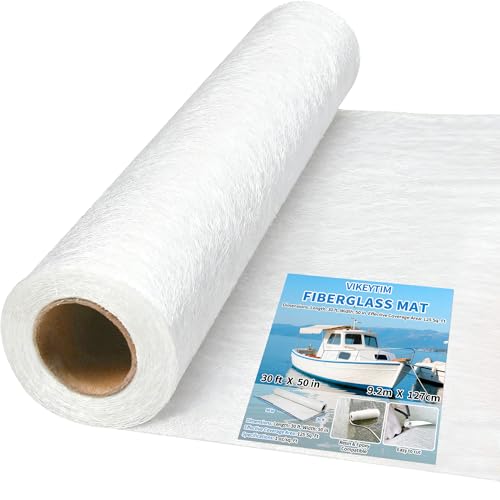
Product type: chopped strand mat (CSM) with 1 oz per square foot. This mat covers large areas (125 sq ft when laid flat) and features an easy roll-up design that unfolds without folding marks. It provides good compatibility with resin and epoxy to form a sturdy sheet. Best for bigger repairs or reinforcing surfaces that require quick, even saturation. Limitation: woven appearance is less uniform for extremely tight curves compared with biaxial fabrics.
SIMPLYHARDWARE Chopped Strand Mat Cloth 50″ x 360″

Product type: 50″ wide, 360″ long rolled mat with 1 oz per sq ft. It’s a practical option for conforming to tight curves and corners. The mat is resin-compatible and can be torn or cut to fit irregular shapes. Best for large surface repairs on boats or roofing where a flexible, lightweight reinforcement is required. Caution: ensure even lay-up to avoid air pockets and poor adhesion in complex geometries.
UNIFAMILY Fiberglass Cloth 50″ x 12 ft
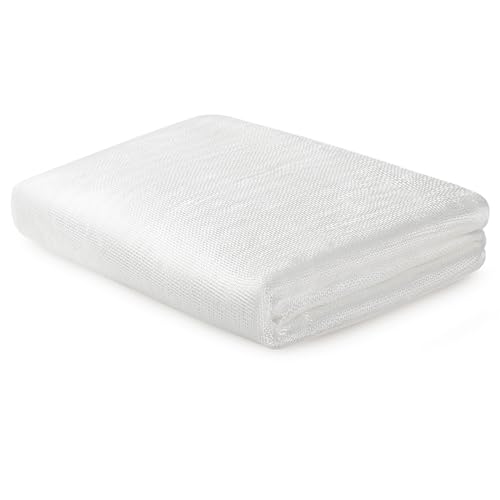
Product type: 6 oz plain fiberglass cloth, 50″ wide, 12 ft long. Features heat resistance, corrosion resistance, insulation, flame retardance, and high strength. Suitable for boats, tubs, surfboards, and automotive repairs. Best for users needing a balance of flexibility and strong reinforcement over larger areas. A caveat: ensure resin compatibility with the epoxy or polyester you plan to use for a solid bond.
Buying Guide: Key Purchase Considerations
What thickness and weave should you choose? Thicker mats (like 8 oz) offer greater strength per layer, while lighter cloths (6 oz) are easier to wrap around curves and cover large areas quickly. Plain weave fabrics provide uniform strength in all directions, while biaxial cloths (1708) excel on curved surfaces and high-stress areas. Consider resin compatibility—epoxy, polyester, and vinyl ester each interact differently with specific fabrics.
How large is your project? For large hull repairs or roofing work, rolls or long cuts reduce seams and improve uniform strength. For small cracks or patching, smaller sheets or cloth tapes offer precise control and faster cure times. Cut size carefully and debulk before applying resin to avoid air pockets.
Flexibility vs. rigidity: if your repair involves complex curves, choose fabrics designed to wrap tightly, such as biaxial or chopped strand mats that conform to corners. For flat surfaces, plain weave cloths give predictable, even reinforcement. Price and availability can matter; select a product that fits your budget and shipping timelines.
Safety and handling: fiberglass cloth can irritate skin and lungs; wear gloves, long sleeves, and a respirator when sanding or grinding cured composites. Work in a well-ventilated area and dispose of resin and cloth according to local regulations.
FAQs
- What is the best cloth for small boat repairs? A 6 oz plain weave fiberglass cloth, cut to fit the patch, provides good balance of strength and ease of use for small areas.
- Can I use any resin with fiberglass cloth? Most cloths are compatible with epoxy, polyester, or vinyl ester resins, but always confirm the resin’s compatibility with the fabric you choose.
- Is biaxial fabric better for curved surfaces? Yes. Biaxial fabrics resist distortion on curves and corners, making them ideal for hull contours and complex repairs.
- How should I prepare the surface before applying cloth? Clean the surface, roughen slightly if needed, and ensure it’s dry. Pre-wet or pre-saturate the cloth to minimize air pockets during lay-up.
- How much cloth do I need for a repair? Estimate the area of damage and plan for an overlap of 2–3 inches beyond the damaged zone. For large projects, buy extra to avoid mid-repair shortages.
- Are these cloths suitable for outdoors or marine environments? Yes, many listed options are designed for marine and outdoor use, offering corrosion resistance and durability in harsh conditions.