Best Rope for Marine Use: Durable Marine-Grade Options
Answering the needs of boaters, anglers, and waterfront homeowners, this guide highlights ropes built for marine use. The featured products cover a range of materials, diameters, and constructions to suit buoyancy, strength, and UV exposure. Ideal buyers include boat crews needing secure mooring lines, campers requiring rugged utility cords, and DIY enthusiasts seeking reliable rope for dock lines, rigging, or general rigging tasks. The table below provides quick comparisons to help you choose quickly before reading each product detail.
| Product | Material/Construction | Diameter | Length | Best For |
|---|---|---|---|---|
| Heavy Duty Rope, 1/4 in x 98 ft (White) – Golden Cock | Polypropylene/Polyester/Nylon mix | 1/4 in | 98 ft | Light towing, general boat/camping use |
| Heavy Duty Rope, 1/2 in x 98 ft (Navy) – Golden Cock | Polypropylene/Polyester/Nylon mix | 1/2 in | 98 ft | Heavier loads, mooring, towing |
| SDLTHR 1/4 in x 100 ft Braided PP Rope | Polypropylene, 16‑strand braided | 1/4 in | 100 ft | Durable, weather-ready utility rope |
| Black UV Resistant Polyester Rope 1/8 in x 100 ft | Polyester, braided | 1/8 in | 100 ft | Outdoor use, UV resistance, lighter loads |
| Young Marine Premium Solid Braided Anchor Line 3/8 in x 100 ft | Solid braided MFP anchor line | 3/8 in | 100 ft | Anchoring, marine-specific reliability |
Golden Cock Heavy Duty Rope, 1/4 in, 98 ft (White)

Features: A versatile blend designed for boating, camping, and heavy-duty securing. Available in multiple diameters with clearly graded strength: 1/4 in (1102 lbs), 5/16 in (2094 lbs), 3/8 in (2833 lbs), 1/2 in (4130 lbs), and 3/4 in (9039 lbs). Options include Polypropylene (lightweight and floating), Polyester (low stretch and UV resistant), or Nylon (high elasticity and shock absorption). Lengths range from 32 ft to 1640 ft; colors include Blue, Navy, White, Orange, and Yellow. Twisted rope offers high strength; braided rope provides smoother handling and flexibility.
Best for: Boat crew and camping setups needing reliable load handling with material choice for environmental conditions. The 1/4 in size is good for light towing or tie-downs, while larger diameters suit heavier loads and mooring tasks. Limitations: Do not exceed rated strengths; select diameter by load requirements to ensure safe performance.
SDLTHR 1/4 Inch 100 ft Braided Polypropylene Rope

Features: 100 ft length, 1/4 in diameter, 16-strand polypropylene construction for high strength. The rolling diamond braid resists fraying, and polypropylene floats, making it visible for outdoor tasks. Working load limits around 1300 lbs are noted for heavy-duty tasks, though actual use should respect safety margins. Weather resistance suits outdoor and marine contexts.
Best for: Decorative knotting, general outdoor use, and boat docking or marine tasks where lightweight, cost-effective rope is adequate. Limitation: Polypropylene floats but has higher elongation than nylon or polyester under load, which may affect shock absorption in dynamic rigging.
Black UV Resistant Polyester Rope 1/8 in x 100 ft
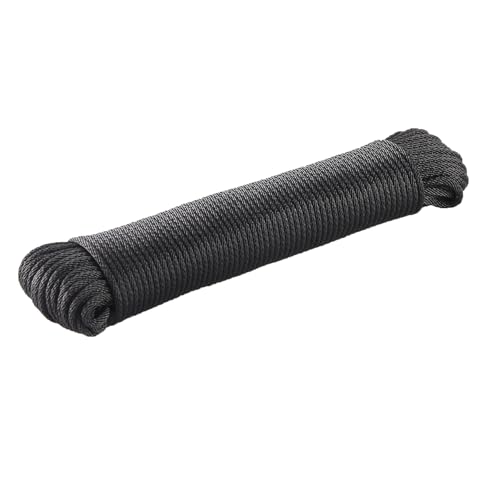
Features: Polyester rope with 297 lb breaking strength. The rope offers lower stretch and better UV resistance than standard nylon, making it suitable for long-term outdoor exposure. Dense braided construction enhances abrasion resistance for marine applications and harsh weather conditions.
Best for: Marine-line tasks requiring durable, weather-resistant performance with lower stretch. Choose this for fixed lines or flagpole cords that need predictable tension. Limitation: Lower diameter reduces maximum load support compared to heavier lines; plan loads accordingly.
Golden Cock Heavy Duty Rope, 1/2 in, 98 ft (Navy)

Features: The same multi-diameter, multi-material approach as the white variant, now offered in navy. Strength grading allows selection by load requirement: 1/4 in (1102 lbs), 5/16 in (2094 lbs), 3/8 in (2833 lbs), 1/2 in (4130 lbs), 3/4 in (9039 lbs). Availability of Twisted vs Braided structures supports different handling and strength needs. Colors assist visibility and safety.
Best for: Heavier duty marine tasks like mooring lines or towing setups where higher strength is required. Limitation: Heavier diameters are bulkier and harder to handle in tight spaces; ensure rope length and storage fit your rig.
Young Marine Premium Solid Braided Anchor Line 3/8 in x 100 ft
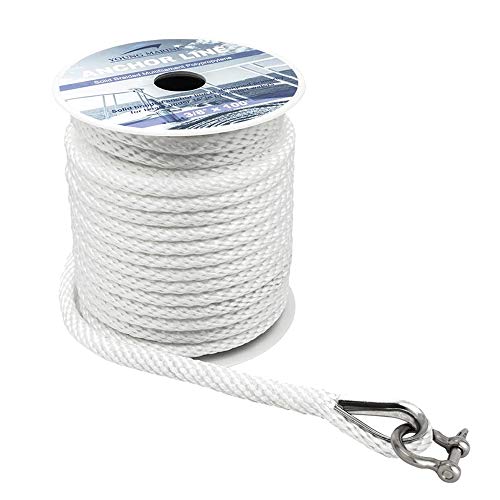
Features: 3/8 inch solid braid MFP anchor line with marine-grade stainless steel thimble. This configuration emphasizes anchoring reliability and resistance to wear in saltwater environments. The solid braid design provides robust handling for mooring and anchor tasks.
Best for: Anchoring and high-tidelity mooring lines where durability and marine compatibility are essential. Limitation: Designed specifically for anchor use; for general rigging, consider alternatives with higher flexibility for knotting and handling.
ATERET Nylon Rope 1/4 in x 80 ft

Features: Nylon rope with UV resistance and shock absorption, 1/4 inch diameter, 80 feet length. Built for multipurpose use including camping lines, clotheslines, and marine tasks where elasticity and resilience are helpful. Durable and practical for everyday outdoor chores.
Best for: Multi-use rope that tolerates stretching and dynamic loads; suitable for rigging, clotheslines, and lightweight mooring. Limitation: Nylon can be heavier and more stretch-prone than polyester for precise, static loads; consider environment and load type when choosing.
Buying Guide: Key Purchase Considerations
- Material and performance: Polypropylene floats and is cost-effective but higher elongation under load. Polyester offers low stretch and UV resistance, while Nylon provides elasticity and shock absorption. For marine use, choose based on load type, environment, and tension.
- Diameter and strength: Match diameter to load. Larger diameters support heavier loads but are harder to handle. Always refer to the rope’s rated breaking strength and apply a safe working load limit.
- Construction type: Braided ropes are smoother and easier to handle; twisted/laid ropes offer simpler splicing and sometimes higher abrasion resistance in specific conditions. For docking or anchor lines, consider solid braided for longevity.
- Length and storage: Longer lines provide flexibility but require more storage space. Select length with headroom for knots, splices, and clearance during use.
- UV resistance and weather exposure: Outdoor marine use benefits from UV-stabilized materials. Verify UV resistance if the rope will be left in direct sun for extended periods.
- Floatation and visibility: Floating ropes are useful for water tasks and visibility. Colors like blue, navy, white, and high-visibility options help identify lines quickly in busy setups.
- Anchor vs general-use: Anchor lines require high strength and moisture resistance; general-use lines prioritize flexibility and ease of handling.
Frequently Asked Questions
- What rope is best for boat mooring? A high-strength rope with low stretch and UV resistance, typically polyester or nylon, in a larger diameter to handle mooring load. Consider solid braided designs for durability.
- Can I use decorative rope for marine tasks? Only if it meets load-bearing requirements and environmental exposure. Decorative rope may not provide the needed strength or UV resistance for critical tasks.
- Is braided rope better than twisted for sailing? Braided rope is generally smoother and easier to handle, with good abrasion resistance, making it a common choice for marine tasks.
- Should I choose a floating rope for docking? Floating ropes are useful when you need visibility and buoyancy, such as dock lines or fenders; ensure the chosen material supports your load needs.
- How do I determine the right diameter? Base diameter on the maximum load you expect. Use the rope’s rated strength with a safe working load margin to prevent overloading.
- What maintenance is needed for marine rope? Rinse with fresh water after exposure to saltwater, avoid prolonged sun exposure for sensitive materials, and store in a cool, dry place to extend life.