Best Life Jacket for 10 Month Old: Safe, Comfortable Options for Water Fun
Answering the need for a safe, properly sized life jacket for a 10-month-old, these infant and toddler PFDs are designed to provide buoyancy and secure closures for supervised water activities. Ideal buyers include parents seeking Coast Guard–approved options for infants under 30 pounds, caregivers looking for secure head support, and families prioritizing quick-drying materials and adjustable fits. Below is a concise buying guide and five carefully chosen products to help you pick confidently.
Quick Product Overview
- Oceans 7 US Coast Guard Approved, Infant-Child-Youth Life Jacket Vest — Best all-around adjustable fit for infants and small children in various weight ranges.
- Dark Lightning Coast Guard Approved Baby/Infant Life Vest — Best for infants needing headrest support and a secure leg strap.
- Airhead Infant General All Purpose Life Jacket — Best for quick responses and durable two-buckle/strap design.
- Airhead Infant Type II Life Jacket — Best for flexible motion with closed sides and quick-dry fabric.
- Dark Lightning Coast Guard Approved Toddler Life Jacket — Best for toddlers near the 20–30 lb range with grab handle.
Oceans 7 US Coast Guard Approved Infant-Child-Youth Life Jacket Vest
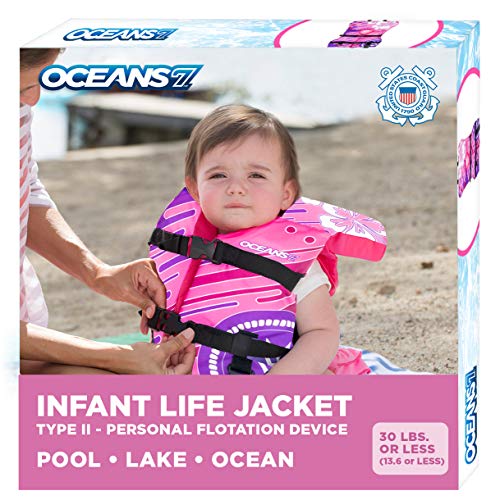
Best for: Families needing a versatile fit across infant to youth weights (8–90 lbs). This vest is USCG-approved and designed with three adjustable straps for a secure fit. The open-side design aids comfort and range of motion.
Why selected: It covers a broad weight range, reducing the need to buy multiple sizes as a child grows. The adjustable straps and chest sizing help tailor the fit for a 10-month-old, provided the weight lies within the infant-to-child range.
Limitations: Fit and comfort can vary with each child; ensure the vest sits below the chin and above the shoulders when fastened securely.
Dark Lightning Coast Guard Approved Baby/Infant Life Vest

Best for: Infants under 30 lbs needing a secure fit with head support and easy handling by parents. This vest includes a headrest, adjustable leg strap, and a grab handle for better control on the water.
Why selected: The headrest and leg strap combination helps prevent the infant from slipping and provides parental control during water activity. It’s tailored for supervised boating and pool time with a focus on stability.
Limitations: For heavier infants near the 30 lb limit, verify the weight and height fit to ensure the vest does not ride up when fastened.
Airhead Infant General All Purpose Life Jacket

Best for: Quick-response safety with a lightweight design suitable for infants under 30 lbs. Features include three body belts and a crotch strap, plus a sturdy outer shell for durability.
Why selected: This model emphasizes a secure fit with a crotch strap and multiple closures, which helps keep the vest in place during active water play and quick rescues. It balances security with ease of use for caregivers.
Limitations: The closed-side design may limit arm mobility slightly compared to open-side styles, so monitor comfort during longer wear.
Airhead Infant Type II Life Jacket
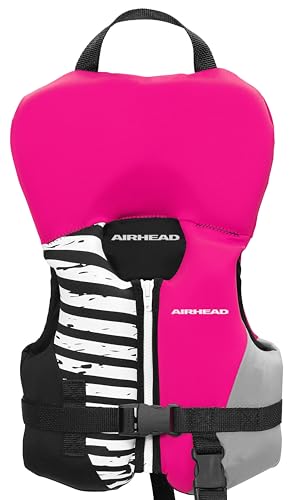
Best for: Parents seeking a compact, quick-drying option with a secure zipper and crotch strap. This is a versatile choice across Type II/III usage for young children.
Why selected: Combines closed sides, zipper, and double closure buckles with a double rescue handle, offering a secure fit and fast aid if needed. The neoprene-like look helps with comfort and quick drying.
Limitations: Some users may prefer more pronounced head-support features for very small infants; verify head/neck support is adequate for your child.
Dark Lightning Coast Guard Approved Toddler Life Jacket

Best for: Toddlers in the 20–30 lb range who need a lightweight life jacket with a grab handle and headrest for stability in the water.
Why selected: It provides a secure, age-appropriate fit with essential safety features like a grab handle and headrest, making it a practical choice for supervised water time with a growing child.
Limitations: This model targets toddlers toward the lower end of the weight spectrum; as the child grows, reassess fit to avoid over-tightening or poor buoyancy distribution.
Buying Guide: How to Choose the Right Infant/Toddler Life Jacket
- USCG Approval: Look for Coast Guard approval (Type II or III) to ensure standard safety benchmarks for buoyancy and construction.
- Weight Range: Verify the child’s current weight, not age alone. Many infant/toddler PFDs cover 8–30 lbs or 20–30 lbs ranges. Choose a size that fits now with growth room if possible.
- Fit and Comfort: Prioritize closed sides for secure fit, crotch straps to prevent riding up, and headrests or back support for head stability in infants.
- Closure System: Prefer multiple adjustable straps, buckles, and zippers that stay secure during movement and quick rescues.
- Materials and Drying: Quick-dry, soft shells and breathable interiors help comfort during extended water activities and reduce irritation on sensitive skin.
- Activity Type: For boating, pool, or lake use, consider the environment and choose a vest with higher mobility if necessary, while ensuring it remains secure.
Frequently Asked Questions
- How do I know if a life jacket fits a 10-month-old?
– Check the weight range on the label and ensure the vest sits securely with the chin above the top of the vest and the straps snug but not tight. Look for a snug fit around the torso with minimal wiggle. - Is a headrest important for infants?
– Yes. Headrests help support the neck and head, reducing the risk of the head tipping forward during splashes or slips into the water. - What is the difference between Type II and Type III infant life jackets?
– Type II provides stable flotation for kids who may roll to face up and is often easier to remove in water. Type III typically offers greater range of motion and comfort but may require more careful fitting to stay secure. - Should I buy a larger size to accommodate growth?
– If possible, purchase within the child’s current weight range and choose models with adjustable straps. Avoid a vest that is too large, which may ride up or slip off. - Can I use a generic floatation device?
– No. Ensure the device is USCG-approved and specifically designed as a life jacket for infants/toddlers. Generic floatation aids may not provide adequate buoyancy or secure fit. - How do I maintain safety when using a life jacket for an infant?
– Always supervise closely, avoid loose clothing that could snag, inspect for wear or leaks before each use, and ensure straps are fastened correctly after each adjustment.