Best Marine Night Vision Cameras for Safer Night Navigation
When choosing a marine night vision camera, the goal is clear visibility in dim conditions to keep navigation safe. This guide highlights five options that suit different boats and use cases, from high-contrast thermal imaging for rough seas to compact analog cameras for engine rooms. Ideal buyers include boaters who sail at night, anglers needing underwater visibility, and captains seeking a reliable backup view around decks and engine spaces.
| Product | Best For | Key Benefit |
|---|---|---|
| YEOIZO Marine Analog Camera | Night sailors and sport boats | Full-color night vision with ultra-low light capability up to 1000 meters range |
| FLIR E70354 M232 Pan Tilt Thermal Camera | Bridge-to-bow navigation with thermal aid | Pan/tilt thermal imaging for day and night visibility |
| Garmin GC 14 Marine Camera | Vessel monitoring above/below decks | Low-light imaging up to 15 meters with flexible placement |
| Garmin GC 12 Marine Camera | Engine rooms and near-deck monitoring | Analog camera with good low-light clarity and multi-plot compatibility |
| FOURQ Fishing Camera | Underwater visibility and ice/boat fishing | Full-color underwater view with IR night vision and long battery life |
YEOIZO Marine Analog Camera

The YEOIZO camera uses a high-sensitivity CMOS sensor to deliver full-color night images, helping you spot trunks, buoys, and other vessels in low light. Best for boaters who want daytime-like color images at night without relying on thermal imaging. It’s ideal for night navigation in calm to moderately rough conditions. A potential limitation is that color accuracy can degrade in extreme darkness compared with true thermal systems.
FLIR E70354 M232 Pan Tilt Thermal Camera 9hz

This FLIR model provides thermal night vision with pan and tilt capabilities, enhancing situational awareness by showing heat signatures. Best for operators who need reliable navigation aid in total darkness, especially near fixed structures like bridges or docks. A caution: thermal cameras may be more expensive and require integration with compatible displays or systems.
Garmin GC 14 Marine Camera

The Garmin GC 14 offers an extra set of eyes aboard for areas above or below decks, delivering solid low-light image quality. It is best for boaters needing a versatile, easy-to-install camera for engine rooms or deck areas. The limitation is that image quality may be lower than high-end thermal or starlight systems in the darkest conditions.
Garmin GC 12 Marine Camera

The GC 12 provides reliable analog imagery with good performance in low light and can feed a single chartplotter or a networked set of displays. It’s a practical choice for engine rooms or near-deck monitoring where you need consistent visibility without the complexity of thermal sensors. Better for straightforward viewing than for identifying heat sources.
FOURQ Fishing Camera
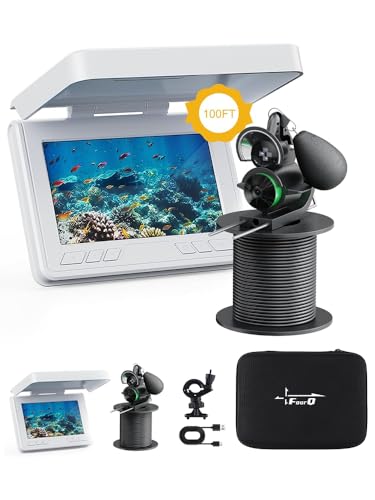
The FOURQ camera brings underwater visibility with a 4.3-inch LCD and IR night vision, plus a 100-foot cable and IP68 waterproof rating. Best for anglers and boats needing underwater viewing to locate fish or inspect hull conditions. It’s important to note that this camera is primarily designed for underwater use and may have different mounting considerations than surface cameras.
Buying Guide
- What night-vision type do you need? Color night vision offers realism in low light, while thermal provides heat-based detection when lighting is extremely poor.
- Camera placement matter: above-deck cameras suit deck monitoring; engine-room cameras require compact, stable mounts; underwater cameras need waterproof housings and longer cables.
- Resolution and range: higher resolution helps identify details at longer distances; consider viewing angle and sensor size for wide coverage.
- Power and integration: verify power requirements and compatibility with your existing displays or NMEA networks.
- Durability: marine environments demand salt and water resistance, with IP ratings or rugged housings as needed.
Frequently Asked Questions
- What is the difference between color night vision and thermal night vision? Color night vision uses low-light sensors to deliver color images, while thermal imaging detects heat to reveal objects in darkness, independent of visible light.
- Can I mix different brands of cameras on one vessel? Yes, but ensure compatibility with your displays and network protocols to avoid integration issues.
- Which camera is best for engine rooms? An analog or IP camera with good low-light performance, such as Garmin GC 12 or GC 14, is well-suited for engine rooms.
- Do night vision cameras require special mounting? Yes, choose weatherproof mounts with appropriate tilt and pan capabilities if needed, and ensure cable routing is protected from the marine environment.
- Are thermal cameras necessary for night navigation? Not always, but they are highly effective in zero-light conditions to detect heat sources like vessels, buoys, or wildlife, regardless of lighting.
- Is underwater viewing useful for night fishing? Underwater cameras with IR or color night vision help locate fish and inspect underwater habitats, though they require waterproof housings and longer cable management.