Best Marine Electrical Cable Suppliers for Boat Wiring and Accessories
Need reliable marine electrical cable for boats, RVs, or off-grid setups? This guide highlights five top options from trusted brands, focusing on durability, corrosion resistance, and suitability for saltwater environments. It’s ideal for boat owners, DIY sailors, and marine technicians selecting wire for lights, sensors, or power systems. The table below compares key details to aid quick decisions.
| Product | Brand | Best For | Key Feature |
|---|---|---|---|
| 14 Gauge Marine Wire, 30ft (14/2 Duplex) | NOVINO | Heavy-duty, outdoor coastal wiring | Tinned copper for corrosion resistance and durability |
| NAOEVO 14 Gauge Marine Wire Duplex (30ft) | NAOEVO | Harsh environments, generalized boat electrics | UL/SAE/ABYC-compliant, IP68 waterproof rating |
| Ancor 16/2 AWG Duplex Cable (100 ft) | Ancor | Light to moderate electrical runs | UL/ABYC-compliant, ultra-flexible |
| XRDS -RF 14 AWG Marine Wire (10 ft) | XRDS -RF | LEDs and electronics with tight routing | High-strand tinned copper core, ultra-flexible |
| GS Power 50 ft Duplex Marine Wire, 12 GA | GS Power | Higher-power circuits on larger vessels | Oxygen-free, Type III stranding, marine-grade insulation |
14 Gauge Marine Wire, 30ft Duplex (14/2)

The NOVINO 14 AWG marine wire is built from real copper strands and tinned to improve conductivity and corrosion resistance. Its outer insulation is thick, offering durability for heavy-duty marine and outdoor wiring projects. This cable suits pontoon boats, bass boats, trailers, fish finders, RVs, and solar systems. Best for long runs where moisture, salt spray, or vibration is a concern. A note: it’s best used where the circuit remains within rated voltage and temperature limits, as with most marine-grade two-conductor runs.
Why it’s selected: This product emphasizes corrosion resistance and flexibility, which helps reduce voltage drop on extended runs. It’s a good fit for general lighting, navigation lights, and auxiliary systems. The tinned copper helps minimize oxidation in salty air. It’s less ideal for extremely high-current, high-temperature applications where thicker gauge is required. For buyers seeking reliable, straightforward marine wiring at a moderate length, this option offers solid value.
Best for: Boat owners needing robust, mid-length two-conductor wiring for lights, pumps, and simple electronics. Avoid if you need higher gauge (like 12 or 10 AWG) for high-current equipment.
NAOEVO 14 Gauge Marine Wire Duplex (30 ft)

NAOEVO’s 14 AWG marine wire uses high-precision oxygen-free tinned copper with 65 strands per circuit for stable conductivity and corrosion resistance. The thicker PVC insulation protects against oxidation, saltwater exposure, and high temperatures. It’s rated IP68 waterproof and supports up to 600V, making it suitable for a wide range of marine and harsh-environment applications. It meets UL1426, SAE, ABYC, and other standards, which helps align with common boat-building and repair guidelines.
Why it’s selected: This option is well-suited for more demanding marine installations that require rugged insulation and long-term reliability. Pick this if you need a wire that can tolerate wet conditions and higher voltage applications while staying flexible enough to route through tight spaces. Limitations include potential higher cost relative to basic wiring and the need to verify compatibility with your specific circuit protections.
Best for: Systems in exposed locations or high-moisture areas where reliability and standard compliance matter. Choose this if you prioritize IP68 waterproofing and robust insulation. Avoid if you only need short, low-cost runs.
Ancor 16/2 AWG Duplex Cable, 100 ft

Ancor’s duplex 16/2 AWG cable uses individual copper strands that are tinned to withstand harsh marine environments. It offers ultra-flexibility with Type 3 stranding, reducing fatigue from vibration and enhancing corrosion protection. It also exceeds UL 1426, US Coast Guard Charter boat standards, and ABYC guidelines, making it a strong choice for a variety of marine installations. This size is typically best for lower-current circuits such as cabin lighting and small electronics.
Why it’s selected: This product balances flexibility and durability for everyday marine wiring tasks. It’s a reliable, standards-aligned option for larger boats that still require manageable gauge. A potential limitation is its lighter gauge for high-current equipment; for such scenarios, a thicker wire may be warranted.
Best for: General interior and low-to-mid power runs where ease of handling matters. Choose this if you value standard compliance and easy routing. Avoid for high-power devices like heavy pumps and major propulsion components.
XRDS -RF 14 AWG Marine Wire, Red & Black

The XRDS -RF 14 AWG set is designed for marine electronics, including LED lights, fish finders, and navigational systems. It uses a high-strand tinned copper core, delivering excellent flexibility for routing through tight spaces. The cable is marketed for corrosion resistance in salty environments and supports typical marine electronics applications. It’s a practical choice when you need a flexible, reliable wire for low- to mid-power devices.
Why it’s selected: This option emphasizes flexibility and ease of installation, making it a good match for boats where routing around bulkheads is common. It’s best for light-to-mid power applications. A limitation could be availability of longer lengths if you’re wiring several zones; plan the run to minimize splices.
Best for: Advanced installations with complex routing and multiple electronics. Choose this if you value bendability and straightforward installation. Avoid if you require thicker gauge for higher-current devices.
Summary: If you need a versatile, flexible 14 AWG option for many boat electronics, XRDS -RF offers practical advantages in tight compartments. For heavier loads and higher currents, consider moving up to 12 AWG options like GS Power.
GS Power 50 Ft Duplex 12 GA Marine Wire
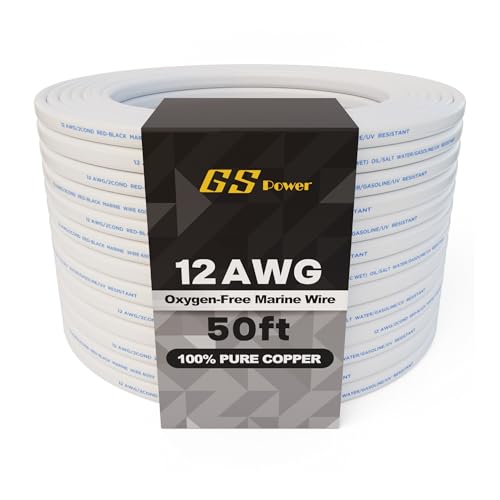
GS Power’s 12 AWG duplex marine wire is a higher-gauge option designed for heavier power applications on boats. It uses oxygen-free copper and Type III stranding with a white PVC jacket and red/black conductors. The wire is rated up to 600V and is built to resist harsh marine conditions. It’s designed to remain flexible in cold environments and has insulation rated for high heat. The product meets SAE, ABYC, UL, and Coast Guard requirements, aligning with common marine standards.
Why it’s selected: This option is best for higher-current circuits such as larger lighting installations, pumps, or power distribution where minimizing voltage drop is important. A caution is that 12 GA may be overkill for light loads and adds cost and stiffness compared with thinner wire. Ensure you select gauge according to load calculations.
Best for: Higher-current circuits on medium to large vessels. Choose this if you need more robust capability and longer runs between power sources. Avoid for small, low-power lighting projects where 14–16 GA would suffice.
Ancor 156410 Marine Grade Wiring (14-Gauge, 100 ft)

The Ancor 14-gauge marine wiring provides a balance of flexibility and durability for general-purpose applications. The 100-foot length is suitable for longer runs without frequent splices. The product emphasizes tinned copper strands to withstand vibration and harsh marine environments, with adherence to UL 1426 and ABYC standards to support compliant installations. It’s a practical pick for interior wiring, cabin lighting, and basic electronics on many boats.
Why it’s selected: This cable is a reliable all-around option for standard marine wiring needs with a long run length. If you’re wiring multiple zones or retrofitting an existing system, the 100 ft length is convenient. A caution: check the exact circuit’s current capacity to avoid oversized loads for this gauge.
Best for: General-purpose marine wiring where standard compliance and resilience are priorities. Choose this if you need a proven, flexible 14 GA option with ample length. Avoid if your installation demands higher-current capacity or thinner runs unrelated to power-hungry devices.
Buying Guide
What gauge should you choose? For low- to mid-current loads like cabin lighting or sensors, 14–16 gauge is common. For higher-current devices such as pumps or larger lights, 12 gauge or thicker is advisable. Always calculate current draw and distance to select the correct gauge to minimize voltage drop.
What insulation matters? Marine environments demand insulation that resists saltwater, UV exposure, and heat. Look for tinned copper, robust PVC jackets, and IP ratings when selecting wires intended for wet or damp areas.
Standards and compatibility: Choose wires that meet UL 1426, ABYC, SAE, and Coast Guard guidelines to align with common maritime safety standards. This helps ensure easier compliance with boat-build or retrofit projects.
Flexibility and routing: If wiring through tight compartments or behind panels, favor high-strand, flexible conductors (Type III) to minimize kinking and facilitate installation. Thick insulation is beneficial in open environments but can add stiffness.
Durability and longevity: Tinned copper improves corrosion resistance in saltwater and humid conditions. Consider the environment (salt spray, humidity, vibration) and choose a product with protective coatings and durable insulation for long-term performance.
FAQ
- What gauge is best for marine lighting? Typically 14–16 AWG for modest loads; 12 AWG is preferred for higher-current circuits like pumps or multiple lights in parallel.
- Is tinned copper necessary in marine wiring? Tinned copper offers enhanced corrosion resistance in saltwater environments and is common in marine cables for durability and reliability.
- What standards should I look for? UL 1426, ABYC, SAE, and Coast Guard (USCG) guidelines indicate compliance with typical marine electrical practices.
- Can I use outdoor speaker or LED strip wire outdoors on a boat? Yes, provided the wire’s insulation and rating match the environment and current requirements, and it remains within its voltage rating.
- How long should a marine wire run be? Length depends on the circuit and load. Longer runs increase resistance; choose thicker gauge if needed to reduce voltage drop.
- Is it okay to mix brands? Mixing brands is possible if the wire gauge, insulation, and ratings meet the circuit requirements and safety standards.