Best Marine Boat Battery Chargers for 12V Systems in 2026
Answering the common buyer question, these marine battery chargers are designed to reliably keep 12V lead-acid and lithium batteries charged on boats, docks, and in harsh marine environments. This guide highlights options for different needs—compact single-bank units for small boats, robust multi-bank chargers for larger setups, and specialty models for deep-cycle or LiFePO4 batteries. The top picks below are chosen for reliability, weatherproofing, and mode versatility, helping you select the right charger for your vessel, budget, and maintenance routine.
Summary of selected products
| Product | Best For | Key Benefit |
|---|---|---|
| 5A per bank, flexible charging modes | ||
| Compact, 5A single bank | ||
| IP68 waterproof, independent modes | ||
| 15A total with per-bank independence | ||
| 1A, versatile for 6V/12V |
NOCO Genius GEN5X2: 2-Bank, 10A Onboard Battery Charger
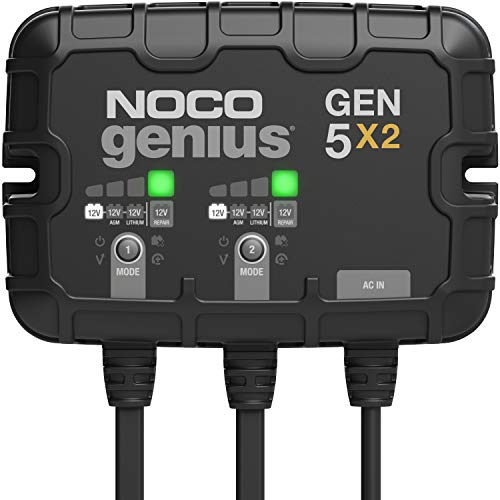
The GEN5X2 provides two independent banks, totaling 10 amps (5A per bank). It’s designed for lead-acid and lithium batteries, with selectable modes for 12V, AGM, Lithium, and a repair mode. This model suits mid-sized boats with dual battery banks or separate starting and deep-cycle configurations. It’s described as compact and robust for marine use, with overcharge protection and temperature compensation for variable conditions.
Best for: boat owners needing a reliable two-bank charger in a compact unit. Choose this if you run a dual-bank setup and want independent charging per bank.
Caution: The data emphasizes mode versatility, but note that installation should follow moisture-proofing standards on exposed decks or bilges to maintain long-term reliability.
NOCO Genius GEN5X1: 1-Bank, 5A Onboard Battery Charger
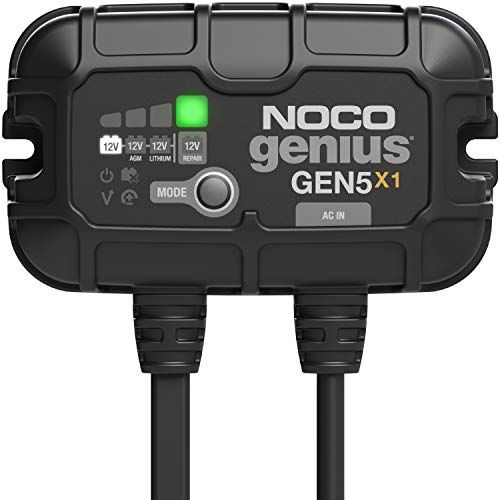
The GEN5X1 is a compact, single-bank charger rated at 5A, ideal for small boats or limited spaces. Like the GEN5X2, it offers modes for 12V, AGM, Lithium, and a repair mode, supporting both lead-acid and lithium batteries. It’s positioned for owners who want a straightforward, space-conscious solution without sacrificing battery care features.
Best for: skippers with limited space or a single 12V battery setup who still require smart charging and protection features.
Caution: With a single bank, there’s less flexibility for simultaneous multi-battery maintenance; ensure your battery configuration aligns with one-bank capacity.
2 Bank Marine Battery Charger 5X2 by FirstPower Pro

This model emphasizes dual-bank charging at 5A per bank in a waterproof IP68-rated enclosure. It supports 12V SLA/AGM, Lithium, and Calcium modes, with independent mode selection for each battery. It’s designed to keep two 12V batteries charged and healthy, including dead-battery recovery features. Better for: boats with two separate battery banks needing flexible mode selection and continuous operation in damp environments.
Caution: While robust, the unit’s performance hinges on proper sealing and venting; ensure installation adheres to your boat’s electrical safety practices.
NOCO Genius GEN5X3: 3-Bank, 15A Onboard Charger
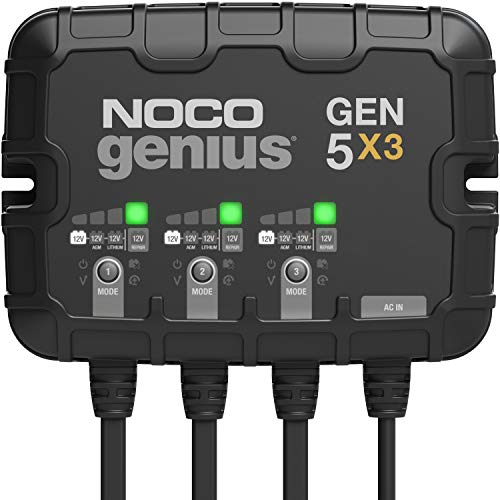
The GEN5X3 offers three banks with a combined 15A capacity (5A per bank). It maintains the same level of mode versatility as the smaller GEN5X models, providing charging profiles for lead-acid and lithium batteries, including a repair mode. This model is best for larger boats or vessels with multiple critical battery banks needing coordinated maintenance and charging cycles.
Best for: boats with three separate battery banks or when centralizing control over multiple batteries is a priority.
Caution: More banks mean more wiring complexity; ensure a professional install to avoid miswiring or improper cross-connection risks.
NOCO GENIUS1: 1A 6V/12V Smart Battery Charger

The GENIUS1 is a compact, low-amperage charger and maintainer, suitable for both 6V and 12V lead-acid or lithium batteries. It includes a desulfator function and temperature compensation for precise charging. This unit is suited for small boats or occasional maintenance against a backdrop of limited battery usage, offering a balance of simplicity and protection features.
Best for: owners seeking a lightweight, simple charger that can also maintain and desulfate smaller batteries over long storage periods.
Caution: Limited amperage means slower charging for larger or deeply depleted batteries; not ideal for high-demand systems.
Smart 2 Bank Marine Battery Charger by Zrfmib

This model presents two banks at 5A per bank with IP68 waterproof rating and independent battery modes for 12V SLA/AGM, Lithium, and Calcium. It supports 24/7 charging onboard and has a manual mode for dead batteries (lower than 1V). It’s a solid option for boats seeking a cost-conscious, weatherproof dual-bank charger with flexible mode selection.
Best for: boaters who need reliable two-bank charging in a waterproof package without premium-brand pricing.
Caution: Ensure compatibility with LiFePO4 if used, as lithium-specific settings must be correct to maximize lifespan.
NOCO Genius GENPRO10X2: 2-Bank, 20A Onboard Charger

The GENPRO10X2 provides higher power with two banks at 10A per bank, suitable for boats with larger battery demands. It maintains independent charging modes per bank and supports 12V lead-acid and lithium batteries with overcharge protection and temperature compensation. This model is best for boats with higher energy needs or multiple high-demand batteries.
Best for: anglers, coastal cruisers, or workboats where rapid replenishment of multiple batteries is critical.
Caution: Higher amperage requires adequately rated cabling and a sturdy installation to handle continuous use in marine environments.
Buying Guide: Key Considerations for Marine Battery Chargers
Charging needs vary by boat size, battery type, and usage. Use these questions to narrow your choice:
- How many batteries require charging, and do you need separate banks?
- What battery chemistries are on board (lead-acid, AGM, calcium, or LiFePO4)?
- Is IP-rated waterproofing essential for your installation location?
- Do you want a charger with dead-battery recovery or a repair mode?
- Is compact size important due to limited mounting space?
- Will you benefit from higher bank amperage or multiple banks for faster replenishment?
Buying Guide: Practical Comparisons
- Single-bank vs. multi-bank: Choose one-bank units for small boats, two or three banks for larger vessels with separate starting and deep-cycle batteries.
- Charging modes: Look for devices offering 12V, AGM, Lithium, and Repair modes to cover diverse battery chemistries.
- Protection features: Temperature compensation and overcharge protection help protect batteries in hot/cold conditions.
- Durability: Prioritize models with marine-grade waterproofing and rugged housings if exposure to spray or rain is common.
- Maintenance vs. rapid charging: Determine if you need 24/7 maintenance capability or faster replenishment for active boats.
FAQ
- What does “5A per bank” mean? – It is the maximum charging current allotted to each bank in a multi-bank charger.
- Can these chargers work with LiFePO4 batteries? – Yes, most NOCO models and similar chargers list LiFePO4 compatibility with appropriate modes.
- Do I need a waterproof charger for all boats? – If the charger will be exposed to spray or mooring areas, an IP68-rated unit is advisable.
- Is dead-battery recovery common? – Many models include a Repair or Dead Battery mode to help begin charging from very low voltages.
- Should I choose a higher amperage charger? – Higher amperage charges faster but requires matching wire gauges and space; balance speed with installation feasibility.
- Is professional installation recommended? – For safety and optimal performance, professional installation is often advisable, especially with higher amperage and lithium batteries.