Best Antifouling Paint for Boats: Top Picks for Every Hull Type
Need reliable antifouling protection for your boat? This guide highlights top options that work well on fiberglass, wood, steel, and aluminum. Each pick targets common fouling like barnacles, weeds, and slime, while balancing ease of use, environmental considerations, and haul-out prep. Best for frequent users, coastal sailors, or workboats that stay in water all season.
Quick comparison table of selected products:
| Product | Best For | Finish Type | Water Type |
|---|---|---|---|
| TotalBoat Underdog Marine Antifouling Bottom Paint (Black, Gallon) | Frequent users, sail/power/work boats | Ablative, low buildup | Saltwater |
| TotalBoat JD Select Ablative Antifouling (Black, Quart) | Marinas with environmental restrictions | Ablative, self-polishing | Salt & Freshwater |
| TotalBoat Krypton Copper Free Antifouling (White, Quart) | Bare aluminum or outdrives | Copper-free | All water types |
| Rust-Oleum Marine Flat Boat Bottom Antifouling Paint (Quart, Black) | Fiberglass, wood, steel with lightweight needs | Low-odor, copper-based | Salt & Freshwater |
| TotalBoat Underdog Marine Antifouling Bottom Paint (Blue, Gallon) | Boats used frequently in saltwater | Ablative, low buildup | Saltwater |
TotalBoat Underdog Marine Antifouling Bottom Paint – Black, Gallon
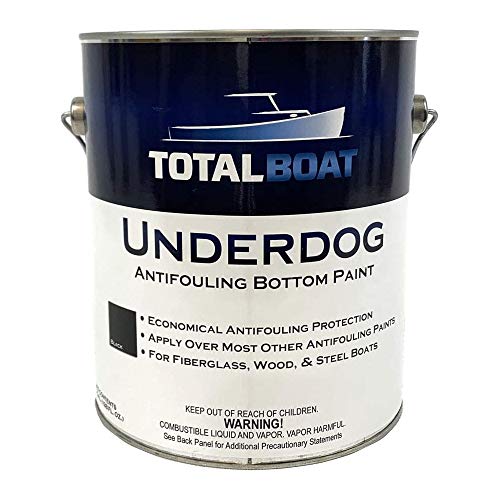
Best for boats that spend substantial time in saltwater and require durable single-season protection. This ablative paint uses a copper biocide to deter barnacles and mussels, with a finish designed to resist trailering and beaching better than traditional ablatives. Suitable for properly prepared fiberglass, wood, steel, and iron hulls. The coating wears away as the boat moves, reducing paint buildup for easier next-season prep.
Who this is for: frequent cruisers or commercial-style boats that need dependable protection with minimal buildup. Caution: copper-based biocide may affect certain marinas’ environmental rules; verify local regulations before application. Best choice when you want a straightforward bottom coat with predictable annual maintenance.
TotalBoat JD Select Ablative Antifouling – Black, Quart

Chosen for marinas with environmental restrictions and easy cleanup. This low-VOC, water-based antifouling is self-polishing, reduces bottom paint buildup, and can be burnished for smoother speeds and improved fuel efficiency. It’s suitable for fiberglass, wood, and steel in both salt and fresh water, with no maximum dry time before launch.
Best for: marinas needing low odors and straightforward cleanup. Limitation: quart size may require multiple coats for large hulls, increasing material use for bigger boats.
TotalBoat JD Select Ablative Antifouling – Black, Gallon

Equally effective as a full-season coating with ablative wear, this product minimizes future sanding and keeps hull performance high. It applies well to fiberglass, wood, and steel and performs in various water types. The finish can be burnished for smoother hull surfaces and enhanced speed.
Best for: boaters seeking gradual wear and easy reapplication next season. Caution: ensure adequate ventilation during application and curing in marinas with strict environmental rules.
TotalBoat JD Select Ablative Antifouling – Blue, Gallon

Best for boats that operate in mixed water conditions. This blue, ablative coating wears away during movement, reducing long-term buildup and allowing easier haul-out prep. It remains compatible with fiberglass, wood, steel, and iron hulls and provides low-odor, low-VOC performance with easy cleanup using soap and water.
Choose this if: you want a flexible, all-around ablative coating that’s forgiving in marina environments. Limitation: color options may affect visibility for some retrofits and inspections.
Rust-Oleum 396967 Marine Antifouling Paint – Quart, Black

Good for fiberglass, wood, or steel surfaces needing bottom protection with moderate environmental considerations. This formulation slowly releases copper to deter fouling and supports recoat within a few hours. It covers up to approximately 110 square feet per quart, suitable for smaller to mid-sized hulls.
Best for: budget-conscious boaters tackling smaller boats or lighter bottom protection. Warnings: ensure compatibility with marina rules regarding copper content and follow recoat timing for best results.
TotalBoat Krypton Copper Free Antifouling – White, Quart

Designed for aluminum boats, outdrives, and trim tabs where copper use is undesirable. This copper-free formula avoids galvanic concerns while delivering bright colors and effective protection in fresh, salt, and brackish water. It’s limited to below-the-waterline use and suitable for fiberglass, wood, steel, iron, and aluminum.
Best for: aluminum hulls, outdrives, or trim tabs seeking copper-free protection. Caution: color brightness can vary with surface prep; verify compatibility with all underwater metals in your setup.
TotalBoat Outdrive AF Aerosol for Underwater Metals – Black, 12 oz.

Specialized aerosol coating to inhibit corrosion on underwater metal components. Contains zinc pyrithione and dries quickly, with a recommended two coats for season-long protection. Best for touch-ups on propellers, outdrives, shafts, and trim tabs where corrosion is a concern.
Best for: quick, targeted protection of exposed underwater metal parts. Caution: aerosols require ventilation and careful handling to avoid overspray onto non-target surfaces.
Buying Guide
What type of boat and water are you in? The best antifouling paint depends on hull material, water salinity, and how often you launch and haul. Ablative coatings wear away with movement, reducing buildup but requiring reapplication each season. Copper-based biocides deter barnacles but may be restricted in certain marinas. Copper-free formulas avoid galvanic concerns with aluminum and outdrives but may differ in color brightness and long-term performance.
How important is environmental impact? Low-VOC and water-based options simplify marina compliance and cleanup. Consider marinas’ rules and possible odor or fume considerations during application and curing.
What about application and maintenance? Some formulas offer easy cleanup with soap and water, while ablatives may need burnishing for better speed. Assess whether you prefer a low-odor option and the typical dry-to-launch times that suit your schedule.
Hull type and size matter. Larger boats may require gallons of paint, while smaller vessels can use quart containers. For aluminum hulls or outdrives, copper-free options may be preferable to reduce galvanic risk.
FAQ
- What is antifouling paint used for? It prevents barnacles, weed, and slime from attaching to a boat’s bottom, helping maintain hull performance and fuel efficiency.
- What is ablative antifouling paint? It wears away gradually as the boat moves, reducing paint buildup and making next-season prep easier.
- Are copper-based antifoulants safe for marinas? Safety depends on local rules; some marinas restrict copper content, so select copper-free options if required.
- Can I recoat the same season? Many products allow re-coating within a specific window or after surface prep; follow product-specific guidelines for best results.
- Is copper-free always better for aluminum boats? Copper-free formulas avoid galvanic corrosion with aluminum, but consider the paint’s overall protection efficiency and environmental rules.
- Do these paints require special disposal? Some low-VOC, water-based options ease disposal; always follow local regulations for leftover coatings and containers.